Content
Ceiling T grid systems are one of the most widely used methods for creating suspended ceilings in commercial and industrial buildings. At the heart of every such system is a set of roll-formed steel profiles: main tees, cross tees, and connecting components. The profile precision of these metal sections determines how well the ceiling grid assembles, how much weight it can carry, and how straight and clean the finished ceiling looks. In this guide, we explain why profile precision is a decision-level issue when choosing a ceiling T grid roll forming machine.
A ceiling T grid profile is a roll-formed steel component shaped like an inverted T. The vertical web creates the load-carrying path, while the horizontal flange provides a ledge for ceiling tiles and lighting fixtures. In a standard suspended ceiling system, main tees run in one direction and cross tees lock into them at regular intervals. The resulting grid serves as the structural framework that supports acoustic panels, ventilation grilles, and light fixtures.
Because these profiles are mass-produced in high volumes, their dimensional accuracy must be repeatable piece after piece. A slight variation in the web height or flange width can make the cross tee loose or cause the ceiling plane to undulate.
Profile precision is not just an aesthetic issue; it affects the performance of the entire ceiling system. The American Society for Testing and Materials (ASTM) and similar standards specify allowable tolerances for metal ceiling grid components. When a roll forming machine produces profiles outside these tolerances, three problems appear.
In short, precision is the bridge between raw coils and a ceiling system that works as designed.
When evaluating a ceiling T grid roll forming line, the following dimensions should be regularly checked:
| Dimension | Recommended Tolerance | Why It Matters |
|---|---|---|
| Web height | ±0.15 mm | Controls grid depth and load transfer to hangers |
| Flange width | ±0.20 mm | Affects tile seating and visible sightline |
| Slot spacing | ±0.10 mm | Keeps cross tee engagement consistent |
| Hole position | ±0.10 mm | Ensures fastening and hanging hardware alignment |
| Straightness (camber) | ≤ 1.0 mm per 3,000 mm | Prevents wavy grid lines |
These tolerances are achievable when the roll forming machine has rigid rollers, precise servo feeders, and a stable cutting system. A machine that cannot hold these values on a continuous basis will create unacceptable scrap and field issues.
 Main and Cross T-bar Grid Roll Forming Machine with Quick-Change CassetteThis roll forming machine holds tight ceiling grid tolerances through rigid rollers and a stable cutting system. Its quick-change cassette lowers future update costs, and the cross T-bar cutting table allows freely adjustable lengths.View Product →
Several machine design choices directly determine whether the final profile stays inside tolerance.
Each pass through a set of rollers contributes incremental bending. If the roll profiles are poorly calculated or the material springback is not compensated, the flange angle drifts. High-quality CNC-machined rolls made from hardened steel hold their geometry much longer.
The forming forces generate side loads and bending moments. A light frame flexes at high speed, leading to lengthwise variation in the web height. A robust box-frame construction and precise shaft alignment minimise this.
Precision in the longitudinal direction is equally important. A servo-controlled cutting system measures the strip through encoders and cuts at the exact cycle position, so the cut lengths and punching locations are repeatable. This is critical when the T-bar has a series of punched slots that must align with the cross tees.
For hook-type cross T-bars, the connecting geometry depends on precise notching and piercing. If you want to see how these precision goals are realised in practice, Sihua's project cases show real installations.
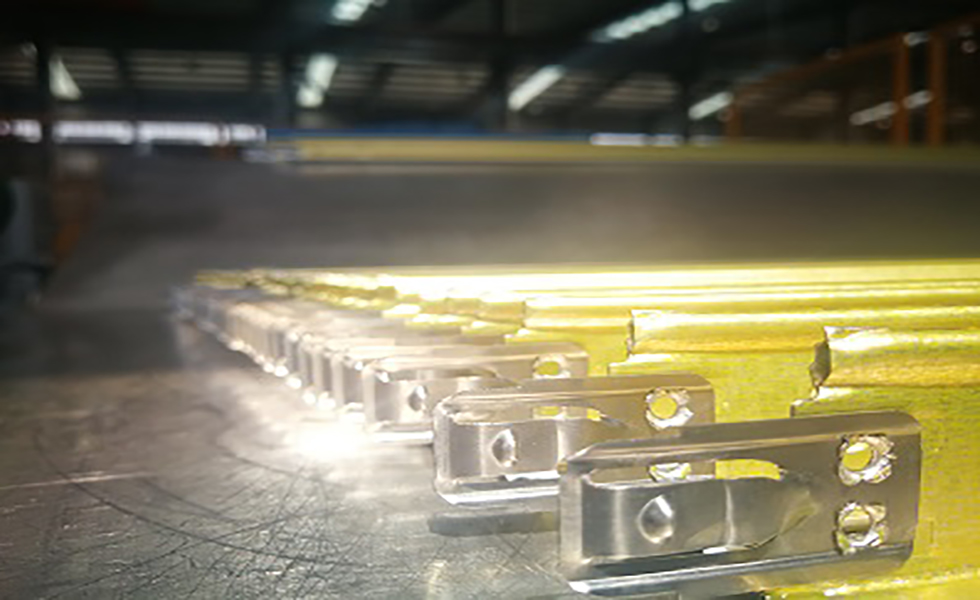 Alloy Hook Cross T-Bar Roll Forming Machine for Ceiling Suspension SystemsThis specialized machine forms T-shaped steel bars with integrated alloy hooks for reliable ceiling connections. Installed in recent projects, it offers high automation and rapid production, making it suitable for high-volume manufacturing of commercial and residential ceiling components.View Product →
Even the best machine will lose accuracy without proper production discipline. Three practical areas keep tolerances stable:
The complete buyer's guide includes a maintenance schedule table used by many fabricators.
When evaluating suppliers, ask how the machine holds tolerances during high-volume runs. Look for features such as:
Different ceiling grid profiles demand different tooling. A line that produces main and cross tees can be equipped with interchangeable cassettes to change the web height or flange width. If you plan to run hook-type cross tees, the punching and notching stations must be aligned with the forming speed. For special sections such as UT, FUT, and UDT series, the machine needs additional forming stations and precise dimpling tools.
The payback period improves when the machine can hold precision without slowing down. Sihua's ceiling T grid forming systems integrate servo control and rugged frames to maintain the values shown in the table above. For your production targets, sales engineers can provide exact tolerance data based on your coil specifications.
 UT FUT UDT Ceiling T-Grid Bar Roll Forming MachineThis versatile machine produces both main and cross profiles for UT, FUT, and UDT ceiling T-grids in one unit. Servo control and a rugged frame help maintain standard tolerances for web height, flange width, and slot spacing.View Product →
A: Standard tolerances are usually ±0.15 mm for web height, ±0.20 mm for flange width, and ±0.10 mm for slot spacing. These can be verified from trial cut samples.
A: Yes, by using a quick-change cassette system. Changing the forming rollers allows the same machine to produce main T-bars, cross T-bars, and even hook-type components without prolonged downtime.
A: Roller life depends on coil material and run time. For galvanised steel strips, many fabricators get one to two million metres before needing a regrind. Regular dimensional checks will tell you when the tooling requires maintenance.
Profile precision is the central performance criterion in a ceiling T grid roll forming machine. It links material cost, installation efficiency, structural integrity, and the visual quality of the final ceiling. When you compare machine quotations, do not focus only on speed; verify that the machine can keep tight tolerances for years. A high-precision line may cost more initially, but the reduction in waste, rework, and field complaints delivers a much better return.

wide material single decoiler Leveling machine and Machine for punching small holes on both sides All the upper and lower rollers are connected to a worm gear reducer.This makes the for...
See Details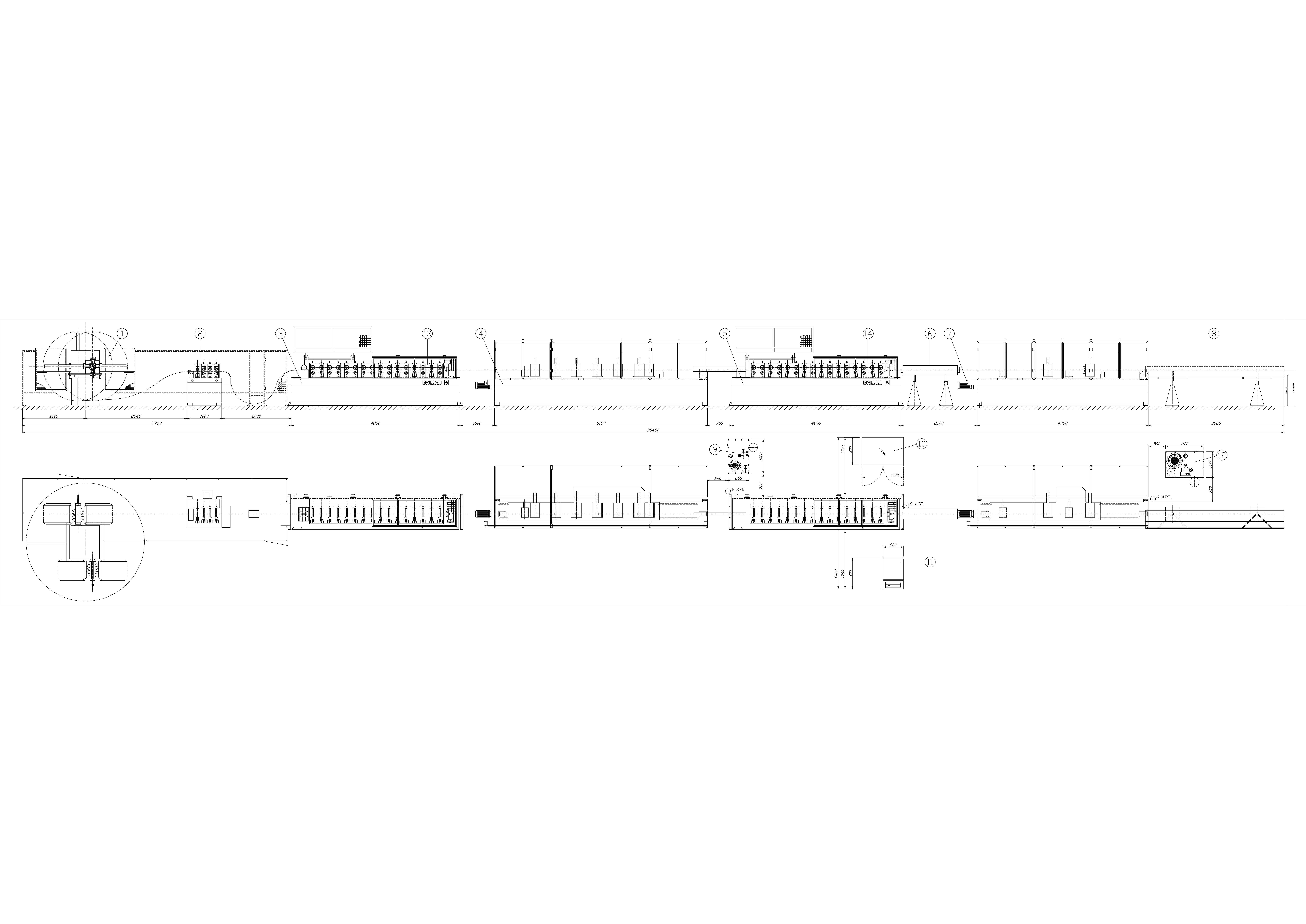
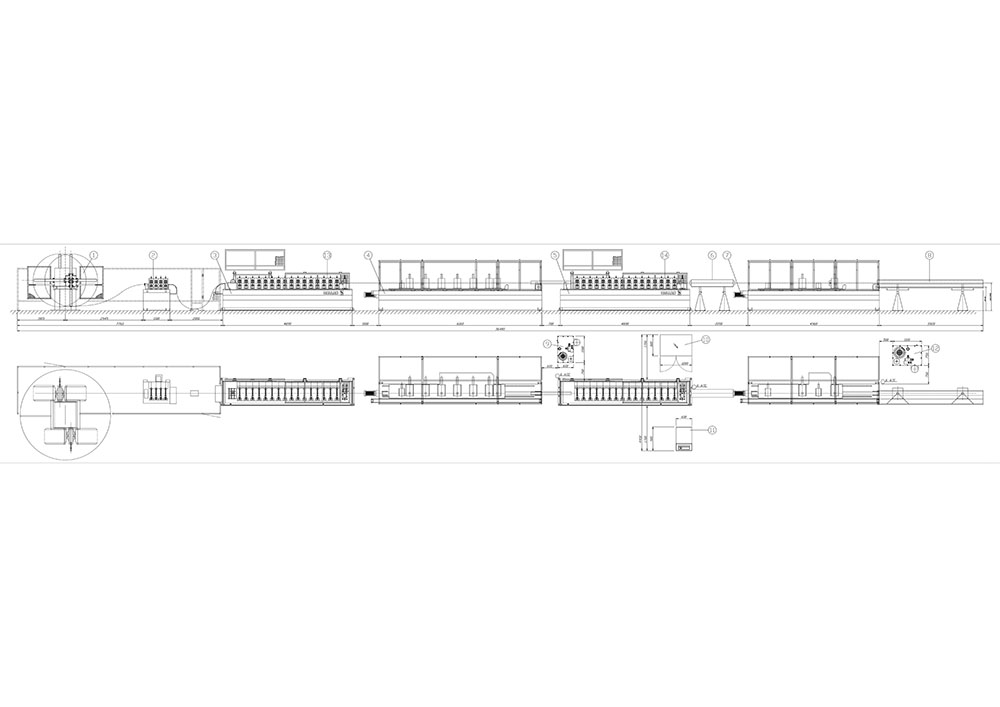
UT FUT UDT ceiling T-grid bar roll forming machine main and cross layout (Main and Cross) UT ceiling T-grid profiles and (Main and Cross) FUT ceiling T-grid profiles can be produced in just ...
See Details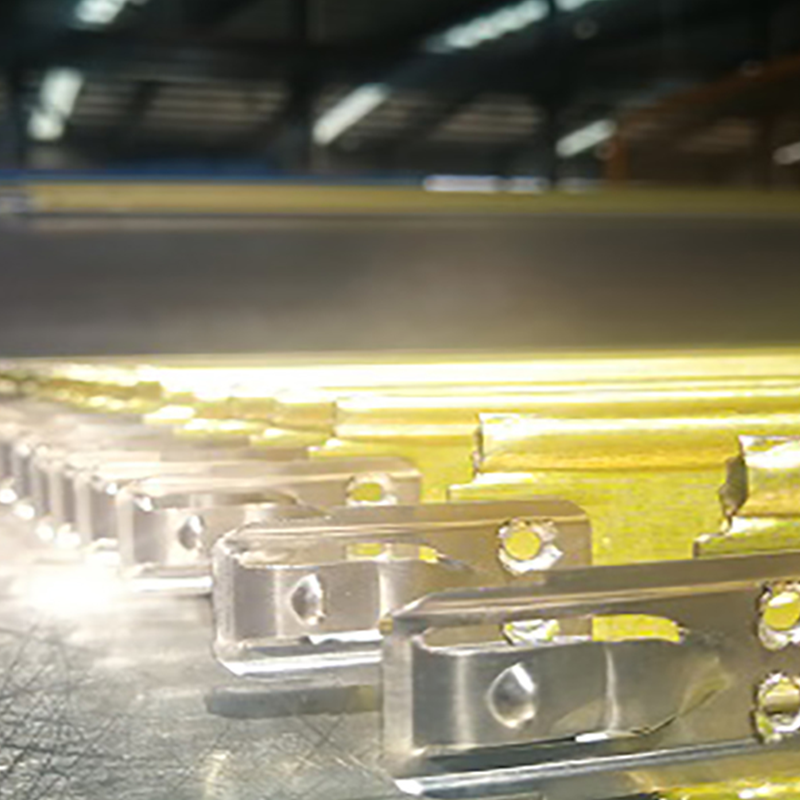
3.Alloy hook cross T-bar roll forming machine is a specialized piece of equipment engineered for producing T-shaped steel bars with integrated alloy hooks. These components are widely utiliz...
See Details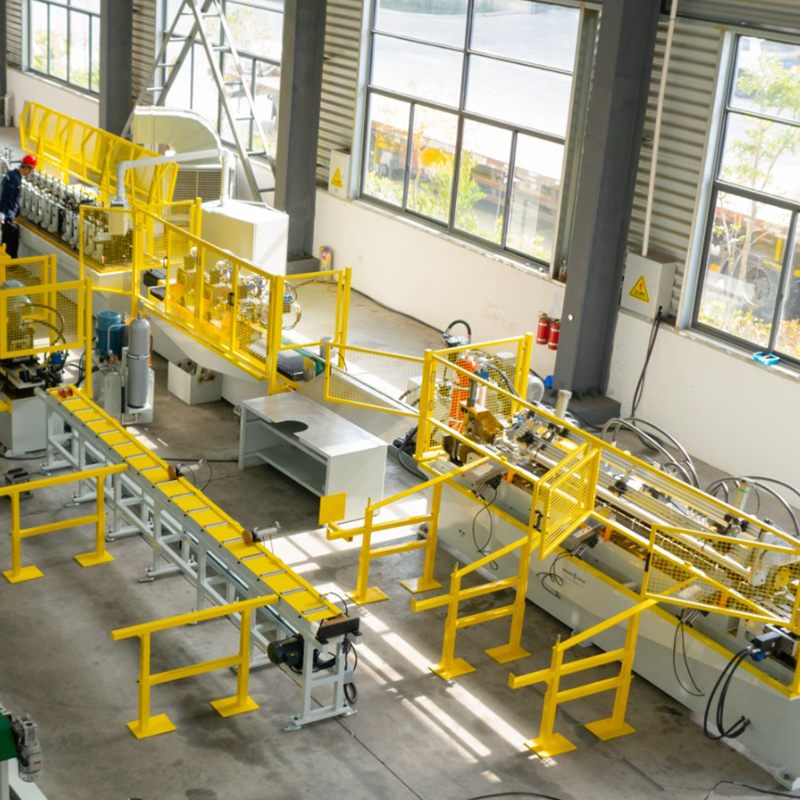
Double-head pre-painted steel hydraulic expanding/contracting uncoiler, double-head galvanized steel expanding/contracting uncoiler, pre-painted steel storage bracket, belt reduction. The 5-...
See Details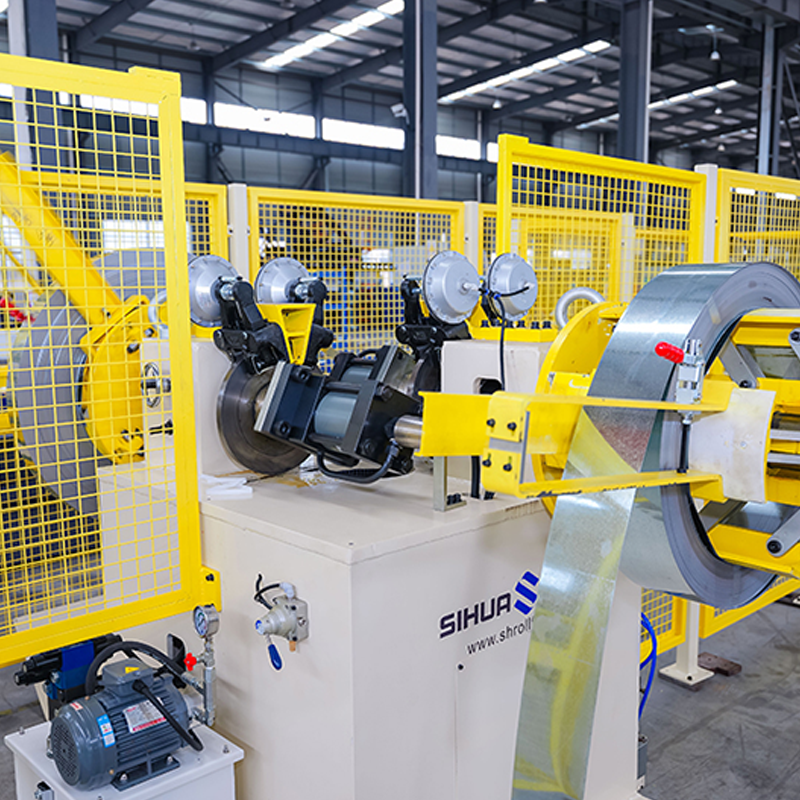
Automatic rotating double-head hydraulic decoiler with no-material detection, 5 tons per side. Laser power and welding length are adjustable to accommodate steel strips of various thicknesse...
See Details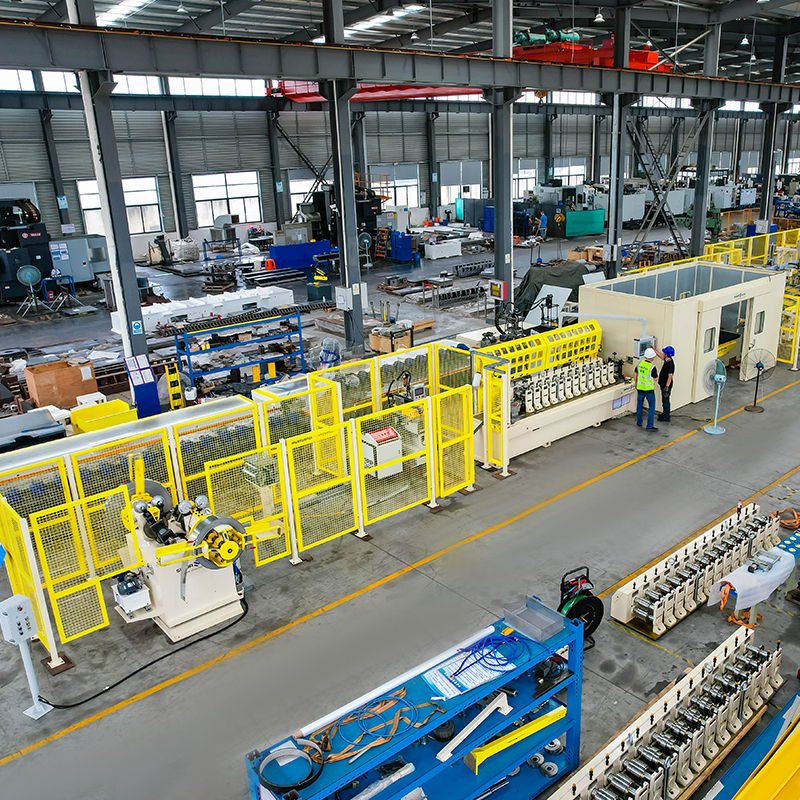
Automatic rotating double-head hydraulic decoiler with no-material detection, 5 tons per side. Quick-change cassette roll forming machine (changeover takes 30 minutes). Cutting without ...
See DetailsDon't hesitate to contact when you need us!
Contact Information
PRODUCTS
Mobile


 English
 Español
 русский