Content
Steel fabricators bidding on a continuous-roof project usually reach the same conclusion when they review the drawings: the roof purlin is Z-shaped, their shop is set up for C channels, and the gap is wider than it looks. A z purlin roll forming machine is a continuous cold-forming line that produces Z profiles from hot-dip galvanized steel strip in a single pass, including punching and cut-off.
The offset flanges of a Z section allow purlins to nest in bundles and overlap at splices, but that offset also forces the roll tooling, hole punching and shear timing to be designed differently from a C purlin line. The wrong machine usually shows up in the form of flange angle deviation, misaligned splice holes, or a line speed that cannot feed your punching capacity.
Short definition: A z purlin roll forming machine is a continuous cold-forming system that bends steel strip into an asymmetric Z section and integrates punching, cut-off and optional stacking in the same production flow.
A z purlin roll forming machine must hold the flange offset and flange angle within the limits that allow the finished purlins to nest tightly and splice predictably: offset within 1.0 mm and flange squareness within 1 degree over the full length.
The offset between the two flanges is the defining dimension of the Z section. During forming, the strip bends in two directions at different distances from the neutral axis. If the roll flower does not balance the springback, the profile twists and the flange tips open or close. That introduces a visible gap between nested purlins and makes the bundle unstable on a truck.
Nesting is the main economic reason to choose Z purlins in the first place.
A packed Z purlin bundle uses roughly 25 to 35 percent less truck floor space than the same number of C purlins with the same section height. That saving disappears when twist and springback are not controlled in the forming line.
The practical throughput of a Z purlin line depends on strip thickness, web height and punching cycle time, not on motor power alone. Once the coil width is fixed, those three values decide the number of roll stands, the forming speed and the punching configuration.
Typical specification ranges to collect before you compare quotes:
For shops that need C, U, Z and Sigma profiles on a single line, cassette and servo-adjustable tooling can cover more than one profile family without losing the flexibility to run small batches.
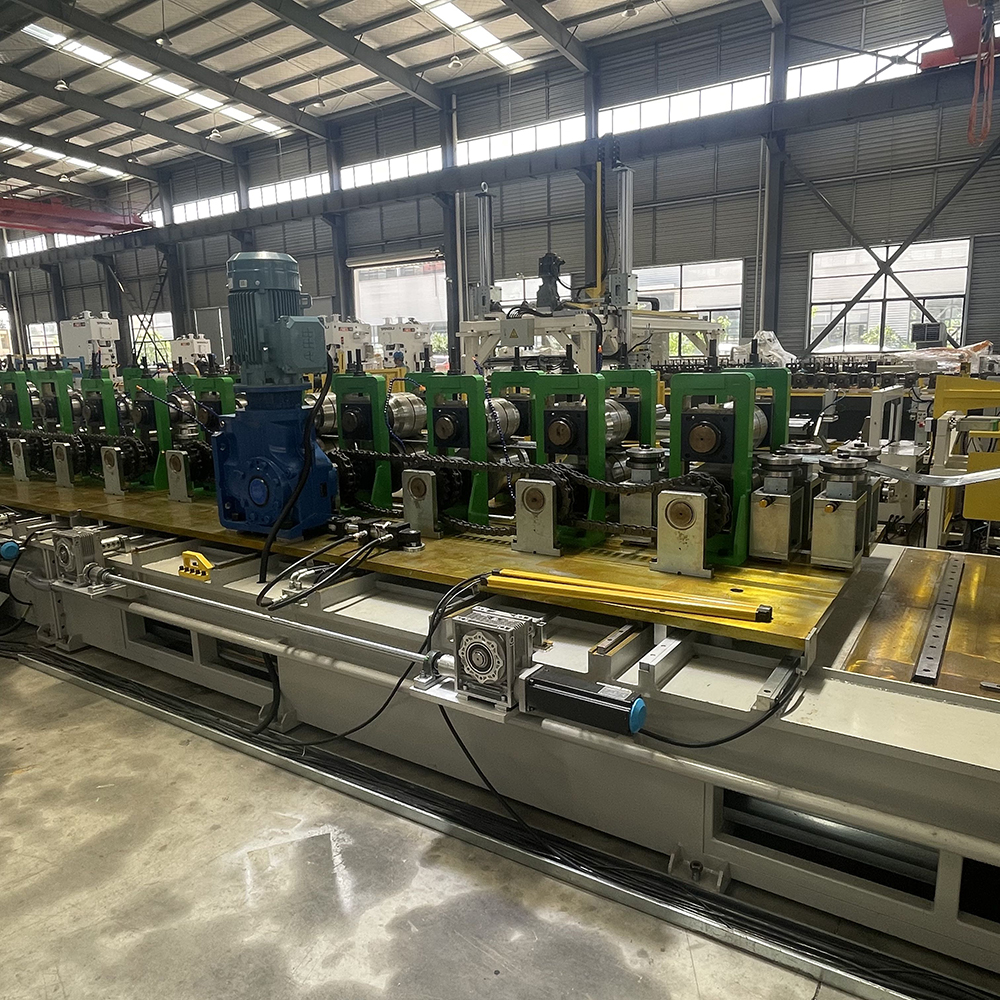 Multi-Profile Roll Forming Machine for C, U, Z, and Sigma SectionsThis machine combines cassette and servo-adjustable tooling to run multiple profile families on one line, including C, U, Z, and Sigma. It suits shops needing flexibility for small batches while maintaining high output, as noted in the purlin production context.View Product →
Consider a 250 mm web purlin in 2.0 mm material at 15 m/min. Six hours of net running time yields about 5,400 meters of purlin length per shift, before allowing for idle time, coil changes and setup. Cut length, hole count and bundling speed can reduce that figure by 10 to 20 percent.
| Parameter | Typical range | Production impact |
| Strip thickness | 1.5-3.0 mm, Q235B / Q355B | Thicker strip needs more passes and lower speed |
| Web height | 100-350 mm | Adjustable stands cover ranges; fixed tooling holds tighter offset |
| Flange width | 40-70 mm | Sets coil width and affects slitting cost |
| Forming speed | 8-18 m/min | Punching cycle time is usually the limit |
| Length tolerance | +/-1.0-2.0 mm | Affects erection speed at lapped splices |
| Hole spacing tolerance | +/-0.5 mm with servo punch | Prevents rework of cleat holes on site |
Changeover time is the biggest operating cost difference between Z purlin machines, and it separates a line that runs one profile all year from a line that processes small batches daily.
The classic option is shim-adjusted rolls, where operators add or remove spacers to reset the stands for a new web height. The servo-adjustable solution changes stand width and profile height by motor, keeping the same roll cartridges in place. Quick-change cassette systems remove one complete tooling cassette and insert another in minutes.
| Configuration | Changeover time | Best fit |
| Shim-adjusted | 30-60 min | One or two stable profiles, long runs |
| Servo-adjustable | 5-10 min | Three to eight web heights |
| Quick-change cassette | 2-5 min | Daily profile changes and JIT schedules |
Rule of thumb from production lines: if one web height will run more than 500 tons per month, a dedicated fixed-roll Z machine beats a universal line on stability. Below that volume, adjustability shortens payback.
Punching is the first bottleneck to calculate, because a spliced Z purlin can carry six to twelve holes and the punching cycle time sets the ceiling for line speed.
Pre-punched coils look convenient, but hole patterns change between projects. Online servo punching registers every hole against the cut position with a closed-loop encoder, which keeps hole spacing within +/-0.5 mm even when the strip thickness changes. If your coil processing schedule includes solar bracket or cable tray punching in addition to purlins, the punching head becomes the flexibility decision rather than the forming stands.
 8-Axis Servo Punching Roll Forming Machine for Solar PV BracketsEquipped with an 8-axis servo punching system, this line automatically adjusts punch position and profile width/height for solar bracket profiles. It offers closed-loop encoder registration for precise hole spacing, making it ideal when punch patterns vary between projects.View Product →
For cut-off, a servo flying shear holds length tolerances at +/-1.0 mm by synchronizing the shear with the pass line. Hydraulic cut-off units are cheaper but usually land at +/-3 to 5 mm and create a burr that slows site assembly. Compare the complete drive and control layout with the profile forming machine selection guide before you shortlist suppliers.
After cutting, purlins move to a run-out table for counting and bundling. An automatic strapping station replaces two manual workers per shift and keeps bundle tension consistent, which protects the nesting geometry during the same truck transport that makes Z profiles attractive.
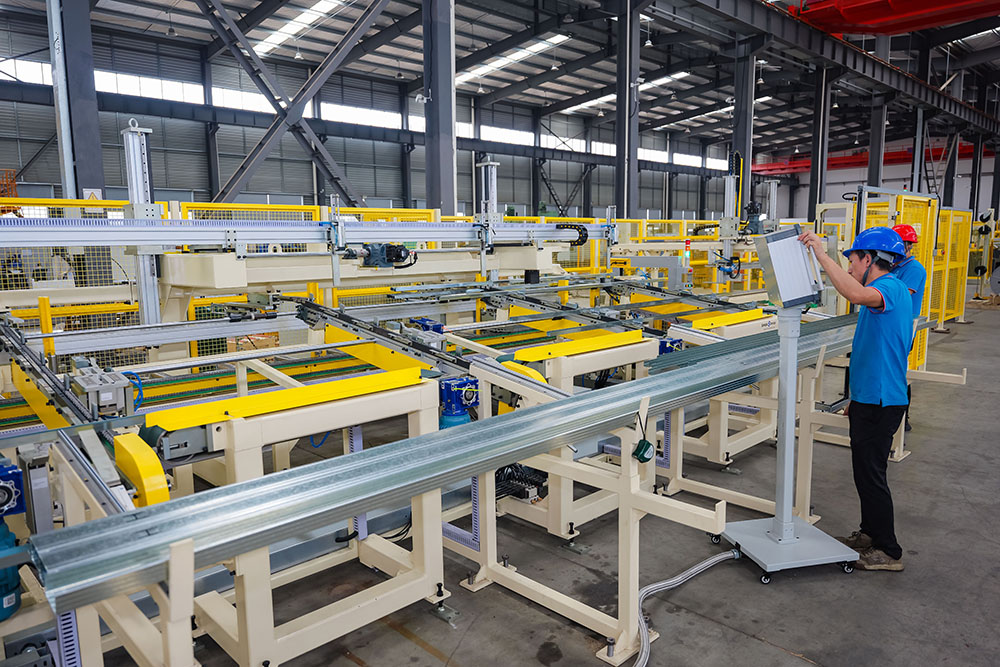 Automatic Profile Packing and Strapping Machine for Metal BundlesThis packing system automates button flipping, small bundle packing, and large bundle palletizing with wooden support strips. It replaces manual bundling workers and ensures consistent bundle tension, protecting purlin profiles during transport and improving downstream handling.View Product →
Ask the supplier to simulate punching timing for your longest purlin. The control program should account for acceleration, deceleration and cut-mark positioning, not only for the average pass line speed.
The fastest way to compare Z purlin machine suppliers is to request three documents before the commercial quotation: the roll flower drawing, the punching die layout and a test piece formed from your own steel strip.
Use the following order when you evaluate equipment offers.
Before you commit, review installed references. Sihua's project case archive includes complete purlin and rack forming lines delivered to metal building fabricators, with the same servo punching and flying-shear architecture described above.
The short answers to the four questions that dominate Z purlin machine purchasing are below.
Yes. Multi-profile lines with servo-adjustable stands or quick-change cassettes switch between C, U, Z and Sigma sections. The trade-off is slightly lower tolerance stability compared with a dedicated Z line that never changes tooling.
Standard lines handle 1.5 to 3.0 mm hot-dip galvanized steel strip in Q235B or Q355B grades. The upper thickness depends on flange width and the number of forming passes. Too few passes causes springback at the flange tips and makes nesting gaps unstable.
With 2.0 mm material at 15 m/min and six hours of net running time, an 8-hour shift produces about 5,400 meters of purlin length. Cut length, hole count and stacking speed can reduce that figure, so verify punching cycle time with your own product mix.
Purlin length tolerance controls erection speed at lapped splices. A servo flying shear with closed-loop length measurement holds +/-1.0 to 2.0 mm; a hydraulic shear usually lands at +/-3 to 5 mm with inconsistent burr direction. For continuous-roof projects, the tighter tolerance pays for itself on site.

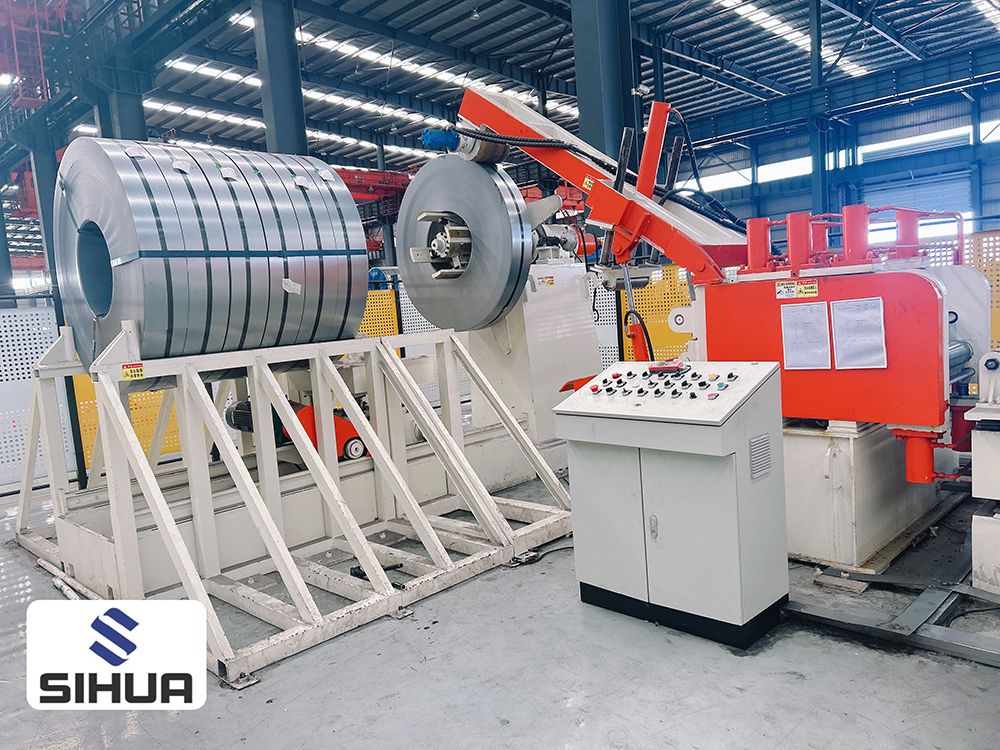
wide material single decoiler Leveling machine and Machine for punching small holes on both sides All the upper and lower rollers are connected to a worm gear reducer.This makes the for...
See Details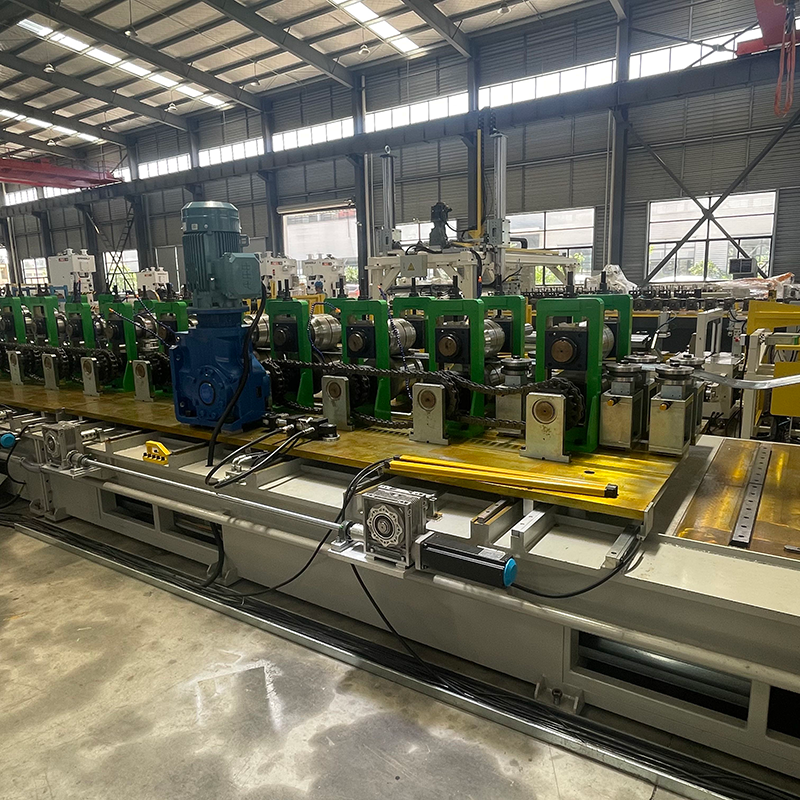
CUZ sigma roll forming machine Heavy-duty single-head decoiler, capacity 5-ton. Leveling machine(A leveling machine is required before using a punch press.) Yadon/Yangli 125–250-to...
See Details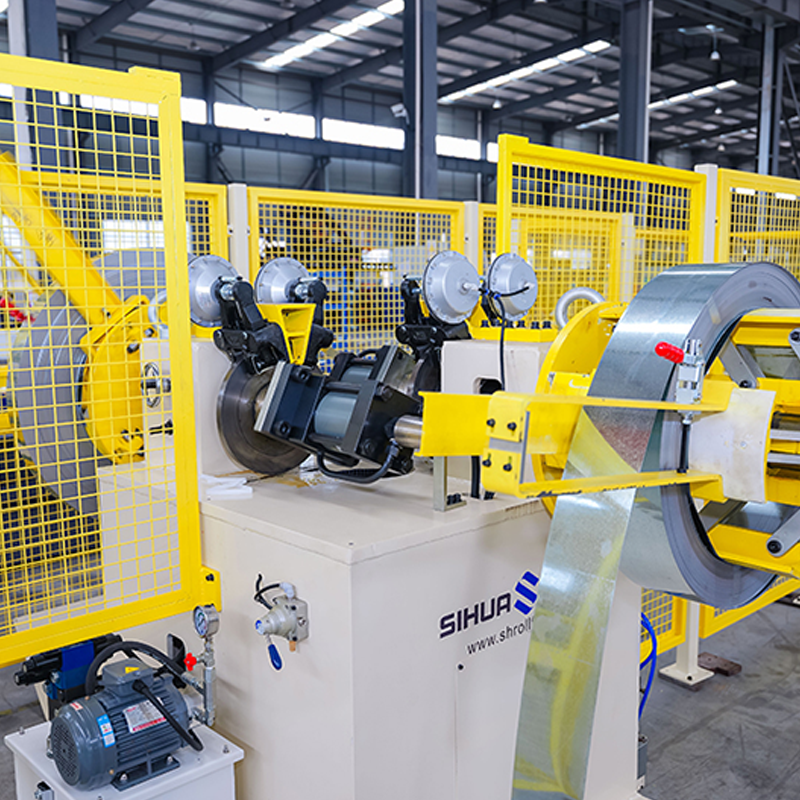
Automatic rotating double-head hydraulic decoiler with no-material detection, 5 tons per side. Laser power and welding length are adjustable to accommodate steel strips of various thicknesse...
See Details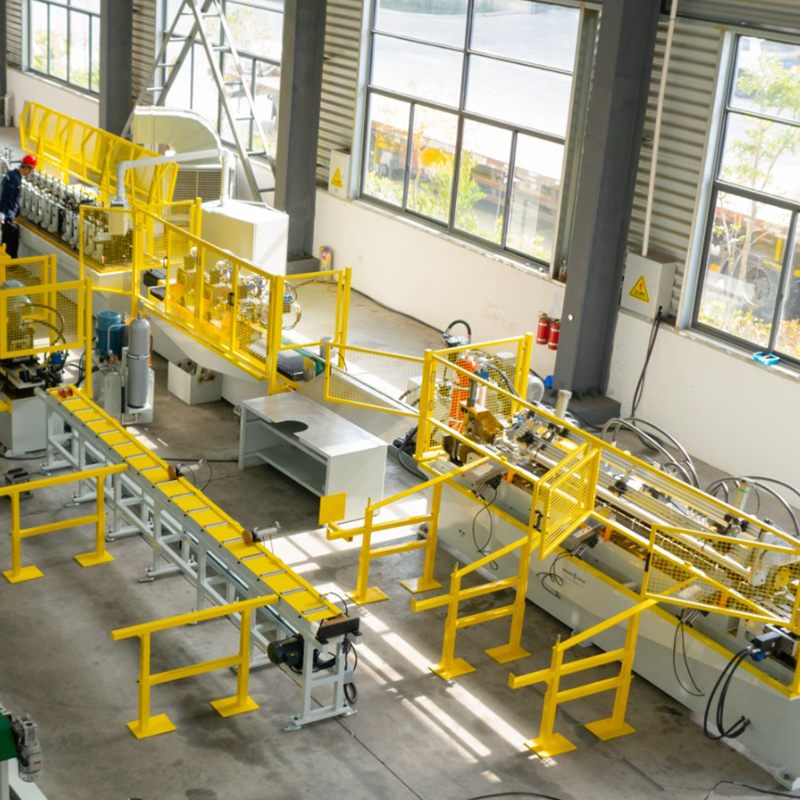
Double-head pre-painted steel hydraulic expanding/contracting uncoiler, double-head galvanized steel expanding/contracting uncoiler, pre-painted steel storage bracket, belt reduction. The 5-...
See Details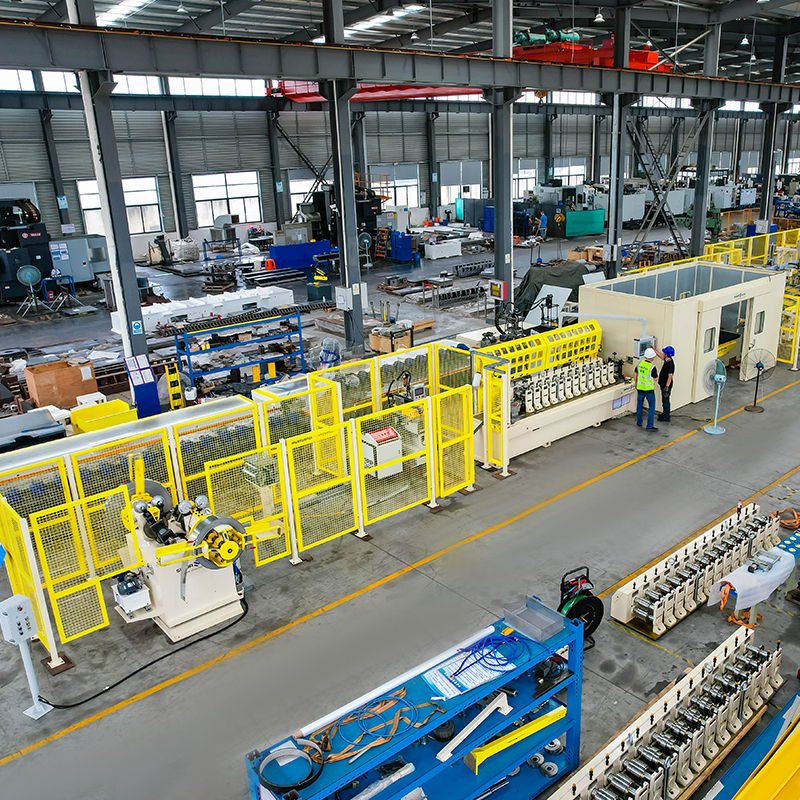
Automatic rotating double-head hydraulic decoiler with no-material detection, 5 tons per side. Quick-change cassette roll forming machine (changeover takes 30 minutes). Cutting without ...
See Details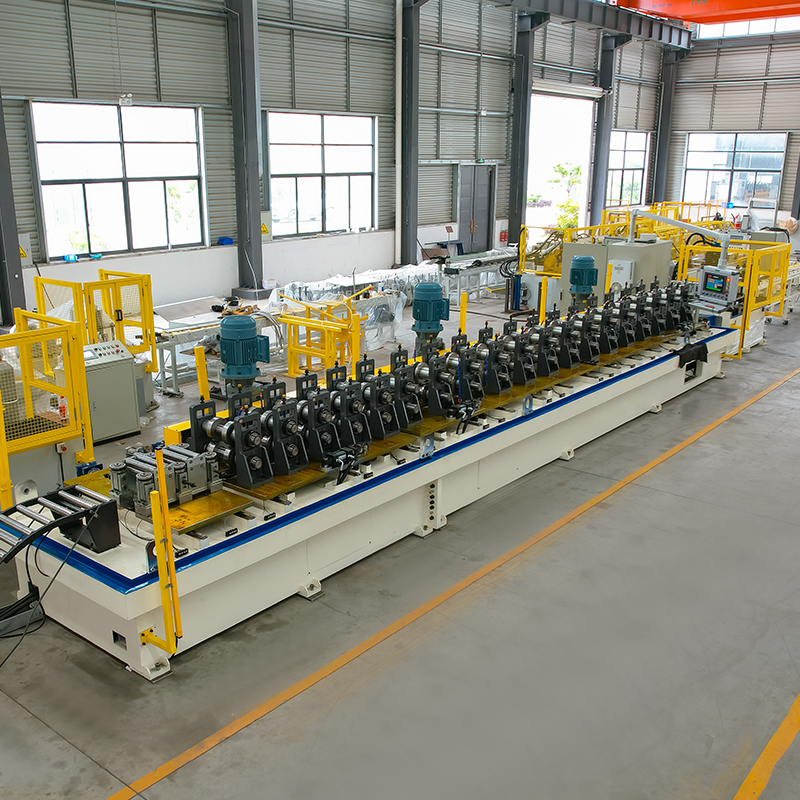
Solar bracket auto change width roll forming machine Material decoiler with storage platform and robotic arm Leveling machine(A leveling machine is required before using a punch press.)...
See DetailsDon't hesitate to contact when you need us!
Contact Information
PRODUCTS
Mobile


 English
 Español
 русский