Content
A ceiling T grid roll forming machine is a specialized industrial equipment designed to manufacture metal T-shaped ceiling suspension systems through continuous bending operations. These machines transform flat steel or aluminum coils into precise cross tees and main runners used in suspended ceiling installations. Modern systems achieve production speeds of 10 to 35 meters per minute, with automated punching, cutting, and stacking capabilities that significantly reduce labor costs while maintaining dimensional accuracy within ±0.5mm tolerance.
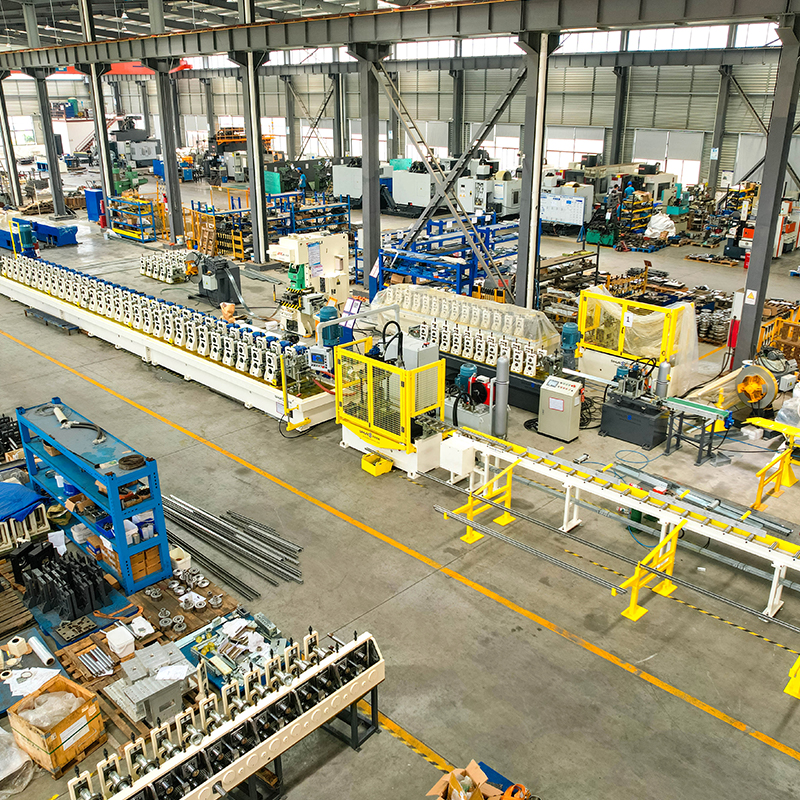
Understanding the mechanical structure of a ceiling T grid roll forming machine helps buyers evaluate build quality and long-term reliability. The machine consists of several integrated stations working in synchronized sequence.
The entry section handles raw material input through a motorized uncoiler capable of managing coil weights between 3 to 7 tons. A hydraulic expansion mechanism secures the coil inner diameter, typically ranging from 450mm to 530mm. The feeding unit incorporates pinch rollers and servo-driven feeders that maintain consistent material tension, preventing slippage that could cause dimensional variations in the final T grid profile.
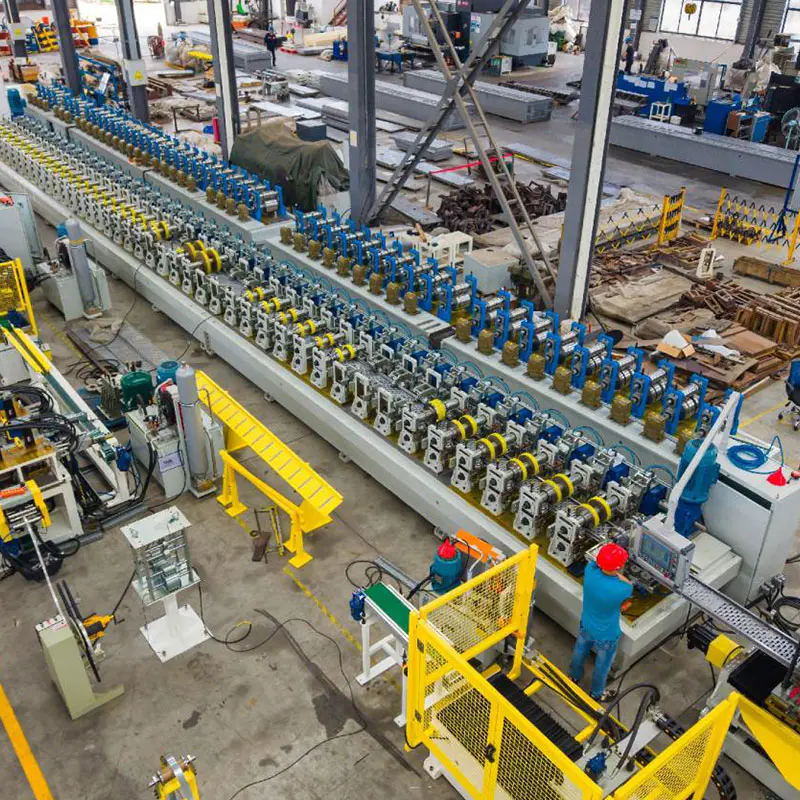
The forming section contains 16 to 24 stands of precision-machined rollers arranged in gradual progression. Each stand progressively bends the flat strip into the characteristic T shape. Roller materials typically use Cr12MoV alloy steel hardened to HRC 58-62, ensuring service life exceeding 10 million linear meters of production before requiring refurbishment. The vertical centers and horizontal alignment of these stations determine profile consistency across production batches.
Integrated punching systems create connection holes, end notches, and suspension points at programmable intervals. Modern machines employ fly-cutting or stop-cutting methods, with fly-cutting enabling continuous production without material stopping. Cutting tolerance typically reaches ±1mm, with hydraulic systems generating 20 to 40 tons of cutting force depending on material thickness.
Ceiling T grid systems accommodate various architectural requirements, necessitating machine flexibility in handling different materials and dimensions.
| Profile Type | Width (mm) | Height (mm) | Material Thickness (mm) | Common Materials |
|---|---|---|---|---|
| Main Runner | 24-38 | 32-40 | 0.25-0.40 | Galvanized Steel, Aluminum |
| Cross Tee | 24-32 | 24-32 | 0.25-0.35 | Pre-painted Steel, Aluminum |
| Wall Angle | 19-25 | 19-25 | 0.30-0.50 | Galvanized Steel |
Galvanized steel coils with Z80 to Z275 zinc coating represent the most common input material, providing corrosion resistance suitable for standard commercial applications. Aluminum alloys in 3003 or 5052 grades serve projects requiring lightweight properties or enhanced moisture resistance. Premium machines accommodate material widths up to 200mm and thickness ranges from 0.2mm to 0.6mm without requiring roller replacement.
Manufacturing economics depend heavily on machine throughput and labor requirements. Entry-level semi-automatic systems produce 8 to 15 meters per minute, requiring operators to manually adjust cutting lengths and remove finished pieces. Fully automated configurations achieve 25 to 35 meters per minute with continuous coil feeding and automatic stacking systems.
Traditional manual T grid production requires 4 to 6 workers per shift to achieve 2,000 meters of output. Automated roll forming lines reduce this to 1 operator overseeing coil loading and quality monitoring, while increasing daily output to 6,000 to 10,000 meters. This represents a 75% reduction in direct labor costs per linear meter of product, typically achieving return on investment within 18 to 24 months for high-volume operations.
Advanced systems incorporate laser measurement devices that continuously monitor profile dimensions, automatically adjusting roller pressure to compensate for material thickness variations or thermal expansion. Vision inspection systems detect surface defects at production speeds, rejecting non-conforming sections before they reach the stacking unit. These technologies maintain defect rates below 0.3% compared to 2-5% typical of manual operations.
Installing a ceiling T grid roll forming machine requires specific infrastructure preparations to ensure safe and efficient operation.
Standard machine configurations demand 15kW to 30kW of electrical power depending on forming stations and auxiliary functions. Three-phase 380V or 480V supply is standard, with machines requiring 60A to 100A circuit breakers. Hydraulic systems require 20 to 40 liters of ISO VG 46 hydraulic fluid, with filtration systems preventing contamination that could damage precision valves.
Floor space requirements range from 8 meters by 1.5 meters for compact single-profile machines to 15 meters by 4 meters for multi-profile systems with automatic packaging. Ceiling height should accommodate coil diameters plus lifting equipment clearance, typically requiring 4.5 meters minimum vertical clearance. Vibration isolation mounts prevent resonance transmission to adjacent equipment, particularly important when running at maximum forming speeds.
Machine pricing varies significantly based on automation level, production speed, and geographic manufacturing origin.
Chinese-manufactured entry-level systems range from $25,000 to $45,000, offering basic forming capabilities with manual length adjustment. Mid-tier automated systems from established Asian manufacturers cost $60,000 to $95,000, including servo feeding and programmable cutting. European or North American manufactured premium systems with full automation and Industry 4.0 connectivity command $150,000 to $280,000.
When assessing potential suppliers, prioritize the following factors:
Request production trials using your specific material specifications before finalizing purchase agreements. Reputable manufacturers accommodate material testing at their facilities, demonstrating actual output quality and machine stability under continuous operation.
Preventive maintenance ensures consistent production quality and extends machine service life beyond 15 years of continuous operation.
Daily maintenance includes cleaning forming rollers to remove metal debris and lubricating bearing blocks with lithium-based grease. Weekly inspections should check hydraulic fluid levels, pneumatic line integrity, and cutting blade edge condition. Monthly procedures involve verifying roller alignment using dial indicators and inspecting electrical connections for corrosion or loosening.
Roller refurbishment becomes necessary after producing approximately 8 to 12 million meters, depending on material hardness and operating speeds. Regrinding services restore roller profiles to original specifications at 15-20% of replacement roller cost. Maintaining detailed production logs tracking material types, speeds, and maintenance activities enables predictive scheduling of major overhauls, minimizing unplanned downtime.
Decoiler System COMBI 3/1 decoiler lever and feeder Capacity: 3-8 tons high feeding accuracy, fully automatic operation, widely used for metal coil stamping Punch Press Unit Punching fo...
See Details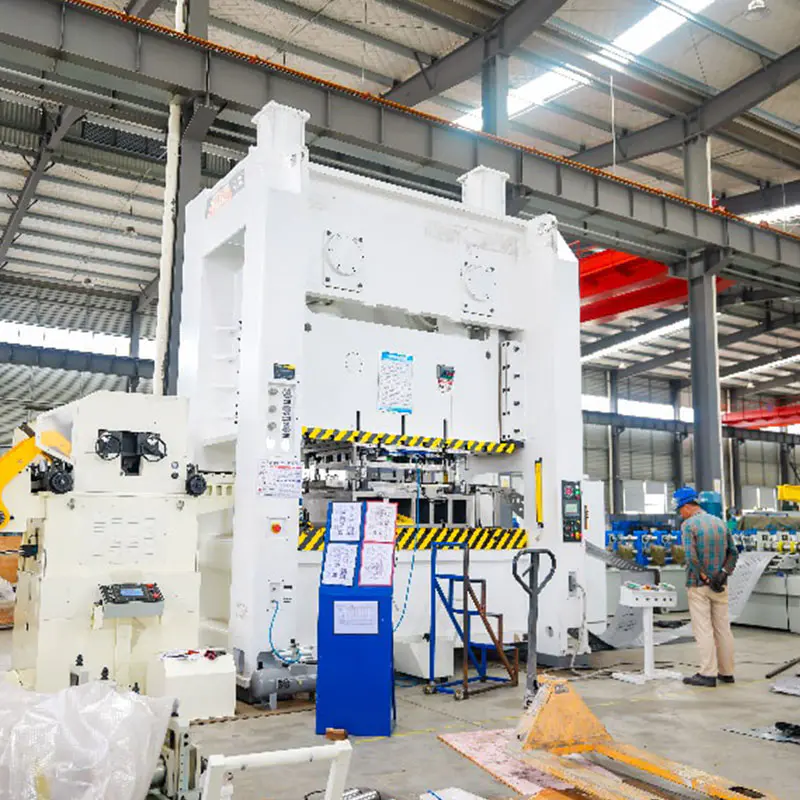
Decoiler System 3-in-1 Decoiler Straightener Feeder Capacity: 5 tons hydraulic coil mandrel expansion, servo feeding & straightening. Punching machine 400 Ton Power Press Capacity: ...
See Details
wide material single decoiler Leveling machine and Machine for punching small holes on both sides All the upper and lower rollers are connected to a worm gear reducer.This makes the for...
See Details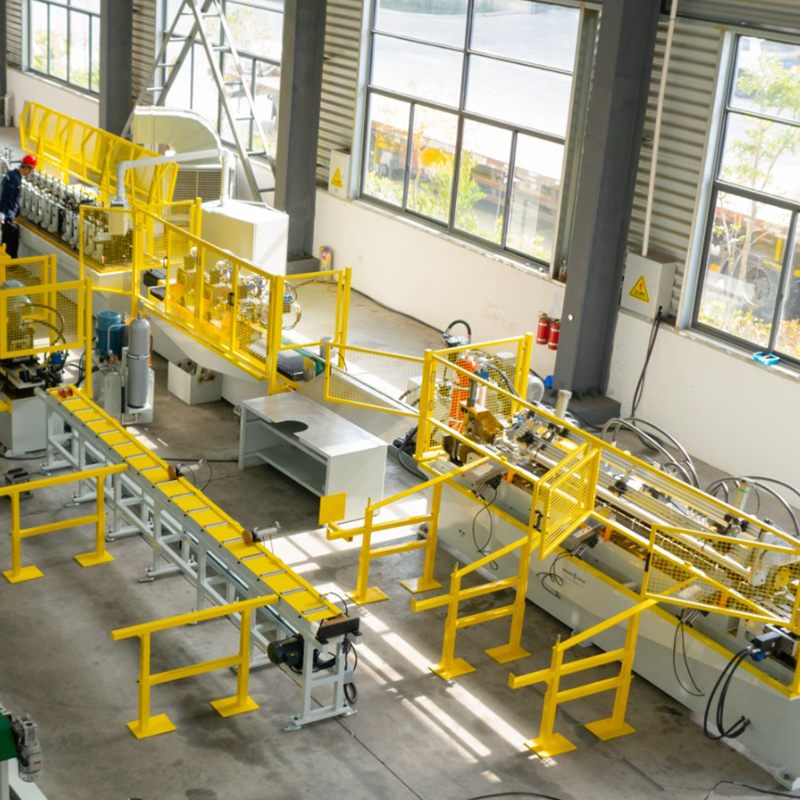
Double-head pre-painted steel hydraulic expanding/contracting uncoiler, double-head galvanized steel expanding/contracting uncoiler, pre-painted steel storage bracket, belt reduction. The 5-...
See Details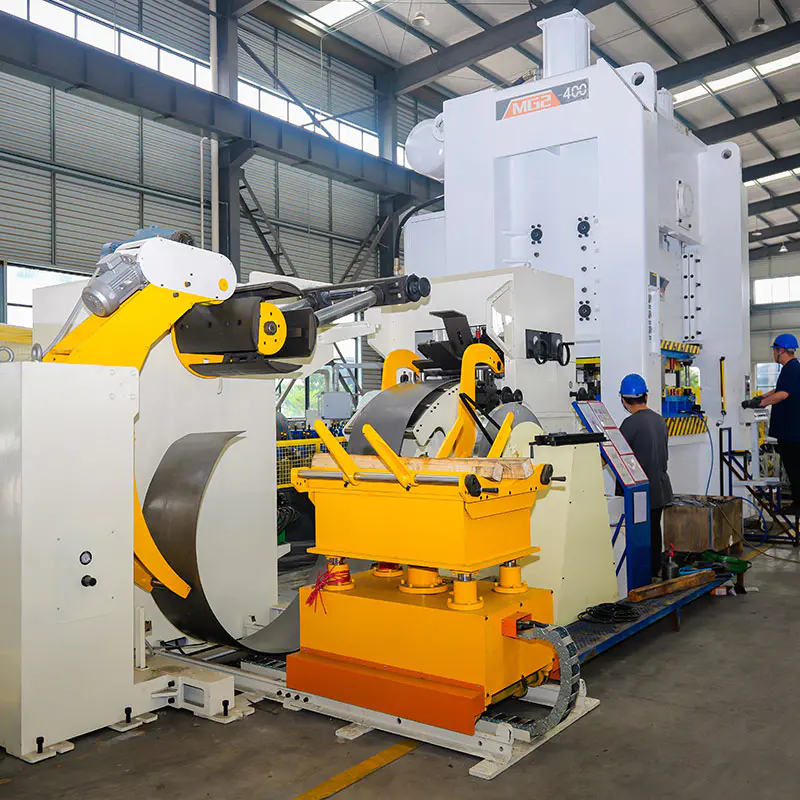
3-in-1 Decoiler Straightener Feeder System · 3-in-1 Decoiler Straightener Feeder capacity: 5 tons Hydraulic mandrel expansion Servo-driven straightening & feeding Synchronized signal wit...
See Details
3.Alloy hook cross T-bar roll forming machine is a specialized piece of equipment engineered for producing T-shaped steel bars with integrated alloy hooks. These components are widely utiliz...
See DetailsDon't hesitate to contact when you need us!
Contact Information
PRODUCTS
Mobile


 English
 Español
 русский