Content
In suspended ceiling grid manufacturing, main tees and cross tees are the two most important profile types. They may look similar at a glance, but they perform different jobs: main tees carry the primary load and transfer it to the ceiling structure, while cross tees lock into main tees and support the ceiling panels. Because of these differences, a T-grid roll former must be tooled and punched differently for each profile. This article compares the tooling and punching setup differences between main tee and cross tee production, and explains what to consider when planning a roll forming line.
A main tee is a long profile, normally 3000-3600 mm, that forms the main running direction of a suspended ceiling grid. It has an inverted-T cross-section with a wide visible flange and a thin vertical web. The main tee is suspended from the structure above with hanger wires, so it requires punched holes at regular intervals. It also contains slots that receive the ends of cross tees.
A cross tee is a much shorter profile, typically 600 mm or 1200 mm, used between two main tees. Although its visible face matches the main tee, its ends must be formed into a locking tab or hook shape that can be inserted into the main tee slot. This end-forming requirement is the reason why cross tee tooling is more complex than main tee tooling.
| Parameter | Main Tee | Cross Tee |
|---|---|---|
| Typical Length | 3000-3600 mm | 600 or 1200 mm |
| Primary Function | Load-carrying runner | Panel support and interlock |
| Critical Features | Hanger holes and cross-tee slots | End tabs, notches, hooks |
| Tooling Complexity | Continuous profiles | Additional end-forming dies |
Roll tooling is the heart of a T-grid roll former. The roll stations shape the metal strip into the final cross section. For main tees, the cross section stays constant over a long length, so the tooling can be designed for continuous, high-speed rolling. For cross tees, however, the end features cannot be produced by the same continuous rolls. You need additional cutting and forming dies that create the locking geometry after the strip has been cut to length.
There are two common approaches. The first is to pre-notch the strip before roll forming using a servo press. The second is to form the profile, cut it to length, and then bend the end tab in a separate station. Each approach has trade-offs in speed, accuracy, and die life. On lines that must produce both profile families, a cassette-style tooling system can reduce changeover time.
For example, a combined main-and-cross T-bar grid roll forming machine can switch between the two profiles on the same line, which is ideal for plants that need flexibility without purchasing two separate machines.
 Main and Cross T-Bar Grid Roll Forming MachineThis combined machine switches between main and cross T-bar profiles on one line, saving the cost of two separate units. It features a double-head uncoiler, quick-change cassette, and durable Cr12MoV rollers.View Product →
The number of forming stations and the roll gap are set according to the material thickness and profile geometry. Main tee profiles usually require around 12-16 stations. Cross tees can use the same initial stations, but the final stations must allow space for the end-forming mechanism.
The cut-off die for cross tees is usually a combined die that cuts the profile and forms the locking tab in one stroke. This requires precise alignment with the roll former. A servo-driven cut-off is recommended when the web height and tab geometry vary between main tee and cross tee products.
Punching is where the production lines for main tee and cross tee separate the most. Main tee punching is both simpler and more demanding in terms of position accuracy. Hanger holes are located at consistent intervals, often 200 mm or 300 mm, and cross-tee slots align with the holes. A servo punching unit can process these features on the fly while the strip moves at constant speed.
Cross tee punching is different. Instead of long rows of holes, the important features are at the two ends. Typical features include an end notch, a locking tab, and sometimes a center slot for ceiling tile clips. Because the part is short, each piece must be positioned very precisely before punching. A stop-and-punch system or a flying punch on a servo carriage is often used.
If you produce hook-type cross tees, the hook shape must be folded after the tab is punched. This adds another press station and can affect the line speed. A dedicated hook cross tee machine handles this type of product more efficiently.
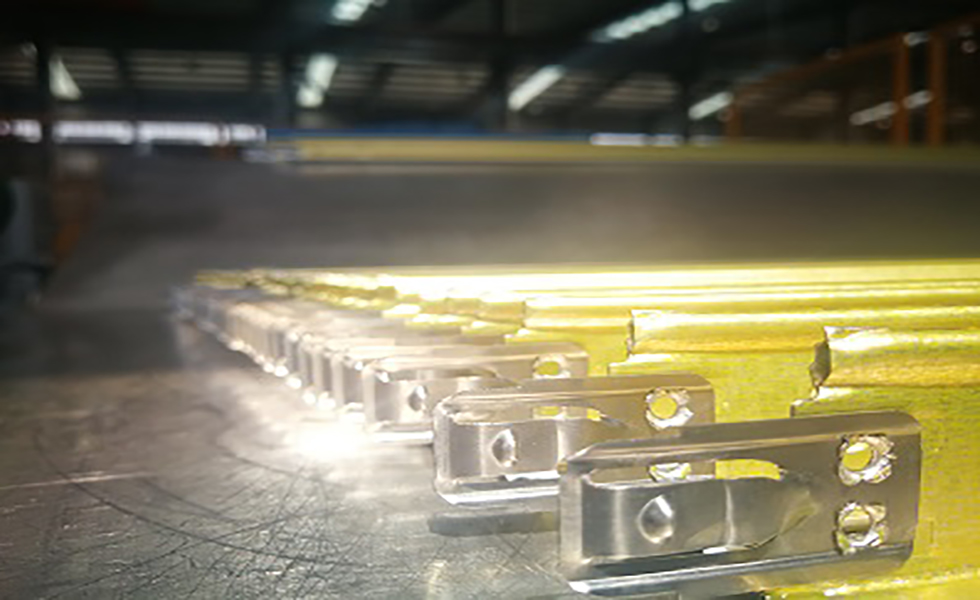 Alloy Hook Cross T-Bar Roll Forming MachineThis specialized machine forms cross tees with integrated alloy hooks for ceiling suspension systems. With high automation and rapid production, it suits high-volume manufacturing and has been installed and accepted in recent years.View Product →
In a combined line, the punching program must be reset when switching from main to cross tee. Modern CNC controls store recipes for each profile so operators can change over quickly.
The choice between a dedicated line and a combined line depends on your order mix. If you mainly produce one standard main tee and one cross tee in high volume, two dedicated lines can maximize output. If you frequently change sizes and types, a combined line with quick changeover helps reduce inventory and floor space.
For speculative production, a machine that can run both profiles on the same coil is very attractive. Some producers also need special main tee variants such as the UT/FUT/UDT series, which have different web heights and slot arrangements. These profiles can be handled with dedicated tooling sets on the same base machine.
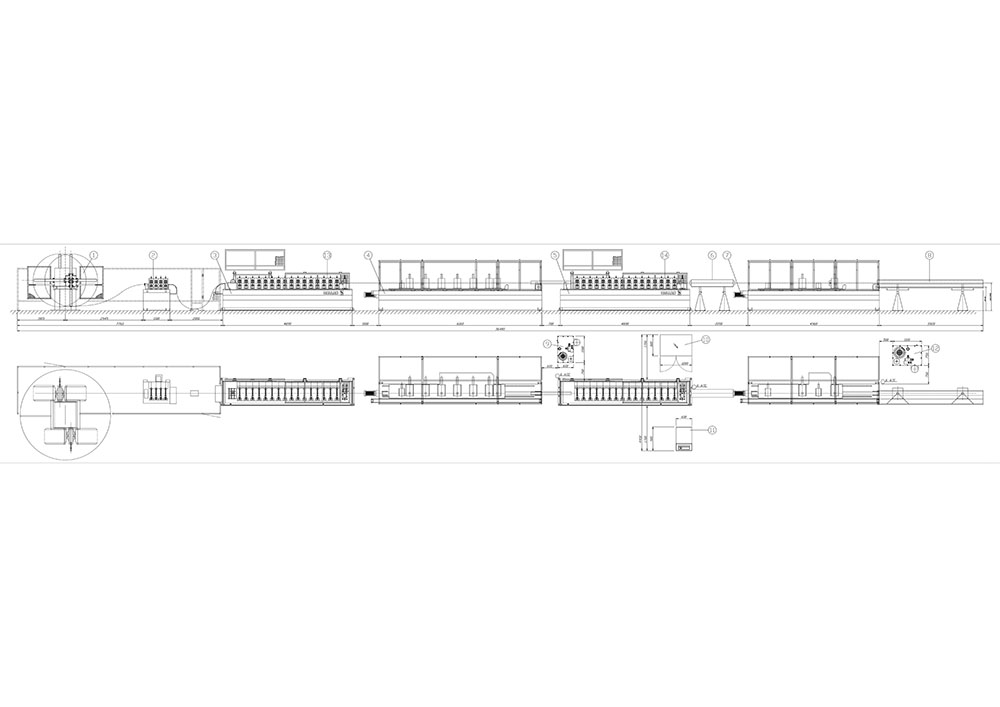 UT FUT UDT Ceiling T-Grid Bar Roll Forming MachineThis machine can produce UT, FUT, and UDT main and cross profiles using dedicated tooling sets on the same base. It addresses multiple web heights and slot arrangements, ideal for speculative production needs.View Product →
Even with good tooling, T-grid production can face defects. Common issues include uneven flange width, burred holes, twisting after cut-off, and inconsistent end tabs. Most problems can be traced to worn rolls, improper punch clearance, or incorrect alignment between the roll former and the punching station.
Use quality checks at the start of each shift and after every tool change. Measure the flange width, check slot pitch, and test how a sample cross tee locks into a main tee.
When evaluating a T-grid roll former, consider the profile range you need to produce, the expected run length, and the available floor space. Ask the supplier for the forming speed, punching cycle time, and changeover time. For specialized products such as hook cross tees or UT/FUT/UDT main tees, confirm that the machine is designed with the necessary stations.
You can also review recent ceiling T-grid project references to see how manufacturers have configured complete lines. For a deeper comparison of machine specifications, a complete buyer's guide can help you shortlist suppliers.
Yes, a combined main-and-cross T-bar roll forming machine can produce both profiles with cassette tooling and programmable punching. The line changes over by swapping the forming rolls and updating the punching recipe in the CNC control system.
Main tee and cross tee production require different tooling and punching setups because the final profiles serve different structural purposes. Understanding these differences helps you select the right line, reduce changeover time, and avoid quality problems. Whether you need a dedicated line or a flexible combined machine, the key is to match the tooling architecture and punching control system to the actual mix of profiles you plan to make.
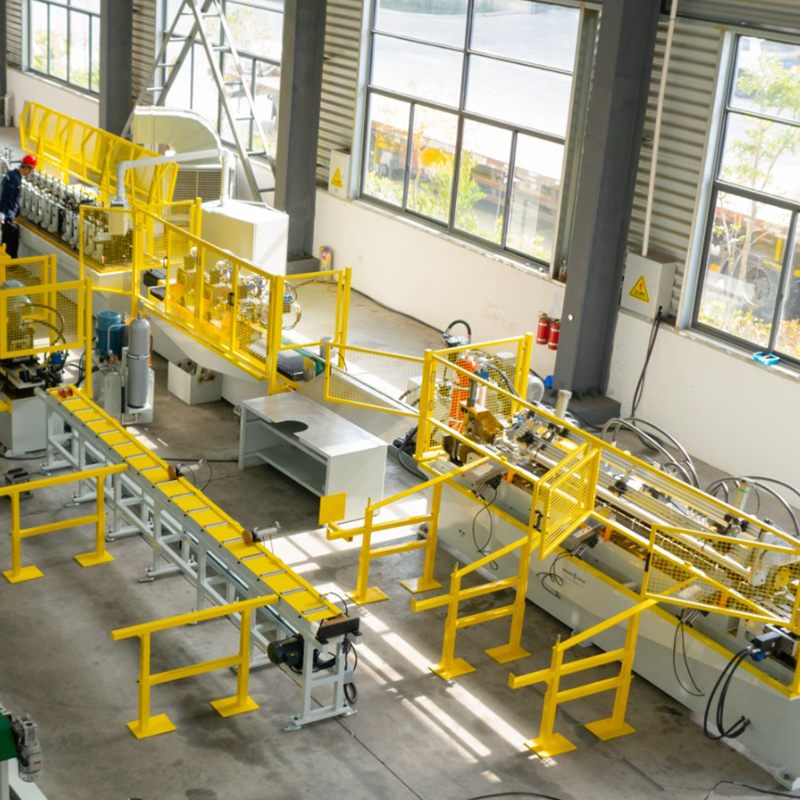
Double-head pre-painted steel hydraulic expanding/contracting uncoiler, double-head galvanized steel expanding/contracting uncoiler, pre-painted steel storage bracket, belt reduction. The 5-...
See Details
wide material single decoiler Leveling machine and Machine for punching small holes on both sides All the upper and lower rollers are connected to a worm gear reducer.This makes the for...
See Details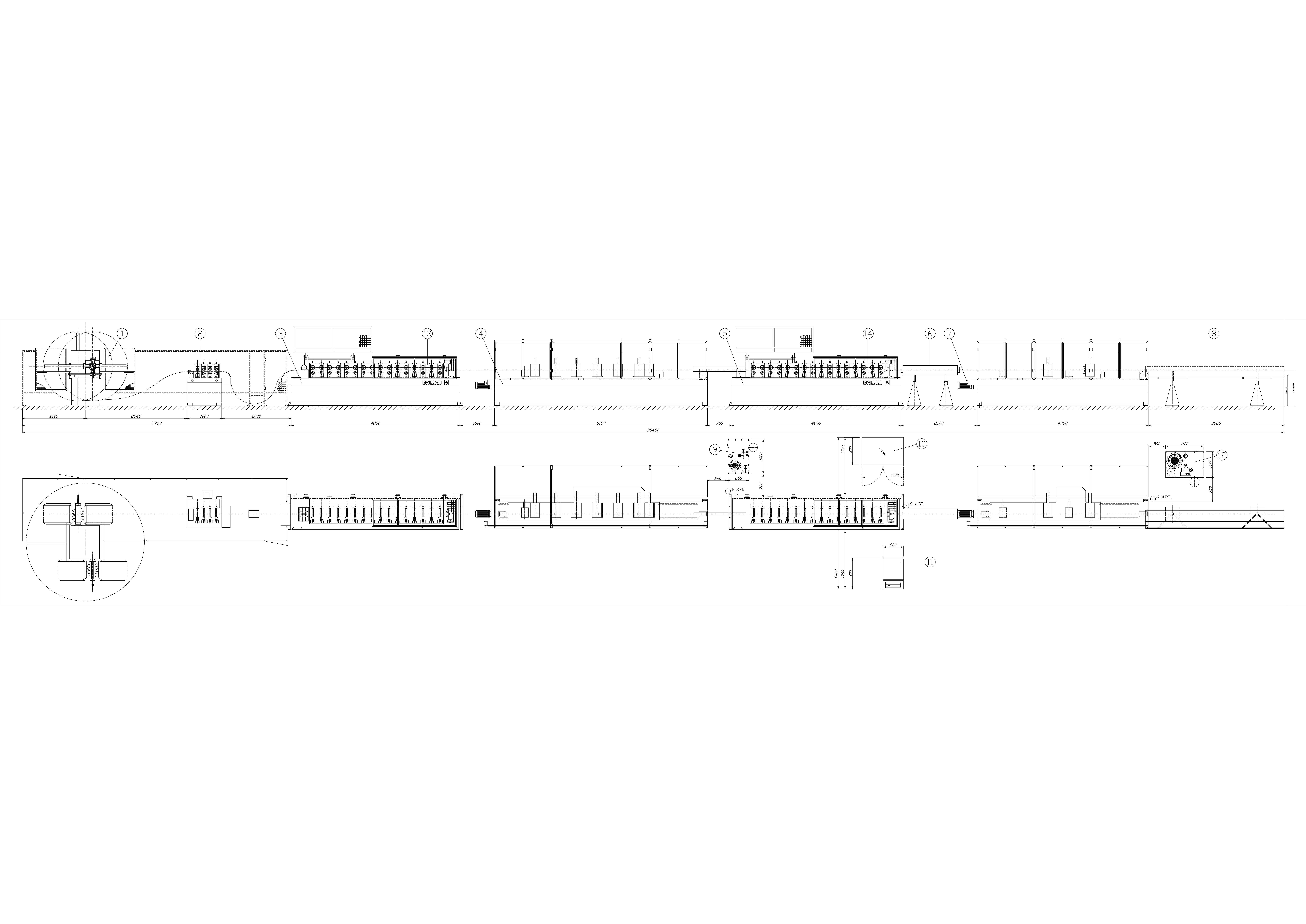
UT FUT UDT ceiling T-grid bar roll forming machine main and cross layout (Main and Cross) UT ceiling T-grid profiles and (Main and Cross) FUT ceiling T-grid profiles can be produced in just ...
See Details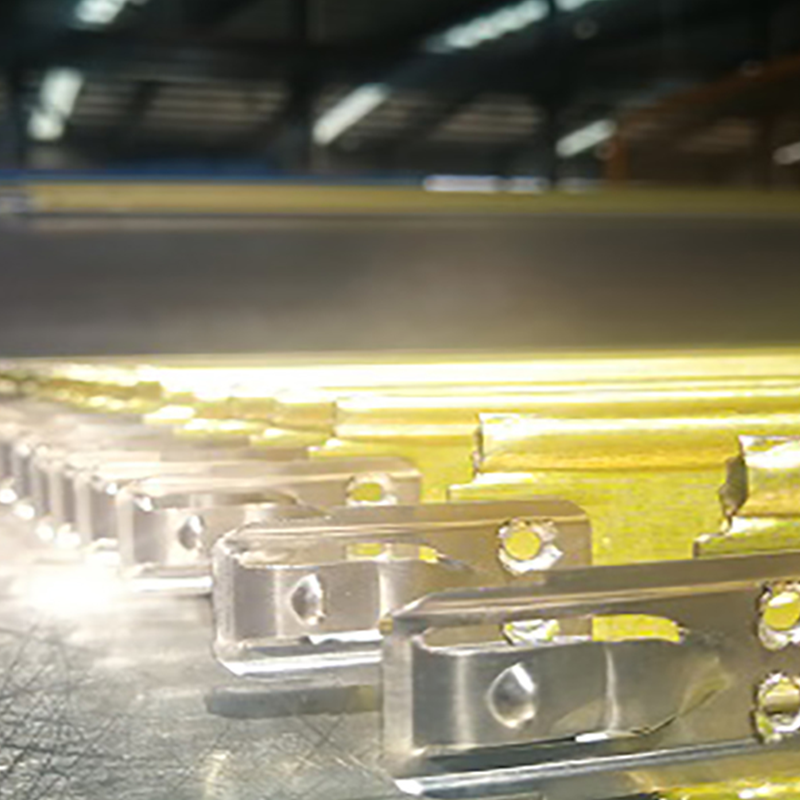
3.Alloy hook cross T-bar roll forming machine is a specialized piece of equipment engineered for producing T-shaped steel bars with integrated alloy hooks. These components are widely utiliz...
See Details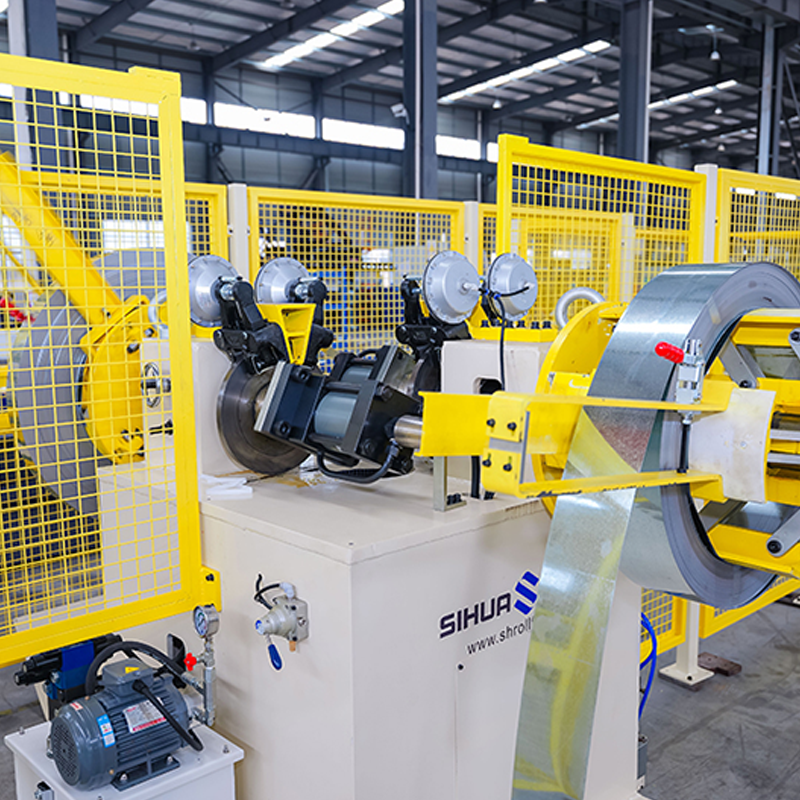
Automatic rotating double-head hydraulic decoiler with no-material detection, 5 tons per side. Laser power and welding length are adjustable to accommodate steel strips of various thicknesse...
See Details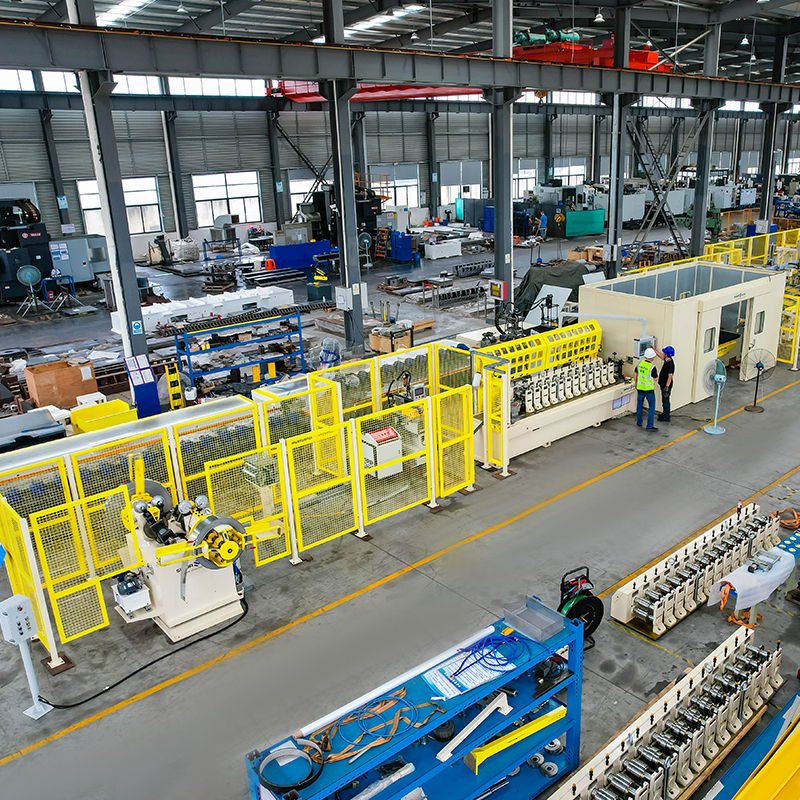
Automatic rotating double-head hydraulic decoiler with no-material detection, 5 tons per side. Quick-change cassette roll forming machine (changeover takes 30 minutes). Cutting without ...
See DetailsDon't hesitate to contact when you need us!
Contact Information
PRODUCTS
Mobile


 English
 Español
 русский