Content
Scaffold metal decking, commonly known as scaffold walkboard or metal deck board, is a structural component that supports workers and materials on temporary access systems. For manufacturers of these panels, the ability to combine anti-slip embossing, perforation, and edge folding in one continuous roll forming process is a decisive productivity advantage. A scaffold metal deck roll former with inline processing converts a plain steel coil directly into a finished, ready-to-use deck plank, eliminating separate handling steps, reducing labor costs, and improving dimensional consistency.
 Integrated Scaffold Metal Decking Roll Forming MachineThis machine combines embossing, punching, and edge folding in one continuous line, converting plain steel coil into finished scaffold deck planks with consistent dimensions and reduced labor.View Product →
Instead of sending pre-cut blanks to a hydraulic press for embossing and then to another machine for punching and folding, a modern integrated line performs all three operations at line speed. This article explains the core processes, main components, material considerations, and selection criteria for this specialized equipment, and it shows why inline processing has become the preferred production method for scaffold decking manufacturers.
A scaffold metal deck roll former is a roll forming line engineered specifically for producing metal walkboards and decking panels used in scaffolding systems and industrial access platforms. The base machine performs cold roll forming to shape a flat metal coil into a decking profile with longitudinal ribs and defined edge geometry. In its inline configuration, the line also integrates three additional stations: anti-slip embossing, perforation, and edge folding.
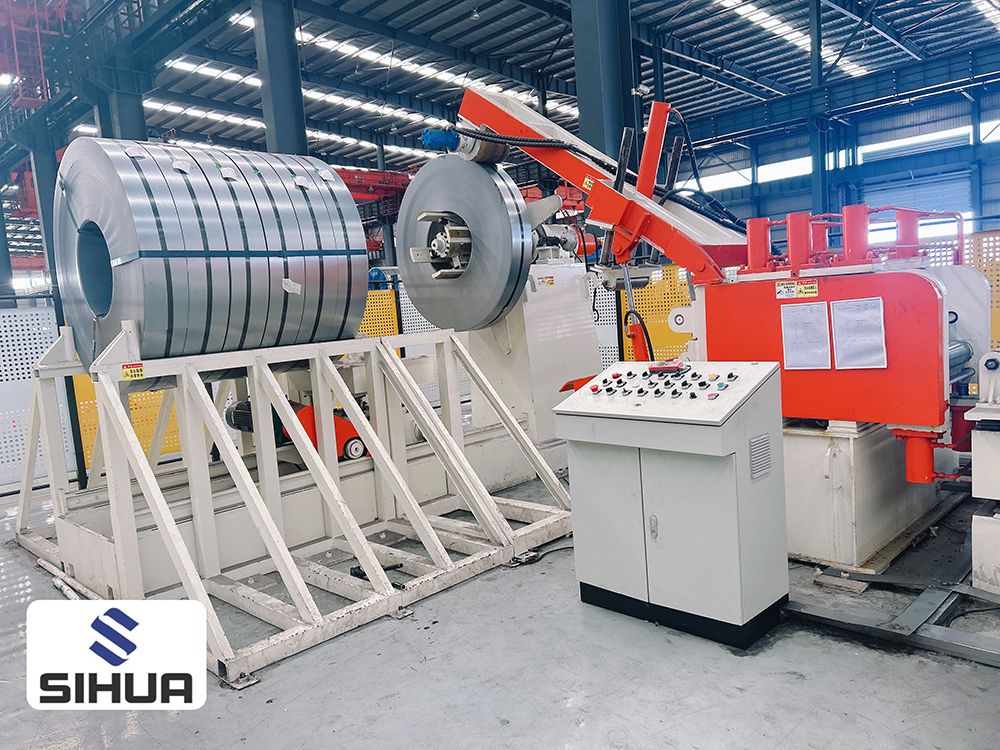
The process flow is straightforward. A decoiler feeds the coil into a leveler, which flattens the strip and controls its tension. The strip then passes through a sequence of roll stations where the profile gradually takes shape. At a designated point in the line, a patterned roller embosses the walking surface to create durable anti-slip texture. A servo-driven punching unit then cuts hole patterns for drainage, fixing, or weight reduction. Near the end of the line, folding rollers close the side edges to produce a safe, stiff border. Finally, a flying die cuts the profile to a specified length.
Anti-slip embossing is one of the most important operations in scaffold decking production, because the walking surface must remain safe even when exposed to rain, oil, or construction dust. Instead of applying a coating or attaching a separate anti-slip plate, inline embossing uses hardened rollers to press a three-dimensional texture directly into the steel surface.
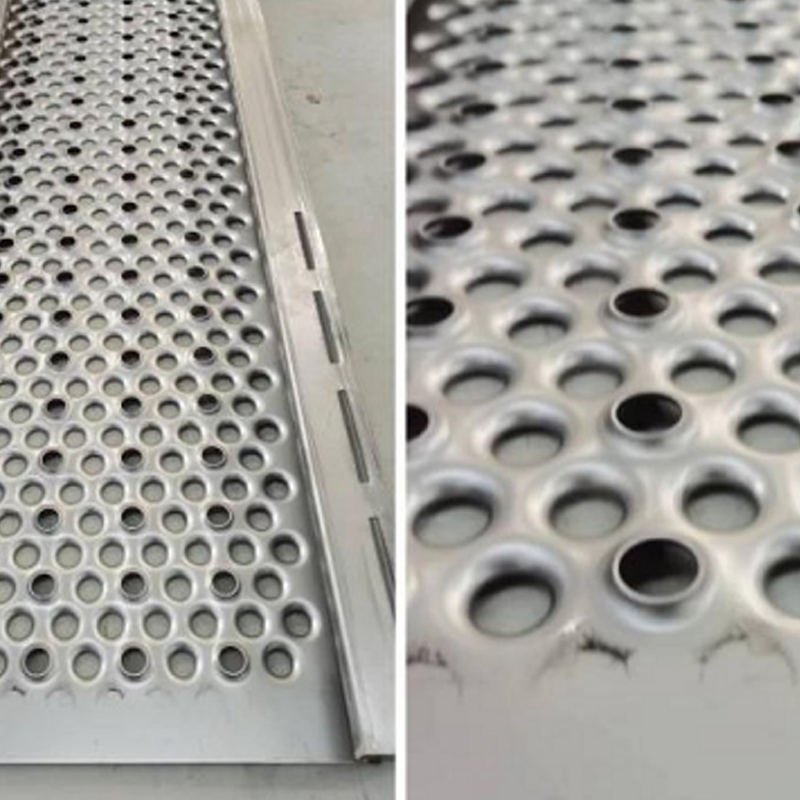
Common embossing patterns include diamond, teardrop, and chevron shapes. The choice of pattern affects both the coefficient of friction and the structural stiffness of the panel. Embossing depth is typically controlled between 0.3 and 1.0 mm, depending on material thickness and the safety requirements of the target market. Because the embossing rolls are integrated into the line, the texture is applied before the profile is fully closed, which reduces springback and ensures the pattern remains uniform along the entire length of the board.
Compared with post-process embossing on a separate press, inline embossing lowers cycle time, avoids re-positioning errors, and minimizes damage to pre-cut edges. It also makes the production line more compact and easier to automate.
Perforation serves several purposes in scaffold decking: round holes allow water and debris to pass through the walkboard; elongated slots can be used for fixing the board to scaffold tubes; and patterned perforations reduce the weight of the panel without compromising its load capacity. An inline punching station performs these tasks while the strip is still moving, using servo-driven punches that can be reprogrammed between batches.
Servo punching technology is particularly valuable in this application because it offers high repeatability, low noise, and flexible hole pattern changes. A good example of this capability is the servo punching unit developed for photovoltaic bracket lines, where the same principle is used to punch holes at precise intervals during high-speed roll forming. The technique has been well documented in the industry: for a deeper look at how servo punching works and where it can be applied, read our overview of the 8-axis servo punching machine: how it works, key features, and applications.
 8-Axis Servo Punching Machine for PV Bracket ProfilesThis servo-driven punching unit delivers high repeatability and flexible hole patterns synchronized with line speed, making it ideal for precise perforation in scaffold decking and solar bracket production.View Product →
By integrating the punching station into the scaffold deck roll former, manufacturers avoid the cost and labor of a separate punching step. Hole position is synchronized with line speed, so every board receives identical spacing, which is critical for fast installation on site.
The edges of a scaffold metal deck are not simply trim details. They determine how the board interlocks with the scaffold frame, how much weight the panel can carry, and how safely workers can handle it. Inline edge folding presses the longitudinal edges of the profile into a defined geometry, such as a single bent flange, a hemmed double fold, or a closed box edge.
A hemmed edge, for example, creates a smooth rounded border that prevents lacerations and reduces stress concentration at the edge. A deeper folded side wall increases the section modulus of the deck, improving resistance to bending under load. The folding station also aligns the edge geometry with the embossed surface so that the overall profile remains flat and dimensionally stable after cutting.
Once the decking is cut to length, the finished boards can be sent directly to an automatic packing station for bundling.
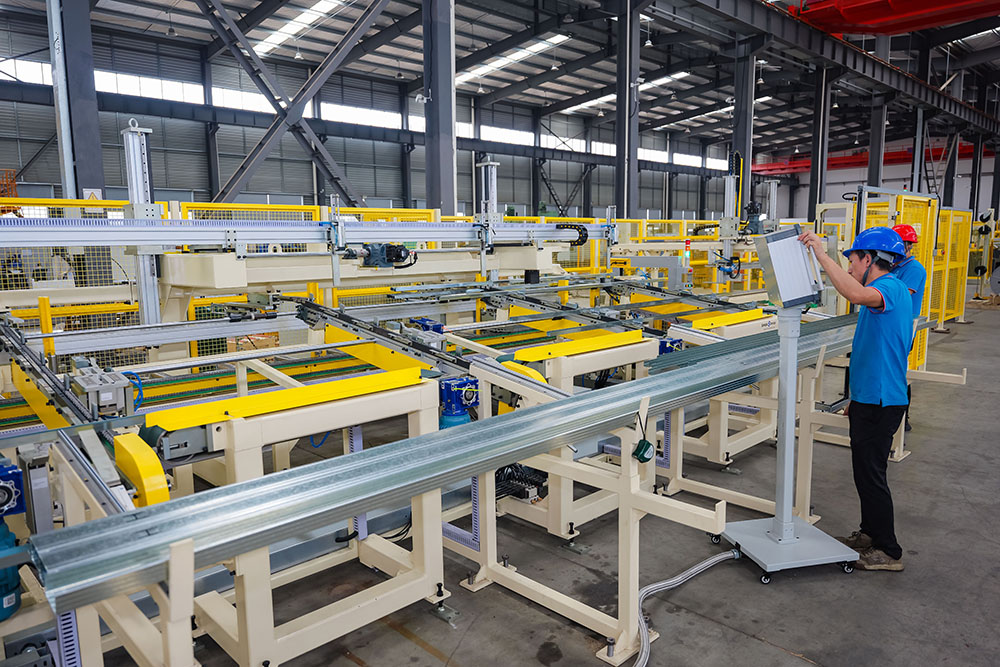 Automatic Profile Packing Machine for Bundling Deck BoardsThis packing system automatically flips, bundles, and palletizes finished metal profiles, streamlining the end of the production line and preparing scaffold deck boards for shipment efficiently.View Product →
A complete scaffold metal deck roll former with inline processing consists of several coordinated modules. Understanding each component helps buyers compare equipment configurations and avoid unnecessary costs.
Optional downstream equipment includes automatic stacking tables, weighing stations, and profile packing machines. The more integrated the line, the fewer manual operations remain between coil input and finished bundle output.
Scaffold decking profiles vary by regional standard and application, so most roll formers are designed for a specific range of material widths, thicknesses, and profiles. Typical values for a mid-size inline line are listed below.
| Parameter | Typical Range |
|---|---|
| Material | Galvanized steel, mild steel, stainless steel |
| Strip thickness | 1.2 to 2.5 mm |
| Strip width | 300 to 600 mm |
| Line speed | 8 to 15 m/min |
| Embossing depth | 0.3 to 1.0 mm |
| Punching precision | ±0.3 mm |
| Cutting length accuracy | ±1.0 mm |
Selecting the right material is equally important. Galvanized steel is common for scaffold decking because of its corrosion resistance and good formability. Stainless steel is chosen for chemical plants and coastal sites where aggressive environments shorten the service life of ordinary steel. In every case, the roll former must be designed to handle the material's yield strength and springback behavior so that the finished profile holds its final shape.
Roll-formed scaffold metal decking appears in a wide range of construction and industrial environments. It is used as the standing surface on tube-and-coupler scaffolds, ringlock scaffolds, and frame scaffolds. The same profile is also adopted in permanent access platforms, catwalks, roof walkways, edge protection platforms, and formwork access platforms.
Inline processing makes the product easier to adapt to these different use cases. Embossed patterns improve slip resistance for rooftop maintenance workers; perforated drainage holes keep platforms dry in outdoor conditions; and strong folded edges protect workers when panels are lifted and carried by hand. For manufacturers, the ability to produce these variants on one line reduces inventory and shortens delivery time to site.
To see real examples of how roll forming equipment has been applied in production environments, you can review the project case studies collected from the company's installation base. These cases show how integrated decking lines are configured, commissioned, and operated in practice.
Selecting the right scaffold metal deck roll former requires a clear understanding of the product mix, target quality, and available floor space. The following points should be discussed with the supplier before ordering.
Pay special attention to the integration quality of the embossing and punching modules. These are the stations that distinguish an inline decking line from a standard roll former, and their design has a direct effect on production efficiency and product consistency.
Most lines are designed for strip thickness between 1.2 and 2.5 mm. The exact range depends on the profile geometry and the embossing depth required. Thicker material reduces the risk of the embossing pattern disappearing under high load but increases the required forming force.
When the stations are properly synchronized by the PLC and servo drives, they add very little cycle time. Line speed is usually limited by the forming profile and the cutoff unit rather than by the embossing or punching modules.
Requirements vary by country and end application. Common references include load testing standards for scaffold platforms and slip-resistance classifications that define the minimum friction level of the walking surface. Buyers should ask for test evidence that the embossing pattern meets the relevant market standard.
On a modern line with servo-driven stations and quick-release tooling, a complete roll set change can take from 30 minutes to a few hours, depending on the number of stations and the complexity of the edge folding section. Inline embossing and punching recipes can usually be recalled from the control system, which further reduces downtime.
Metal Scaffold decking roll forming machine Shaft diameter: 70–80 mm; scaffold decking length: 0.5–6 m; thickness: 1–2.5 mm. Equipment layout diagram.We welcome you to send us your factory's...
See Details
wide material single decoiler Leveling machine and Machine for punching small holes on both sides All the upper and lower rollers are connected to a worm gear reducer.This makes the for...
See Details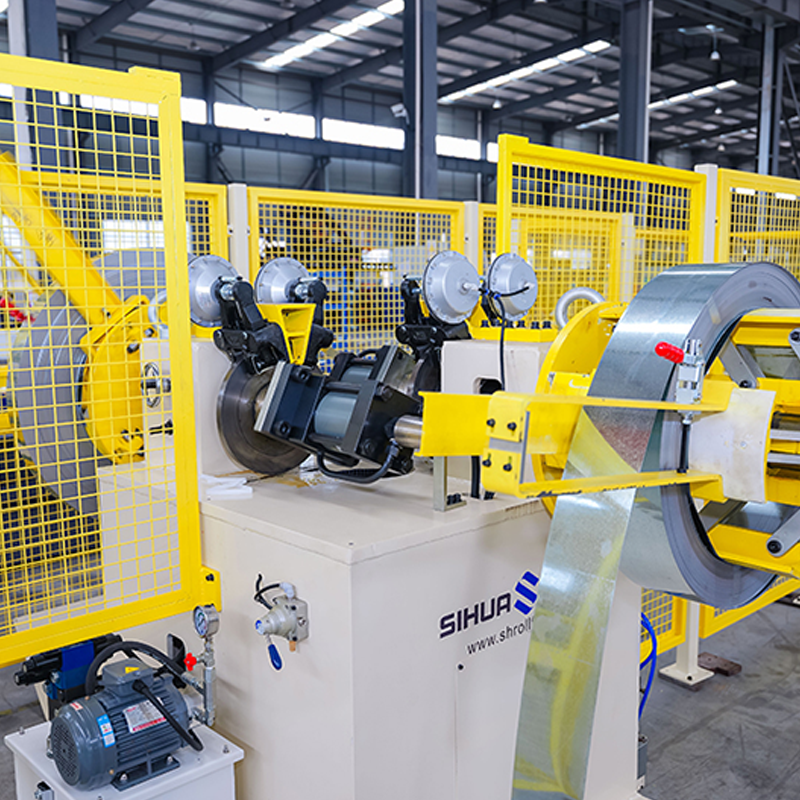
Automatic rotating double-head hydraulic decoiler with no-material detection, 5 tons per side. Laser power and welding length are adjustable to accommodate steel strips of various thicknesse...
See Details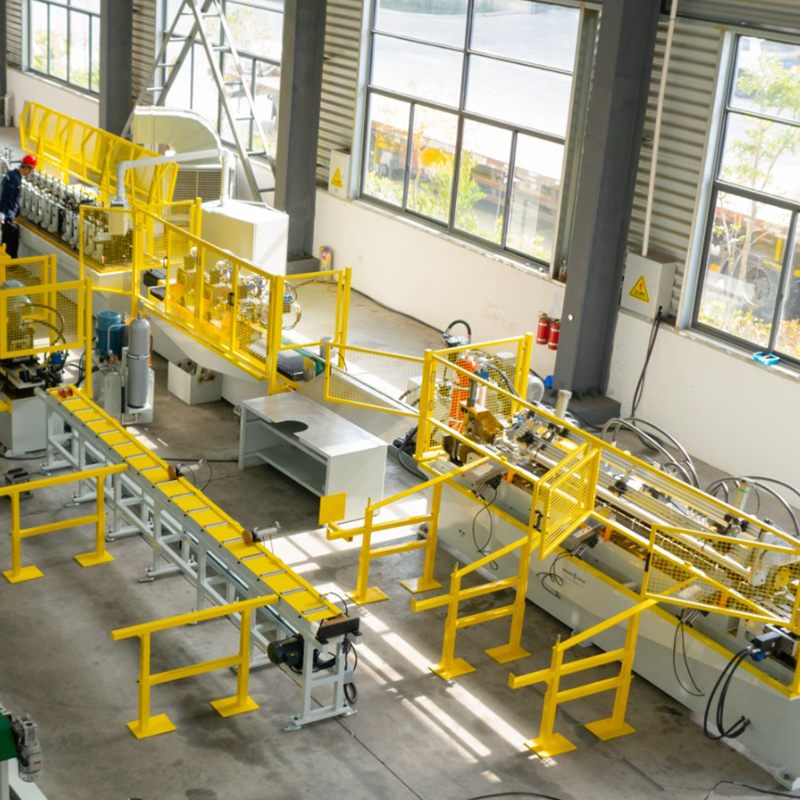
Double-head pre-painted steel hydraulic expanding/contracting uncoiler, double-head galvanized steel expanding/contracting uncoiler, pre-painted steel storage bracket, belt reduction. The 5-...
See Details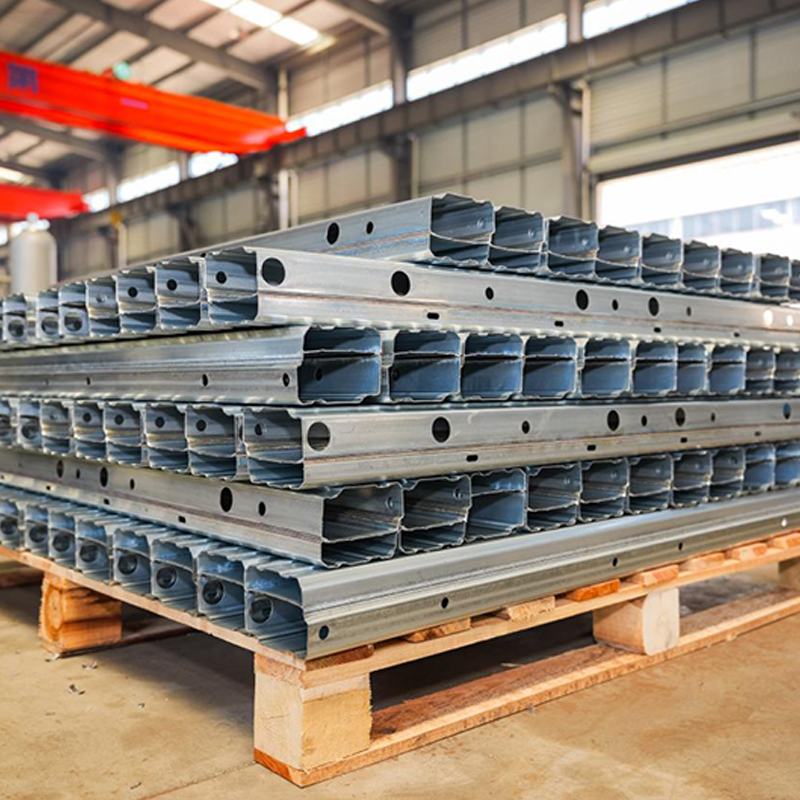
The production line for vehicle B-profile automotive chassis reinforcement beams involves several key processes to ensure High-strength, precision, and durability for vehicle applications. Key e...
See Details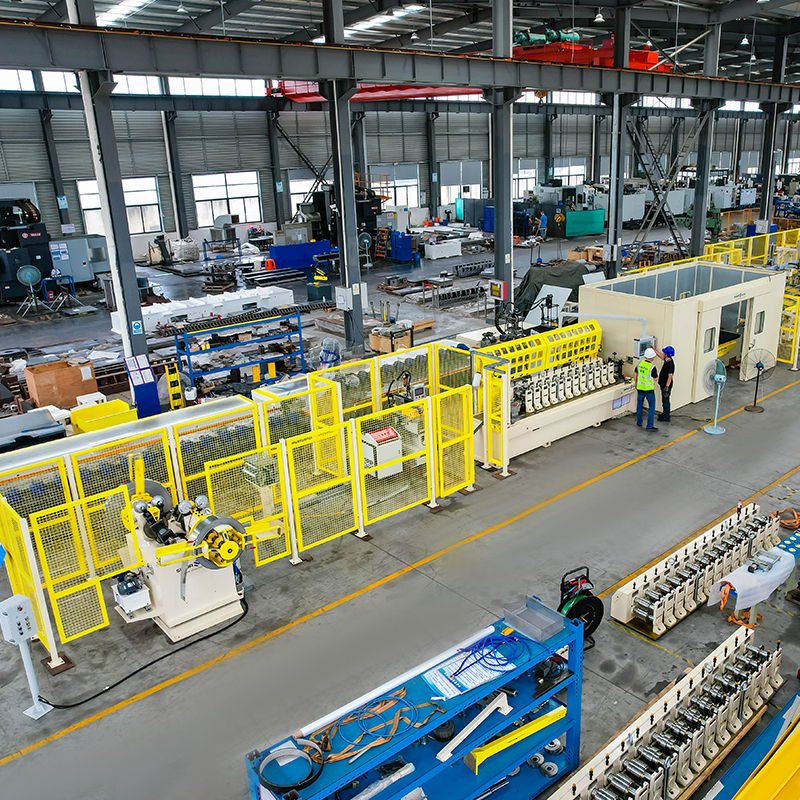
Automatic rotating double-head hydraulic decoiler with no-material detection, 5 tons per side. Quick-change cassette roll forming machine (changeover takes 30 minutes). Cutting without ...
See DetailsDon't hesitate to contact when you need us!
Contact Information
PRODUCTS
Mobile


 English
 Español
 русский