Content
An 8-axis servo punching machine is a CNC-controlled metal punching system in which eight independent servo-driven axes coordinate simultaneously to position, feed, index, and punch sheet metal or strip material with high precision. Each axis is driven by a dedicated servo motor paired with a closed-loop encoder, which continuously feeds position data back to the CNC controller — enabling real-time correction and holding positional accuracy typically within ±0.01 mm.
The designation "8-axis" distinguishes these machines from simpler 2- or 4-axis punching centers. In a standard configuration, the eight axes typically cover: X-axis (horizontal material feed), Y-axis (lateral positioning), Z-axis (punch ram stroke), A-axis (turret or die indexing), B-axis (material clamp or gripper), C-axis (sheet rotation or angular positioning), and two additional axes allocated to secondary feeding mechanisms, in-process gauging, or automated tool change functions depending on the machine's specific design.
This multi-axis architecture makes 8-axis servo punching machines the equipment of choice for complex progressive stamping, precision terminal manufacturing, connector production, and high-speed punching of profiles that require simultaneous multi-directional movement — tasks that single- or dual-axis machines cannot accomplish in a single pass.
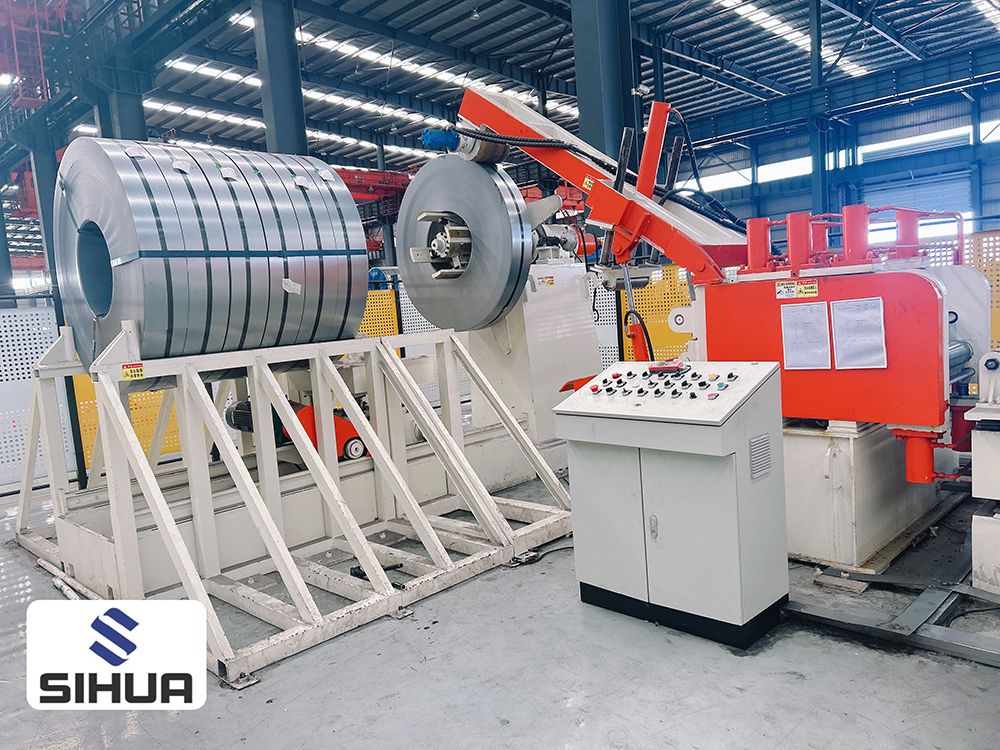
The core advantage of servo-driven punching over conventional hydraulic or mechanical eccentric-press punching lies in programmable, variable-profile ram motion. In a mechanical punch press, the ram follows a fixed sinusoidal stroke profile dictated by the crankshaft geometry — the punch accelerates through the full stroke regardless of whether that speed profile is optimal for the material or tooling. A servo punch press replaces the fixed crankshaft drive with a servo motor (directly or via a ball screw or eccentric mechanism), allowing the CNC to define a custom velocity profile for every stroke.
In practice, this means the machine can execute a slow, controlled approach at entry and breakthrough to reduce burr formation and tool wear, then accelerate through the return stroke to maximize throughput. For materials prone to springback — high-strength steel, stainless, or thick aluminum — a dwell or pressure hold at bottom dead center can be programmed to improve hole geometry without additional secondary operations.
The closed-loop feedback architecture of all eight axes means that if any axis deviates from its commanded position — due to mechanical load, thermal expansion, or backlash — the controller detects the error within microseconds and issues a correction. This is fundamentally different from open-loop stepper-driven machines, where positional errors accumulate undetected over the course of a production run.
Specifications vary by manufacturer and application focus, but the following parameters define the performance envelope of a typical 8-axis servo punching machine in the precision terminal and connector segment:
| Parameter | Typical Range |
|---|---|
| Number of controlled axes | 8 (fully servo-driven, closed-loop) |
| Punching force | 5–30 kN (varies by frame class) |
| Stroke rate (SPM) | 200–800 strokes per minute |
| Positional accuracy | ±0.01 mm or better |
| Feed pitch range | 0.1–300 mm (programmable per step) |
| Material thickness range | 0.05–3.0 mm (material-dependent) |
| Strip width capacity | Up to 200–300 mm (model-dependent) |
| CNC system | Proprietary or Siemens/FANUC-based |
The stroke rate figure deserves particular attention. At 800 SPM with ±0.01 mm positional accuracy maintained across all eight axes simultaneously, the machine's motion controller must execute interpolated position commands at update rates of 1 kHz or higher. This requires a high-speed real-time control bus (typically EtherCAT or SERCOS III) between the CNC and the servo drives to eliminate communication latency that would otherwise cause inter-axis synchronization errors.
The number of controlled axes directly determines the complexity of parts a punching machine can produce in a single uninterrupted run. Understanding what each additional axis adds helps clarify when an 8-axis configuration is justified over simpler alternatives.
The ROI argument for an 8-axis machine hinges on setup time elimination and scrap reduction. Parts that would require two or three separate setups on a 4-axis machine can be completed in one uninterrupted program on an 8-axis machine. For production runs of precision electrical terminals, automotive connectors, and lead frames — where tolerances are tight and material costs are high — the reduction in inter-operation handling damage and setup-induced variability can justify the higher capital cost within 12–24 months of production volume.
8-axis servo punching machines are deployed across a specific subset of manufacturing sectors where part complexity, material cost, and tolerance requirements converge to demand their capabilities.
This is the dominant application segment globally. Electrical terminals — the stamped metal contacts inside connectors used in automotive wiring harnesses, consumer electronics, and industrial control panels — require punching, bending, and coining operations at pitches as small as 0.5 mm, with hole-to-hole positional tolerances of ±0.02 mm or tighter. 8-axis servo punching machines with progressive die tooling produce these parts at rates of 400–800 SPM while maintaining the geometric consistency required by IEC and automotive connector standards (USCAR, LV214).
Semiconductor lead frames — the copper alloy structures that mechanically support and electrically connect IC chips to their packages — are among the most demanding applications for precision punching. Feature dimensions are measured in tenths of a millimeter, materials are expensive copper alloys (C194, C197), and scrap rates must be kept below 0.5% to maintain profitability. The multi-axis synchronization of 8-axis servo machines, combined with in-process vision inspection integration, makes them the standard platform for lead frame production lines.
Thin-gauge automotive stampings — bracket clips, sensor housings, relay contacts, and fuse components — benefit from the servo machine's ability to program variable punch depth and dwell profiles optimized for high-strength steel grades (DP600, DP800) that are increasingly specified for lightweighting. The 8-axis configuration's angular positioning capability also enables punching of slots and patterns at compound angles that would otherwise require secondary laser cutting or milling.
Surgical instrument components, implantable device contacts, and diagnostic equipment stamped parts require burr-free, radius-controlled edges that servo punch machines with optimized stroke profiles can deliver consistently. The cleanroom-compatible variants of these machines — sealed enclosures, filtered exhaust, lubricant-free tooling zones — are specifically designed for ISO Class 7/8 medical manufacturing environments.
The precision of the machine is only as good as the tooling it carries. 8-axis servo punching machines impose specific tooling requirements that differ from conventional press tooling.
Tool steel specification: At 400–800 SPM with servo-controlled approach velocities, punches and dies experience a high number of impact cycles per hour. Powder metallurgy high-speed steel (PM-HSS, e.g. ASP2053 or HAP40) or cemented carbide (WC-Co) tooling is standard. Conventional D2 or M2 tool steel wears unacceptably fast at these cycle rates on hard or abrasive materials.
Clearance specification: Punch-to-die clearance must be tighter on servo machines than on mechanical presses because the controlled, low-velocity approach at breakthrough produces different shear mechanics. For copper and brass materials up to 0.5 mm, clearances of 3–5% of material thickness per side are typical. For harder stainless or spring steel, 6–8% per side prevents excessive tool loading.
Turret-compatible tooling systems: On 8-axis machines equipped with automatic turret indexing, tooling must conform to the machine's quick-change mounting standard. Misfitting a tool cartridge in a high-speed turret index cycle causes catastrophic tooling and machine damage. Most manufacturers supply dedicated tooling sets with precision-ground shanks and retention systems matched to the turret's geometry.
Programming an 8-axis servo punching machine requires a CNC environment that can handle simultaneous multi-axis interpolation, programmable stroke profiles, and conditional branching for in-process quality checks — capabilities that exceed what standard G-code alone can provide.
Most 8-axis punching machine manufacturers supply a proprietary graphical programming interface that abstracts the underlying axis commands into punch pattern editors, pitch tables, and tool assignment screens. A production engineer enters the part geometry (hole locations, pitch sequence, angular features), selects tooling from the machine's tool library, and defines the strip layout — the software then generates the optimized axis motion program automatically.
For integration into broader Industry 4.0 manufacturing architectures, modern 8-axis servo punching machines support:
The service life of an 8-axis servo punching machine depends heavily on maintenance discipline. The servo motors and ball screws on all eight axes are the components most sensitive to contamination and inadequate lubrication.
Scheduled maintenance intervals for a machine running two shifts per day typically include:
With proper maintenance, the structural service life of the machine frame and drive system exceeds 15–20 years. Servo motors and drives are the components most likely to require replacement within that window — typically at 8–12 year intervals depending on operating environment and cycle utilization. The modular drive architecture of modern 8-axis machines means individual axis drives can be replaced without overhauling the entire system.
Capital equipment decisions for precision punching machines involve more variables than advertised specifications suggest. The following criteria form a practical evaluation framework for procurement teams.
1. Verify axis count against your actual part complexity. Not all machines marketed as "8-axis" use all eight axes simultaneously in production. Some configurations reserve axes for setup functions or auxiliary operations that activate infrequently. Request a live demonstration running a part representative of your actual production requirements — not a supplier-selected demonstration part.
2. Evaluate the CNC controller's interpolation capability. True 8-axis simultaneous interpolation requires a controller with sufficient processing headroom to compute all axis commands within a 1 ms or tighter cycle time. Ask for the controller's maximum interpolation cycle time specification and compare it across candidate machines.
3. Assess tooling ecosystem and supply chain. A machine that requires proprietary tooling sourced exclusively from the manufacturer creates a long-term supply dependency. Machines that accept industry-standard tooling systems (e.g., Trumpf-compatible or Amada-compatible punch holders) provide more flexibility for tooling procurement and reconditioning.
4. Quantify the total cost of ownership, not just purchase price. Servo drive replacement costs, local service availability, spare parts lead times, and programming software licensing fees all contribute meaningfully to 10-year ownership cost. A machine priced 15% lower than competitors may carry 30% higher maintenance costs if spare parts require international shipping.
5. Confirm integration compatibility with your existing production line. If the machine will feed an automatic stacking, taping, or assembly system downstream, verify that the machine's output I/O protocol (digital I/O, EtherCAT, Profinet) matches the receiving equipment's interface requirements before purchase.

wide material single decoiler Leveling machine and Machine for punching small holes on both sides All the upper and lower rollers are connected to a worm gear reducer.This makes the for...
See Details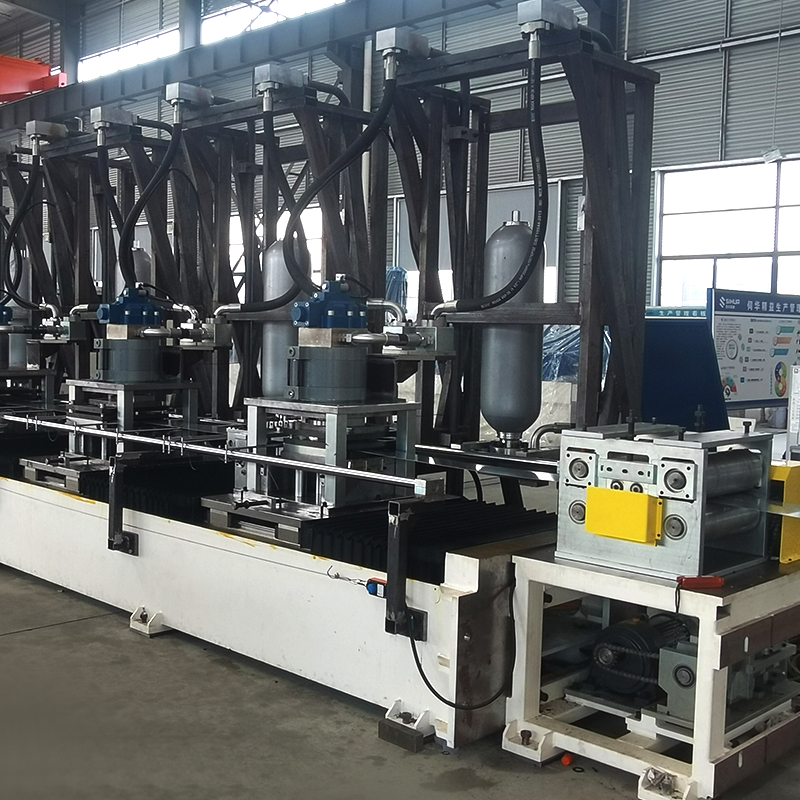
8-Axis servo punching solar PV bracket roll forming machine, flexible adjustment of punching position. Material decoiler with storage platform and robotic arm Feeder (to provide power f...
See Details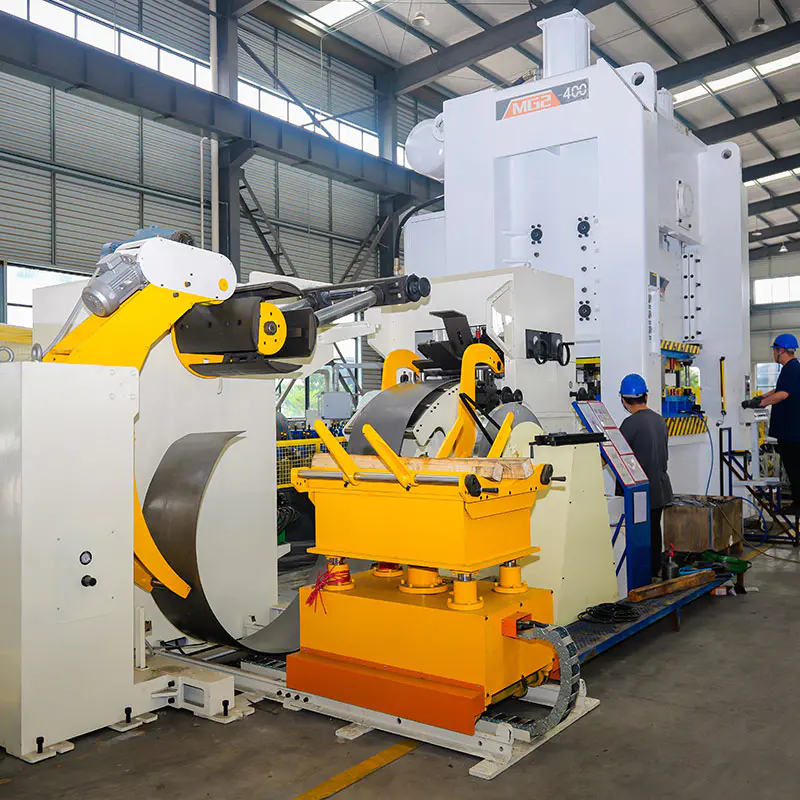
3-in-1 Decoiler Straightener Feeder System · 3-in-1 Decoiler Straightener Feeder capacity: 5 tons Hydraulic mandrel expansion Servo-driven straightening & feeding Synchronized signal wit...
See Details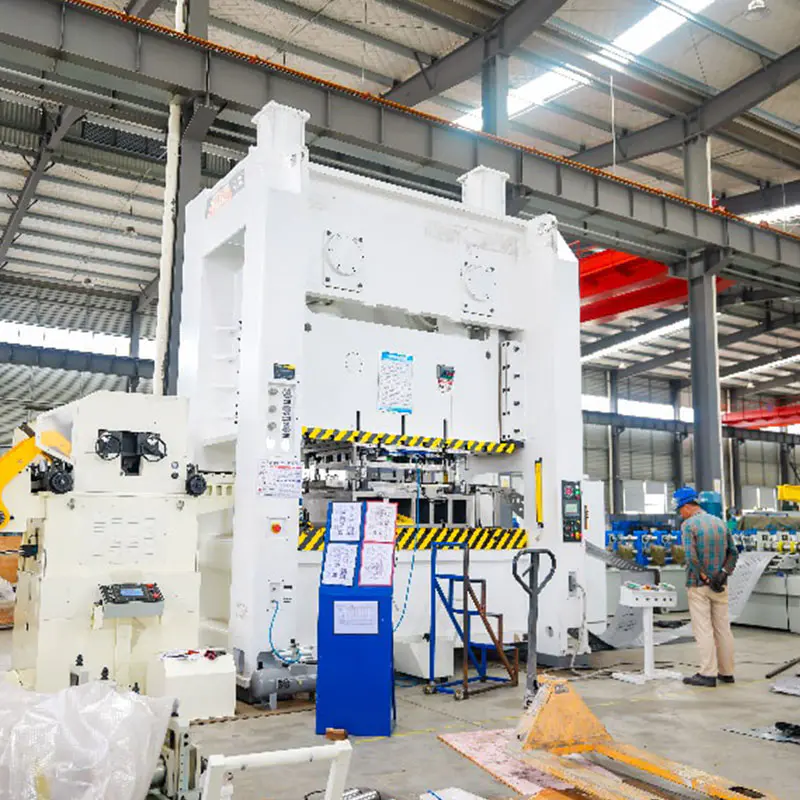
Decoiler System 3-in-1 Decoiler Straightener Feeder Capacity: 5 tons hydraulic coil mandrel expansion, servo feeding & straightening. Punching machine 400 Ton Power Press Capacity: ...
See Details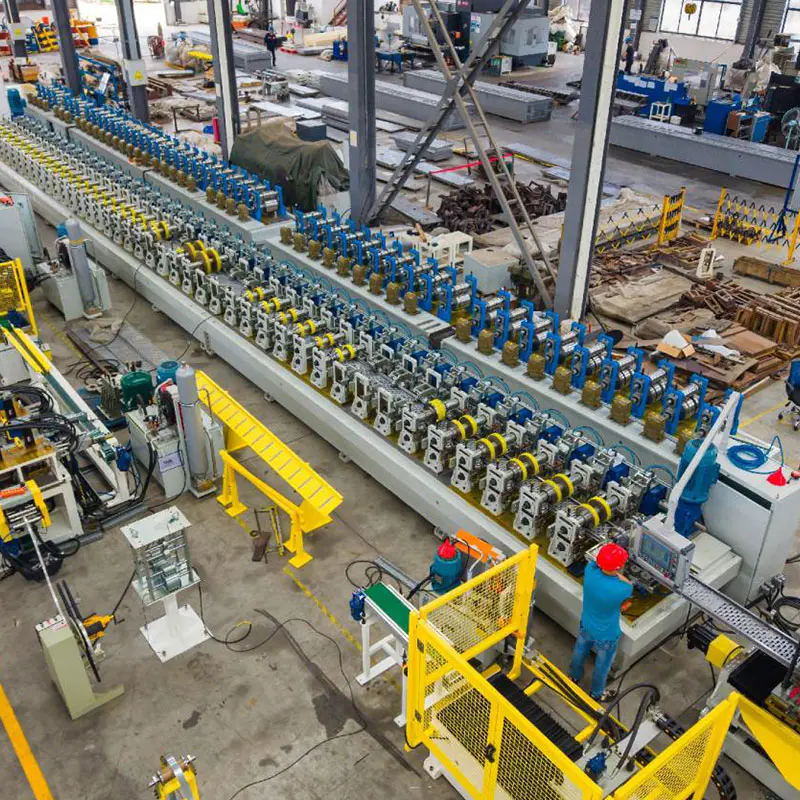
Decoiler System COMBI 3/1 decoiler lever and feeder Capacity: 3-8 tons high feeding accuracy, fully automatic operation, widely used for metal coil stamping Punch Press Unit Punching fo...
See Details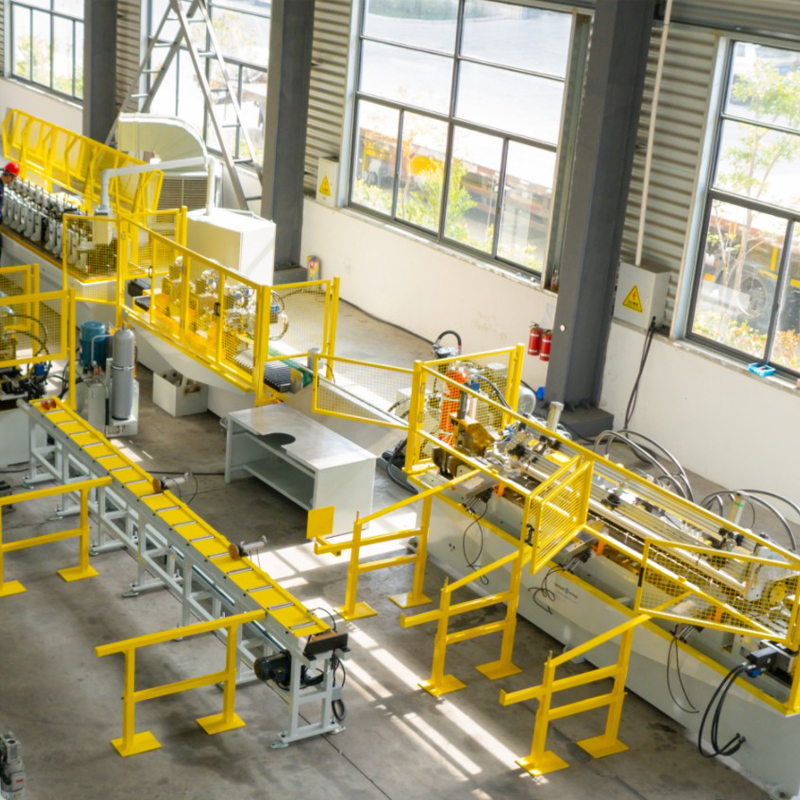
Strut cassette roll forming machine Single-head 3-ton decoiler Leveling machine(A leveling machine is required before using a punch press.) Yadon/Yangli 125-ton press machine (opti...
See DetailsDon't hesitate to contact when you need us!
Contact Information
PRODUCTS
Mobile


 English
 Español
 русский