Content
A metal fabricator taking on a purlin contract usually hits the same math: a press brake delivers one multi-bend part every 30 to 60 seconds, while the first order demands 8,000 identical lengths by the end of the month. A sheet metal roll former changes that calculation by forming continuously from coil at 15 to 50 m per minute, holding one cross-section across thousands of repetitions. This guide explains what the machine does, which profiles run fastest, and the four specifications that decide whether a line pays for itself.
A sheet metal roll former is a continuous forming machine that feeds coiled strip through a sequence of paired roller dies, each station adding a small angle change until the strip exits as a finished profile of constant cross-section.
Core definition Roll forming is the progressive bending of sheet metal through 8 to 24 matched roller stations; because each bend is created in small increments, the process avoids the surface marking and springback problems that appear in single-hit press brake work.
Every line contains five functional units:
The practical output is that one line replaces a press brake, a punch press, and two or three material handlers. The profile geometry, including the number of bend lines, depth, and flange width, decides the station count: allow one to three stations per bend line, with two as the common planning figure.
The correct sheet metal roll former is defined by the profile family it produces, because cross-section geometry sets station count, tooling cost, and realistic line speed. Commercially installed lines cluster into the five ranges shown below.
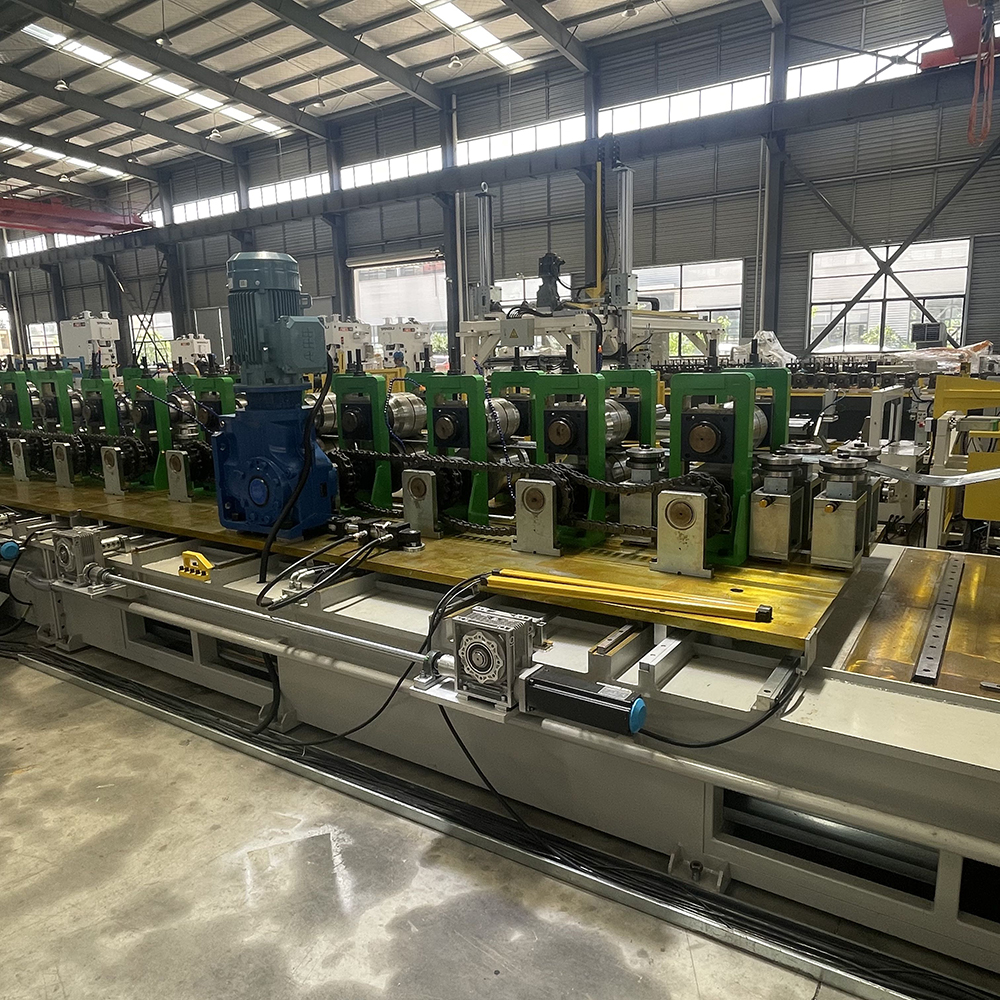 CUZ Sigma Roll Forming Machine with Automatic Width ChangeThis machine forms three CUZ and three CU-sigma profiles on one line, with an automatic width-change system and a 110 mm shaft, suiting high-mix profile production.View Product →
 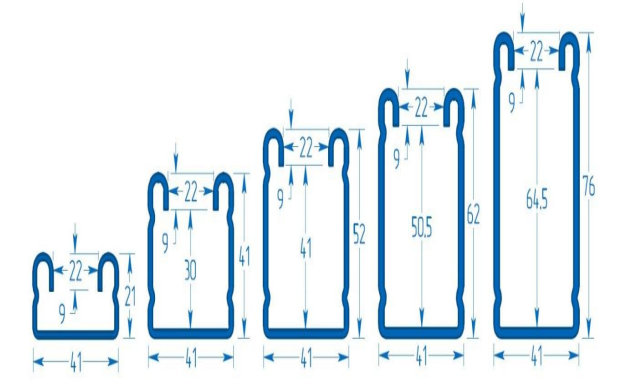 Strut Cassette Roll Forming Machine for 41-Series ProfilesThis cassette-type former handles 41×21 to 41×76 profiles by sharing a 20-station roller set and adding a 10-station cassette, built for high-strength SS304 strip.View Product →
Typical line speeds by profile family, in m/min
Ranges cover commercially common profile sizes; heavy-gauge or very deep profiles sit at the lower end of each band.
Choose a sheet metal roll former by evaluating four factors in order: material scope, profile geometry, line speed, and changeover method. Each one changes the machine price more than any optional feature on the quotation.
If incoming coils are wider than the strip width the profile actually needs, place a slitting machine or heavy-duty decoiler ahead of the former. That combination eliminates edge-trim waste on the forming line and keeps the machine fed with the exact coil width. Suppliers that build the full chain in one contract simplify spare-parts, commissioning, and warranty responsibility.
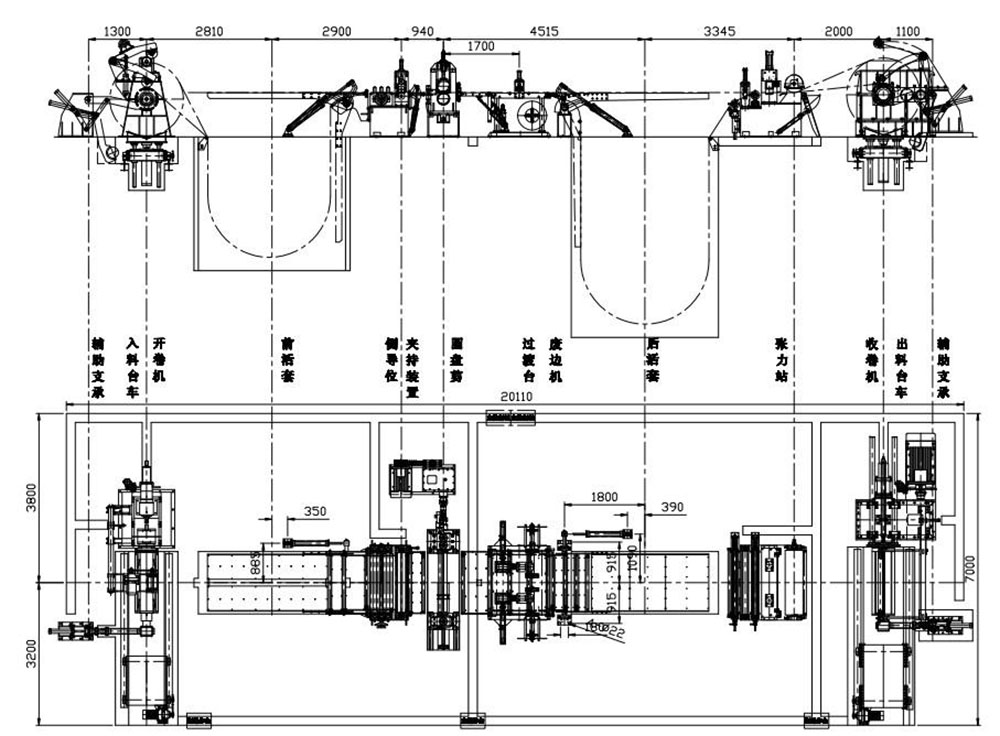 Slitting Machine for Precision Coil Width ControlThis slitting line cuts wide coils into the exact strip widths needed by the roll former, reducing edge-trim waste and simplifying coil feeding ahead of production.View Product →
Shanghai Sihua Precision Machinery Co., Ltd. is one manufacturer that supplies the chain from slitting and decoiling through roll forming, servo punching, and automatic packing; that scope matters when delivery dates and line integration sit on your side of the contract. Review the machine ranges and the supporting specifications before comparing quotes.
Roll forming wins for constant-cross-section parts in high volume; press braking wins for short runs and complex multi-axis bending; stamping wins only when the part is compact enough for a progressive die and volume justifies the tooling cost.
| Method | Typical shapes | Practical output | Tooling investment | Changeover time |
| Sheet metal roll former | Long, constant cross-section | 15-50 m/min | Moderate to high | 15-90 min |
| Press brake | Short brackets, low-volume sections | 1-4 parts/min for a 3-bend part | Low | 5-20 min |
| Stamping press | Compact parts with formed holes | 10-25 parts/min in a progressive die | Highest | 2-8 hours |
Put the profile on a roll former when the cross-section stays identical and projected volume sits above roughly 5,000 to 15,000 m per month, depending on local labor rates. Field results from installed lines confirm a 12 to 18 month payback at two-shift operation with 50 percent utilization; read the project case studies for verified numbers before you budget.
These are the questions plant managers ask most often before signing for a roll forming line.
Most single-purpose formers process 0.3 to 3.0 mm. Structural purlin and rack-upright systems with larger shafts and higher torque drives reach 4.0 to 6.0 mm, but tooling cost rises steeply above 3 mm because roll diameters and drive power both increase.
Allow one to three stations per bend line. A simple hat channel needs six to eight; a deep Sigma purlin can need fourteen to twenty. More stations tighten tolerance but lengthen the machine and raise the tooling budget.
Yes, through three routes: manual roll change with 60 to 120 minute setup, cassette quick change with 15 to 30 minute setup, or automatic width and height adjustment, which is common on drywall stud lines where the size changes constantly but the shape does not.
Compare the fully loaded cost of the current process, including operator labor, setup, scrap, and rework, against a coil-fed line running at projected utilization. A mid-size former working two shifts at 50 percent utilization typically pays back within 12 to 18 months for a constant-cross-section part.
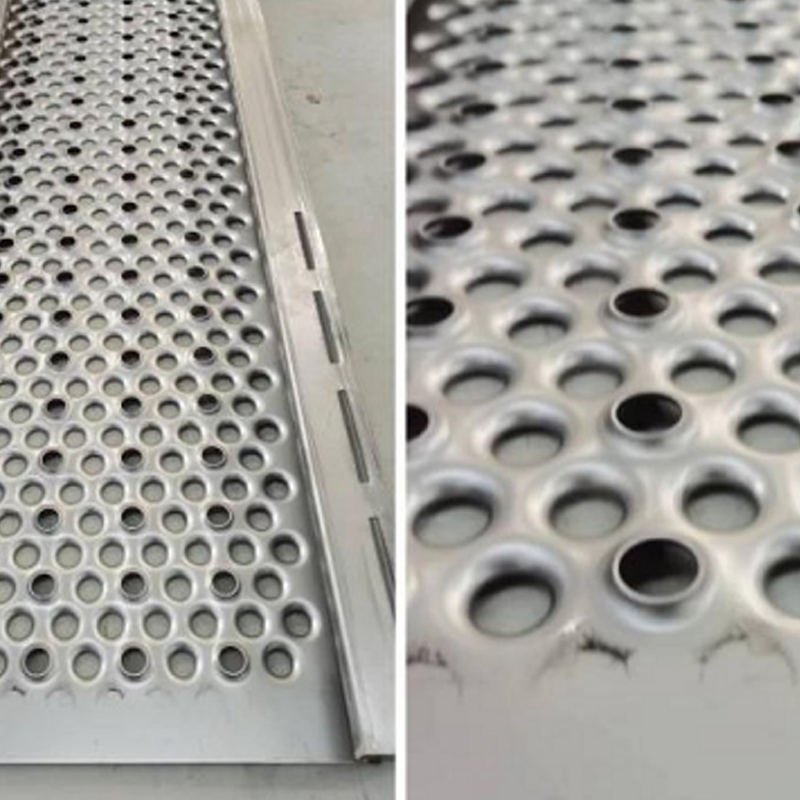
Metal Scaffold decking roll forming machine Shaft diameter: 70–80 mm; scaffold decking length: 0.5–6 m; thickness: 1–2.5 mm. Equipment layout diagram.We welcome you to send us your factory's...
See Details
wide material single decoiler Leveling machine and Machine for punching small holes on both sides All the upper and lower rollers are connected to a worm gear reducer.This makes the for...
See Details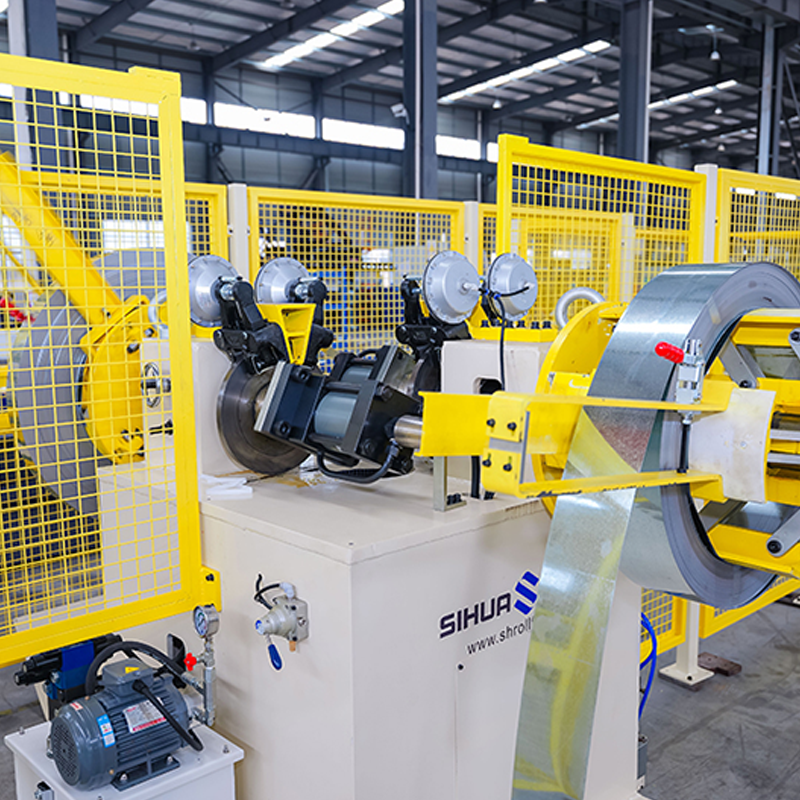
Automatic rotating double-head hydraulic decoiler with no-material detection, 5 tons per side. Laser power and welding length are adjustable to accommodate steel strips of various thicknesse...
See Details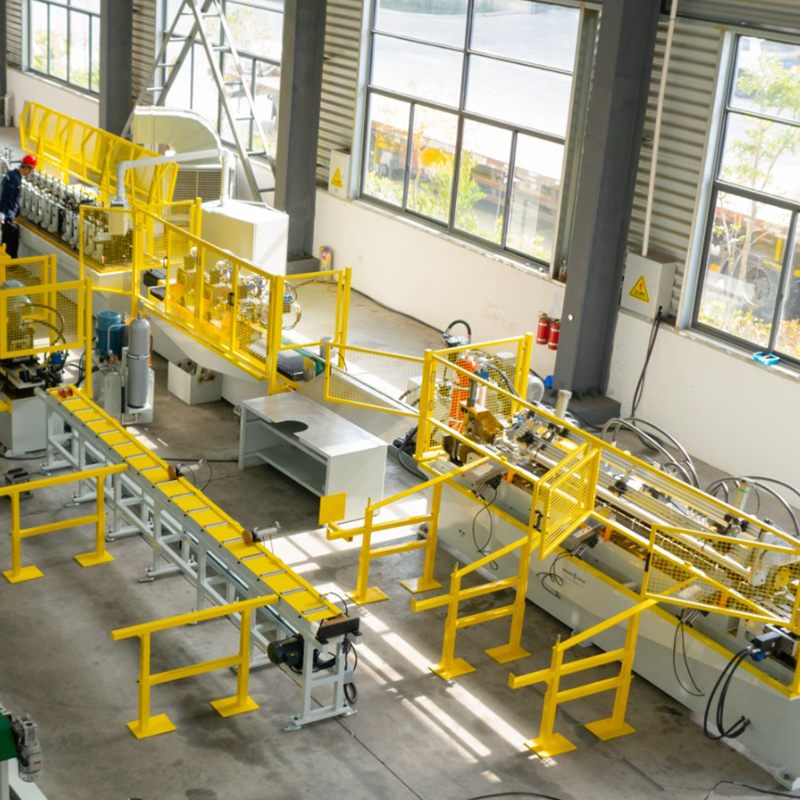
Double-head pre-painted steel hydraulic expanding/contracting uncoiler, double-head galvanized steel expanding/contracting uncoiler, pre-painted steel storage bracket, belt reduction. The 5-...
See Details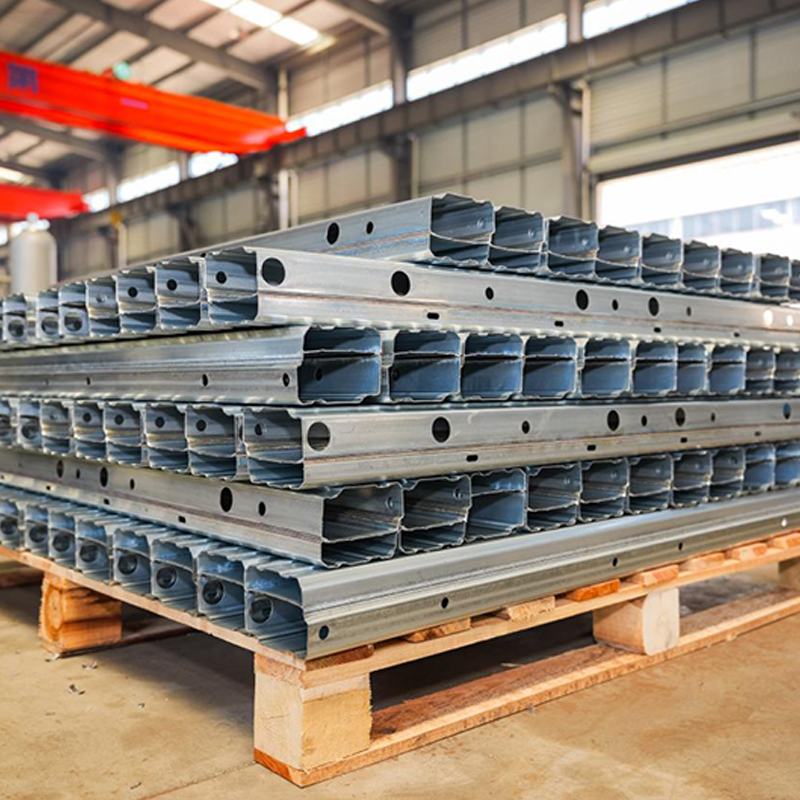
The production line for vehicle B-profile automotive chassis reinforcement beams involves several key processes to ensure High-strength, precision, and durability for vehicle applications. Key e...
See Details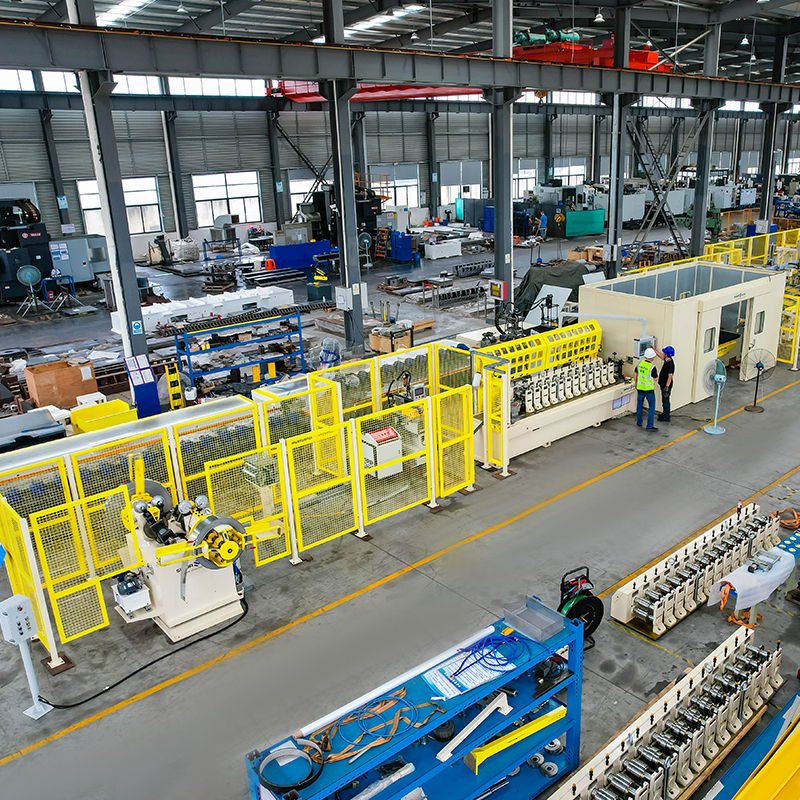
Automatic rotating double-head hydraulic decoiler with no-material detection, 5 tons per side. Quick-change cassette roll forming machine (changeover takes 30 minutes). Cutting without ...
See DetailsDon't hesitate to contact when you need us!
Contact Information
PRODUCTS
Mobile


 English
 Español
 русский