Content
Line managers who move production from steel coils to roll forming aluminum rarely get to keep their setup sheet. A manufacturer forming 1.5 mm 5052-H32 for a solar mounting bracket may see edge wave every 40 meters, or watch the profile leg spring open by 4 degrees as it leaves the final station. The strip gauge was identical, the rolls were clean, and the line speed never changed. What changed is the material: aluminum work-hardens faster than steel, stores more elastic energy relative to its yield strength, and conducts heat away at roughly three times the rate of steel.
Roll forming aluminum is the continuous incremental bending of aluminum coil through a sequence of contoured roll stations to produce a constant cross-section profile. The forming principle matches steel, but the differences above change every downstream decision: alloy choice, tooling finish, lubrication, line speed, and the tolerances you can honestly quote.
The alloys that dominate aluminum roll forming are the 1xxx, 3xxx, and 5xxx series, and 6xxx alloys should only be formed in soft tempers; the harder the temper, the more likely the profile will crack at the bend line.
The 1xxx series, essentially pure aluminum, gives the best formability but very low strength, so it fits decorative trim, flashing, and gaskets. The 3xxx series adds manganese, and 3003 is the default for roofing profiles, gutters, and solar frames because it balances elongation, corrosion resistance, and cost. The 5xxx series adds magnesium: 5052 and 5056 deliver roughly double the yield strength of 3003-H14 and become the standard for marine, transport, and tank profiles. The 6xxx series is heat-treatable; 6061-T4 can be roll formed with generous radii, but 6061-T6 generally cracks and should never be specified for cold bending.
| Alloy and temper | Yield strength | Elongation | Min. bend radius | Typical profiles |
| 1100-O | 35 MPa | 35% | 0.5 t | Trim, flashing, decorative |
| 3003-O | 45 MPa | 25% | 1.0 t | Roofing, gutters |
| 3003-H14 | 145 MPa | 12% | 1.5 t | Solar frames, general sections |
| 5052-H32 | 195 MPa | 12% | 2.0 t | Marine, transport, tanks |
| 6061-T4 | 145 MPa | 22% | 2.5 t | Structural sections |
Aluminum springs back roughly twice as much as mild steel of equal part stiffness, and it work-hardens so quickly that the strip entering the fifth station is mechanically a different material from the one entering the first.
Each forming station lifts the local yield strength, which raises the bending force for the next station. The cumulative effect shows up as widening edge wave, a curved profile, or a leg angle that drifts over a coil run. Aluminum conducts friction heat away quickly, so the visible symptom of a bad setup is fine aluminum dust or pickup on the roll surface, not a hot strip.
Roll tools for aluminum should be polished to a surface finish of 0.2 to 0.4 micrometer Ra, machined from D2 or DC53 tool steel, and normally run at 15 to 30 meters per minute.
Aluminum's tendency to gall and pick up on tool steel makes surface finish and lubrication more important than in steel roll forming. These adjustments prevent the most common defects:
Minimum bend radius is the fastest way to compare aluminum tempers for roll forming. The value is expressed as a multiple of material thickness, and exceeding it produces cracking on the outer bend surface.
Typical practice for 90-degree bends with the bend axis perpendicular to the rolling direction:
Values for 90-degree bends, perpendicular to the rolling direction. Bending parallel to the rolling direction can raise the minimum radius by up to 50 percent.
Mild steel
Aluminum alloy
A properly tuned aluminum roll forming line holds formed-width tolerances of plus or minus 0.2 mm and leg-length tolerances of plus or minus 0.3 mm, provided the incoming strip width and thickness stay in spec.
The most common quality failures on aluminum profiles are edge wave, longitudinal bow, and micro-scratches on the visible surface. Edge wave usually comes from uneven strip width or a worn roll set; bow comes from inconsistent strip thickness; scratches come from roll surface defects, dirt, or insufficient lubrication. All three become more visible after anodizing or PVDF coating, so surface requirements must be stated at the quoting stage, not discovered after the first coil is run.
Aluminum roll forming production splits into four application groups: solar mounting, electrical support, architectural, and transport, and the machine configuration differs more across these groups than across alloy choices.
Solar mounting profiles are typically formed from 3003-H14 or 5052 in 1.5 to 2.5 mm thickness, with pre-punched holes that must hold a longitudinal tolerance of plus or minus 0.5 mm. That tolerance is nearly impossible to maintain with a separate punching step, which is why an in-line servo punching station is built into the same line.
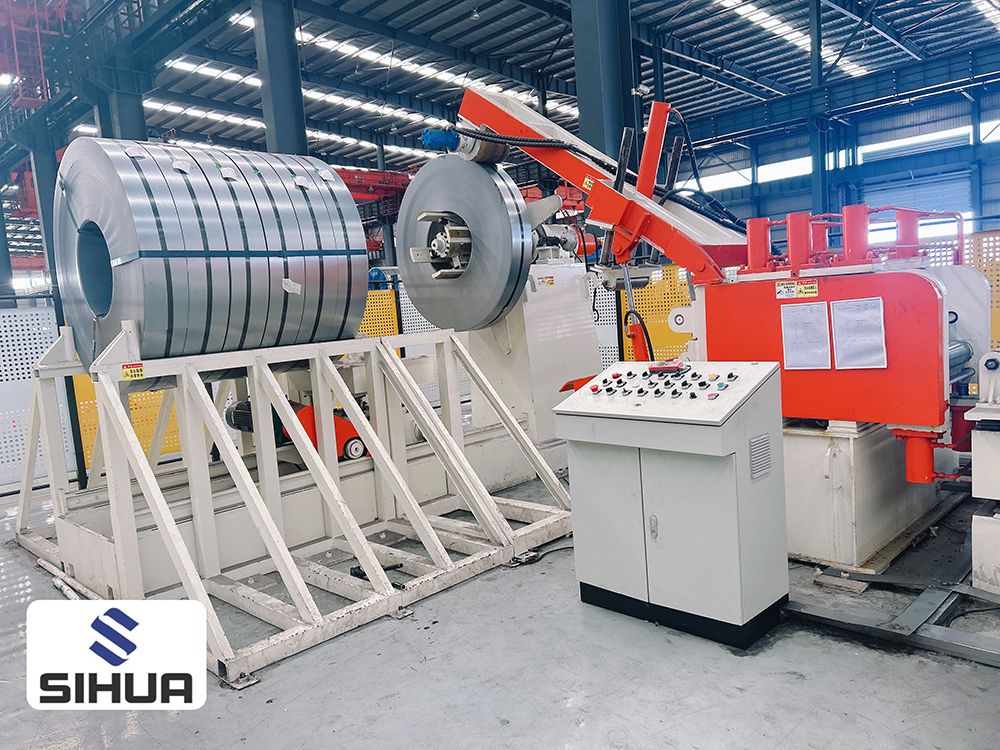 8-Axis Servo Punching Solar PV Bracket Roll Forming MachineThis line integrates servo punching with roll forming to maintain tight hole tolerances on solar mounting profiles, addressing the ±0.5 mm longitudinal precision challenge mentioned earlier.View Product →
Electrical support profiles such as aluminum cable trays and strut channels are formed from thinner strip, typically 0.8 to 1.5 mm, and the same machine often runs several profile widths in one shift. Quick-change cassette tooling keeps changeover time below 30 minutes.
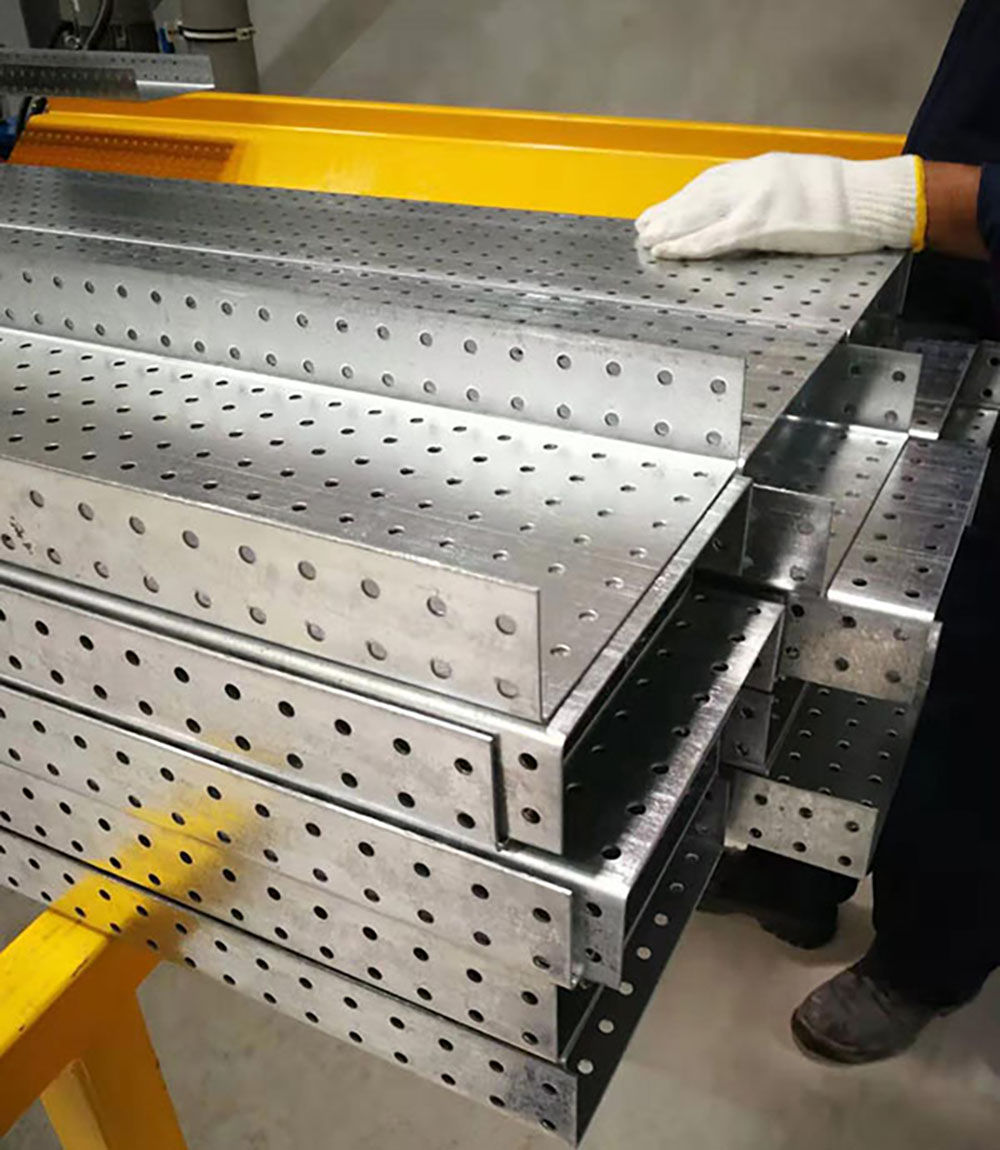 Adjustable Width Cable Tray Roll Forming MachineBuilt for quick changeovers between multiple cable tray widths, this machine suits thin-strip electrical support profiles and keeps tooling swaps under 30 minutes.View Product →
Architectural profiles include PV module frames and window-door frames, where bend quality determines whether the frame corners close within 0.5 mm. These lines run slower and demand the highest roll finish in the shop.
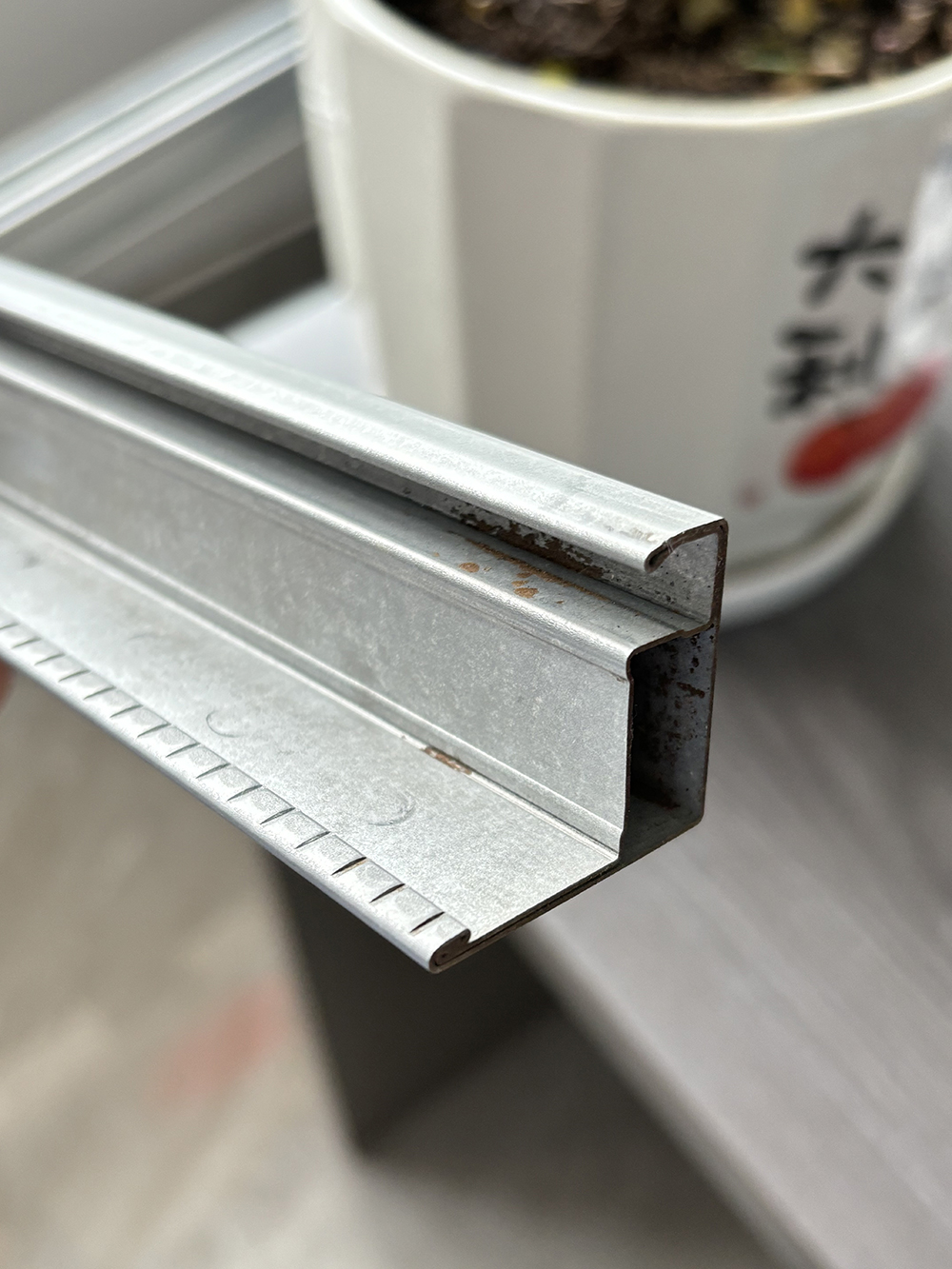 PV Frame and Window Door Profile Roll Forming MachineThis machine delivers precise bending for architectural profiles like PV module frames and window-door frames, helping achieve corner closures within 0.5 mm as described in the text.View Product →
Before ordering a line, compare application case studies and request a test run with your own coil. The customer case library shows how similar profiles are handled on production lines, and Shanghai Sihua Precision Machinery Co., Ltd. supports trial runs on its aluminum roll forming machines.
No. In the T6 temper, 6061 has elongation below 10 percent and a high yield strength, so the outer radius cracks on typical roll formed bends. Use 6061-T4, 5052-H32, or 3003-H14 instead. If 6061-T6 is a design requirement, roll form in T4 and age the finished profile.
For general profiles, 3003-H14 is the safest default. For structural, marine, or transport profiles, 5052-H32 or 5056 give higher strength with acceptable formability. For purely decorative profiles, 1100-O or 3003-O eliminate cracking risk entirely.
Over-bend the final stations by 1 to 3 degrees, add a sizing station that applies zero forming angle, increase strip tension between stations, or commission springback-corrected tooling. Measure springback on a calibration part before production.
The tool steel grade can be the same, D2 or DC53, but the roll finish must be finer, the clearances slightly tighter, and the lubrication lighter. These differences are mandatory, not optional, for aluminum.
3.Alloy hook cross T-bar roll forming machine is a specialized piece of equipment engineered for producing T-shaped steel bars with integrated alloy hooks. These components are widely utiliz...
See Details
wide material single decoiler Leveling machine and Machine for punching small holes on both sides All the upper and lower rollers are connected to a worm gear reducer.This makes the for...
See Details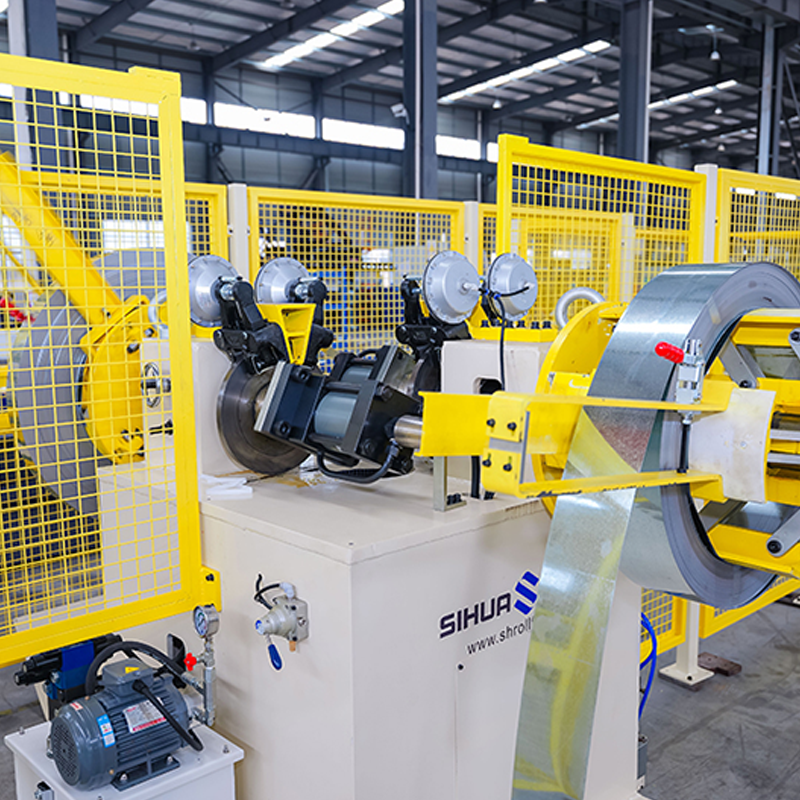
Automatic rotating double-head hydraulic decoiler with no-material detection, 5 tons per side. Laser power and welding length are adjustable to accommodate steel strips of various thicknesse...
See Details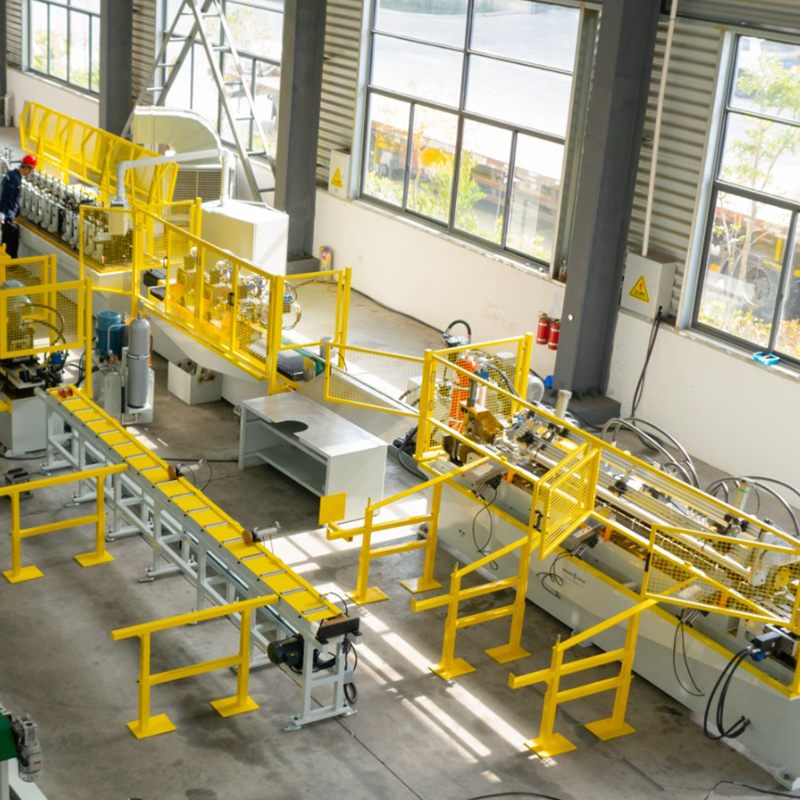
Double-head pre-painted steel hydraulic expanding/contracting uncoiler, double-head galvanized steel expanding/contracting uncoiler, pre-painted steel storage bracket, belt reduction. The 5-...
See Details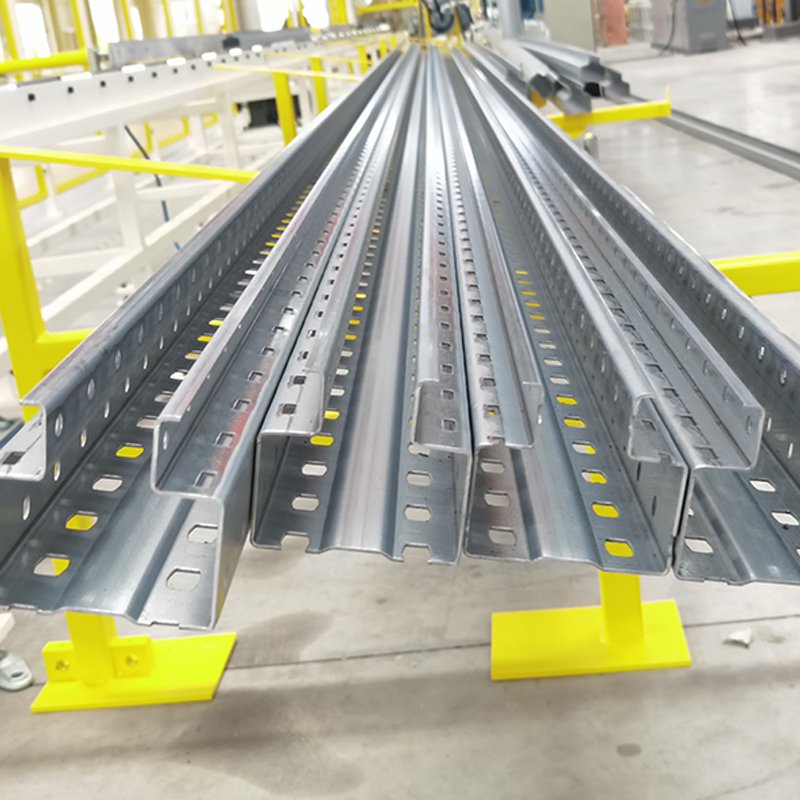
Upright rack roll forming machine, steel yield strength 250–550 MPa Single-head manual decoiler with feeding trolley Leveling before the press machine Yangli/Yadon press machine (o...
See Details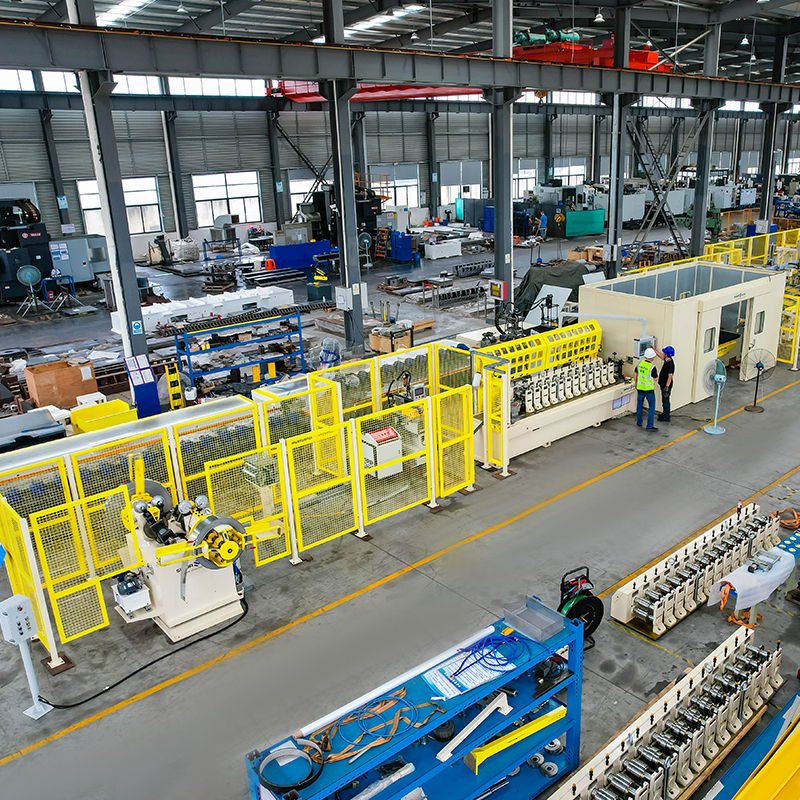
Automatic rotating double-head hydraulic decoiler with no-material detection, 5 tons per side. Quick-change cassette roll forming machine (changeover takes 30 minutes). Cutting without ...
See DetailsDon't hesitate to contact when you need us!
Contact Information
PRODUCTS
Mobile


 English
 Español
 русский