Content
A metal sheet roll forming machine is a continuous cold-forming system that progressively shapes a flat metal coil into a specific cross-sectional profile by passing it through a series of paired roller stations. Each station bends the metal strip incrementally — typically by a few degrees per pass — until the desired geometry is achieved at the exit end of the machine. The process requires no heating, relying entirely on the mechanical properties of the metal and the precision of the tooling to produce consistent, dimensionally accurate profiles at high speed.
Roll forming is one of the most efficient metalworking processes available for producing long, uniform profiles in high volumes. A single production line can process 10 to 100 metres of finished profile per minute, depending on material thickness, profile complexity, and cut-off method. Because the process is continuous and the tooling is fixed, dimensional consistency is extremely high — profile cross-sections are held to tight tolerances across runs of thousands of metres with minimal operator intervention.
Metal sheet roll forming machines are used to produce structural sections, roofing and cladding panels, door and window frames, racking and shelving components, automotive parts, solar panel mounting rails, cable trays, and hundreds of other profiles across construction, manufacturing, and infrastructure industries worldwide.
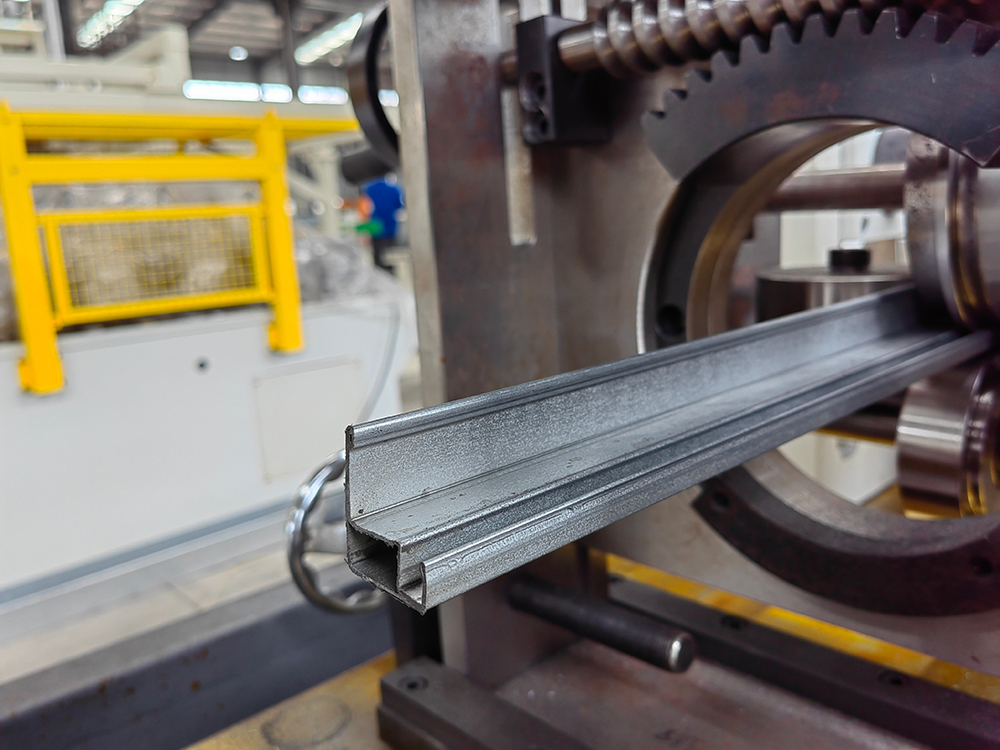
Understanding the roll forming process helps in selecting the right machine configuration and tooling for a specific application. A complete production line consists of several integrated stations that take the metal from raw coil to finished, cut-to-length profile.
The process begins at the decoiler, which holds and feeds the metal coil. A mandrel expands inside the coil's core to grip it securely, and the decoiler rotates to pay out strip at a controlled rate. Decoilers are rated by coil weight capacity — commonly 3 to 15 tonnes for industrial lines — and may be motorised (powered decoiler) or passive, where strip tension from the forming line drives the uncoil.
Coiled metal has residual curvature (coil set) and may carry crossbow or edge wave defects from the coiling process. A multi-roll straightener removes these flatness defects before forming begins — critical for achieving consistent profile geometry, especially in roof sheet roll forming where panel flatness directly affects weathertightness and visual appearance.
Many roll forming lines incorporate a servo-driven punch press before the forming stations to add holes, slots, or embossments to the flat strip while it is still easy to access. Pre-punching is preferred over post-forming punching for features that must be precisely located relative to the formed geometry.
The core of the machine is the roll forming mill — a linear array of forming stands, each containing a pair of precisely machined rollers mounted on horizontal shafts. The upper and lower rollers are profiled to match the strip geometry at that specific stage of the forming sequence. As the strip passes through each successive station, the cross-section is progressively bent closer to its final shape. The number of stations required depends on profile complexity, material thickness, yield strength, and the total bend angle — simple profiles may require as few as 8 stations, while complex architectural sections can require 24 or more.
Features that are easier to add after forming — such as end notches, corner clips, or holes in specific flange positions — are added at a post-forming station integrated into the line, timed by an encoder to fire at precise strip positions.
At the exit end of the line, a cut-off system separates the continuous profile into individual lengths. Two main types are used: a flying cut-off die, which accelerates to match line speed, cuts, then retracts — allowing fully continuous production without stopping the strip — and a stop-and-cut (pre-cut) system, which stops the strip briefly to cut. Flying cut-off systems are standard on high-speed lines and those producing long panels where stopping and restarting would reduce throughput and surface quality.
Finished profiles exit onto a run-out table and are collected manually or by automated stacking systems. Roof panels and long structural sections require careful handling to avoid surface scratches and profile distortion during stacking and transport preparation.
The roofing and cladding sector is one of the largest end markets for roll forming technology. A roof sheet roll forming machine is configured specifically to produce roofing and wall cladding profiles from pre-painted or galvanised steel, aluminium, or copper coil. These machines must produce panels that are flat, dimensionally consistent, and free of surface defects across lengths that can reach 12 metres or more — requirements that place high demands on machine rigidity, roller alignment, and material handling.
Corrugated sheet machines produce the classic sinusoidal wave profile used in agricultural, industrial, and residential roofing. The corrugated pattern is one of the simpler roll forming geometries, requiring relatively few stations, and these machines are among the most widely produced and cost-accessible in the roofing equipment market. Standard corrugated profiles are produced in steel thicknesses from 0.25 mm to 0.8 mm at line speeds of 25–45 m/min.
Trapezoidal roofing profiles — including the widely used IBR (Inverted Box Rib) and R-panel profiles — feature flat pans and angular ribs that provide superior load-bearing capacity and water drainage compared to corrugated sheet. These profiles are standard in commercial and industrial roofing across most markets. The more complex geometry requires more forming stations than corrugated machines, and precise rib geometry is critical for correct panel interlock on installation.
Standing seam is a premium architectural roofing system in which panels interlock via raised vertical seams, eliminating exposed fasteners entirely. Standing seam roll forming machines produce panels with upturned legs that are mechanically seamed together on the roof, creating a clean, waterproof joint. These machines require very high forming precision — seam geometry must be exact for mechanical seaming tools to function correctly — and typically run at lower speeds than corrugated or trapezoidal lines. Standing seam lines are often designed as portable or site-forming systems that can be transported to the construction site and produce panels to the exact required length on-site, eliminating the need for field cutting and reducing waste.
Sandwich panel lines combine two roll forming stations — one for the outer face sheet and one for the inner liner — with a core injection or lamination stage in between. The result is a composite panel with an insulating foam or mineral wool core bonded between two formed metal skins. Sandwich panels are used extensively in cold storage, commercial construction, and industrial building envelopes where thermal performance and speed of installation are priorities.
| Machine Type | Profile | Typical Speed | Primary Application |
|---|---|---|---|
| Corrugated Sheet | Sinusoidal wave | 25–45 m/min | Agricultural, industrial, residential |
| Trapezoidal / IBR | Angular rib and pan | 20–40 m/min | Commercial and industrial roofing |
| Standing Seam | Interlocking upturned legs | 8–20 m/min | Architectural, premium commercial |
| Sandwich Panel | Composite insulated panel | 4–12 m/min | Cold storage, commercial buildings |
Roll forming machines can process a wide range of metals, provided the material has sufficient ductility to undergo cold bending without cracking and consistent mechanical properties across the coil width. The most commonly processed materials are:
Purchasing a metal sheet roll forming machine is a significant capital investment. Evaluating the following specifications ensures the machine is matched to both current production requirements and foreseeable future needs.
Roll forming competes with press braking, extrusion, and stamping for producing formed metal profiles. Its advantages become decisive in specific production scenarios:

wide material single decoiler Leveling machine and Machine for punching small holes on both sides All the upper and lower rollers are connected to a worm gear reducer.This makes the for...
See Details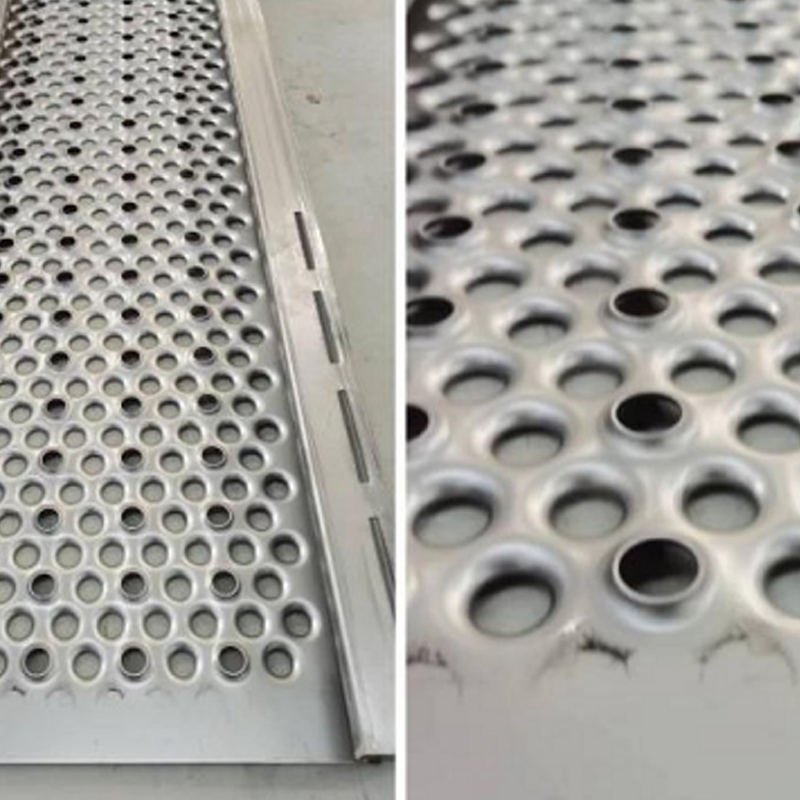
Metal Scaffold decking roll forming machine Shaft diameter: 70–80 mm; scaffold decking length: 0.5–6 m; thickness: 1–2.5 mm. Equipment layout diagram.We welcome you to send us your factory's...
See Details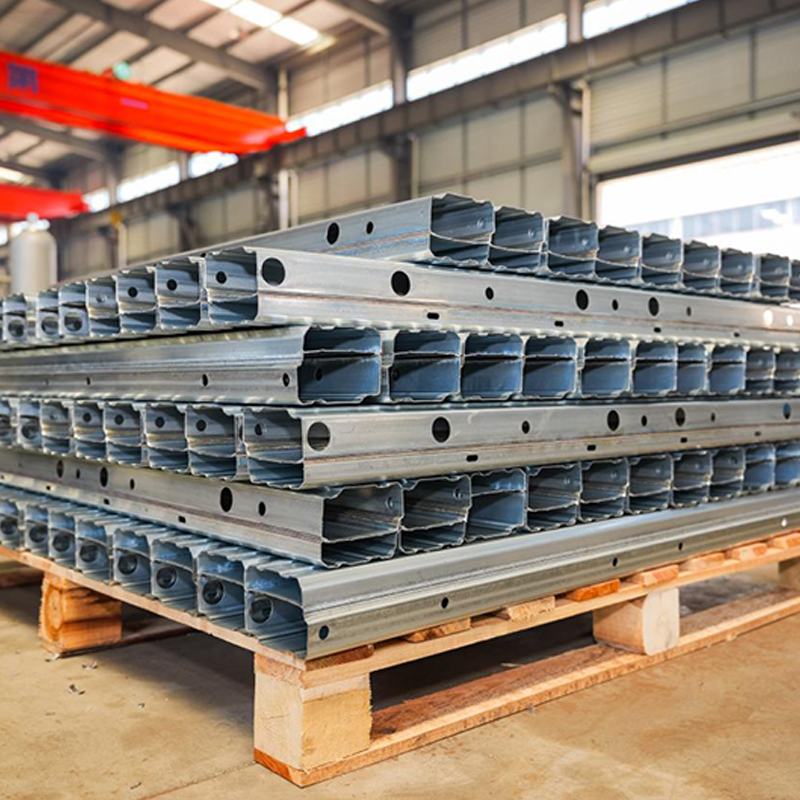
The production line for vehicle B-profile automotive chassis reinforcement beams involves several key processes to ensure High-strength, precision, and durability for vehicle applications. Key e...
See Details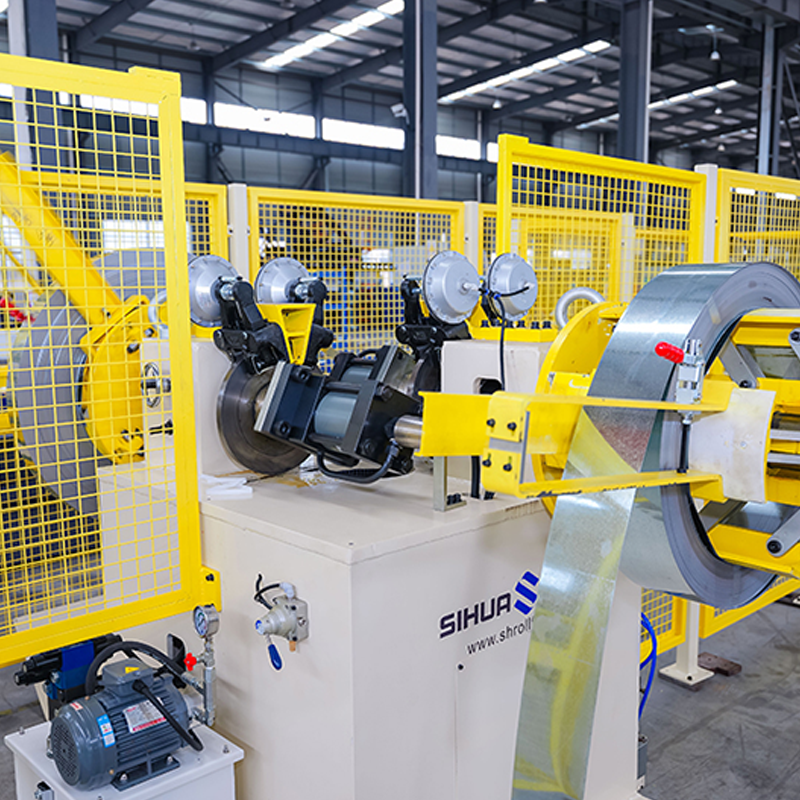
Automatic rotating double-head hydraulic decoiler with no-material detection, 5 tons per side. Laser power and welding length are adjustable to accommodate steel strips of various thicknesse...
See Details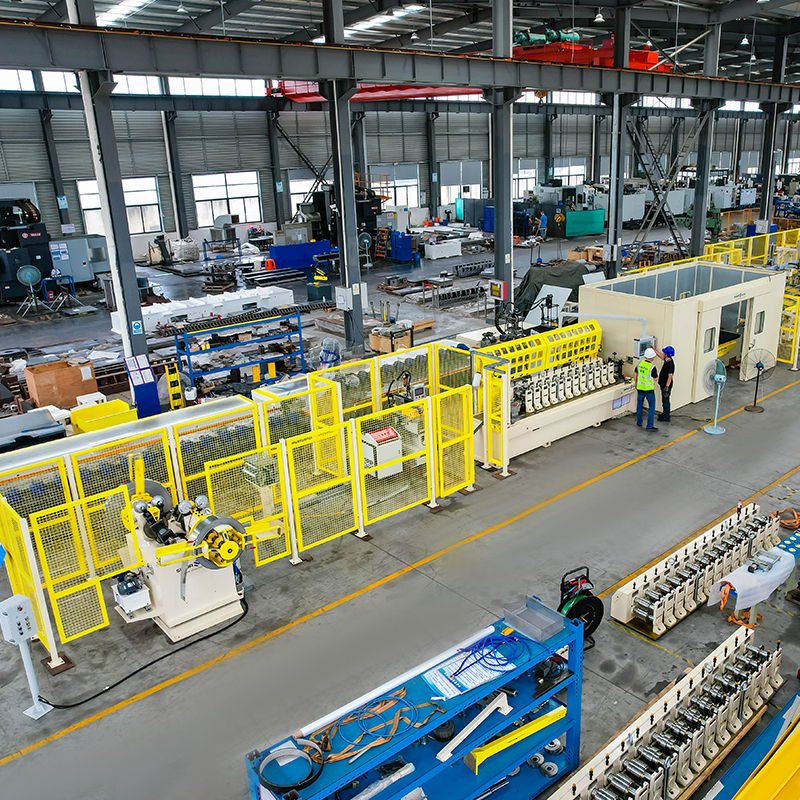
Automatic rotating double-head hydraulic decoiler with no-material detection, 5 tons per side. Quick-change cassette roll forming machine (changeover takes 30 minutes). Cutting without ...
See Details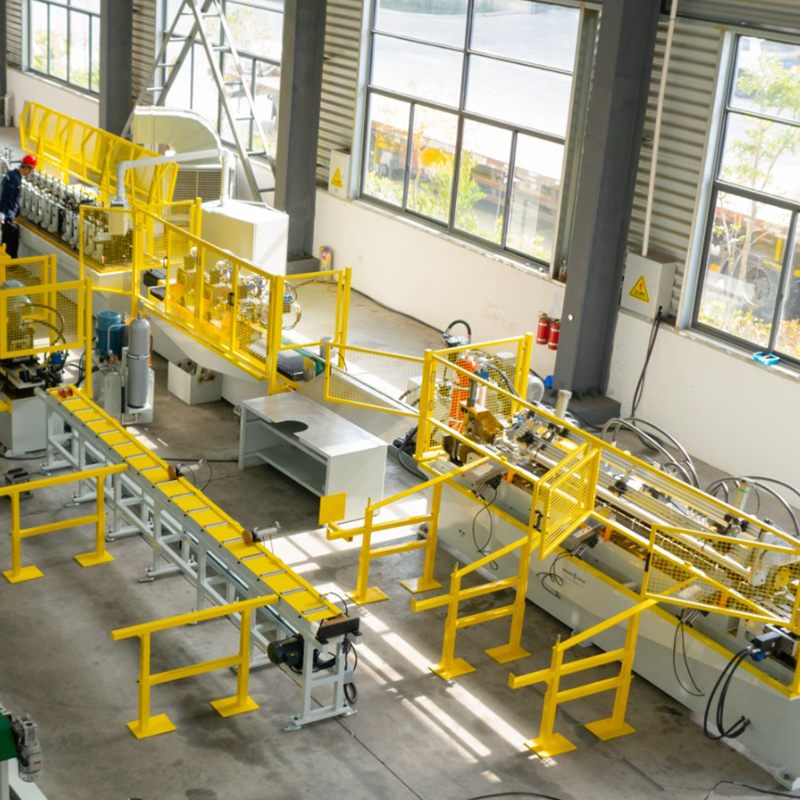
Double-head pre-painted steel hydraulic expanding/contracting uncoiler, double-head galvanized steel expanding/contracting uncoiler, pre-painted steel storage bracket, belt reduction. The 5-...
See DetailsDon't hesitate to contact when you need us!
Contact Information
PRODUCTS
Mobile


 English
 Español
 русский