Content
Roll forming has long been one of the most productive methods for converting metal coils into finished profiles for construction, energy, and automotive applications. For decades, however, maintenance decisions depended on fixed schedules or operator intuition. Industry 4.0 changes that convention. By equipping roll forming machinery with IoT sensors, manufacturers can continuously monitor vibration, temperature, load, and positioning data, then use that data to trigger maintenance actions precisely when a component begins to degrade, before an unexpected stoppage occurs.
Core concept: Predictive maintenance does not wait until a machine breaks. It detects the early mechanical signs of failure and lets you schedule intervention at a time that is safe, convenient, and cost-effective.
Industry 4.0, also known as the fourth industrial revolution, describes the convergence of connected sensors, data analytics, and automation in manufacturing. In a roll forming plant, this convergence turns a sequence of mechanical stations into a cyber-physical system where every forming stand, punching unit, cut-off press, and auxiliary device contributes real-time data.
Three building blocks matter most:
Roll forming is particularly well suited to this approach because the process is continuous and repetitive. The same strip passes through the same rolls thousands of times under stable conditions, so even small changes in vibration or load carry real statistical meaning.
Predictive maintenance in a roll forming line starts with selecting the right physical instrumentation. The table below summarizes the sensor families commonly used and the failure modes they reveal.
| Sensor Type | Parameter Monitored | Typical Failure Detected |
|---|---|---|
| Vibration sensor | Bearing and gearbox vibration | Worn bearings, loose couplings, roll misalignment |
| Temperature sensor | Motor, gearbox, and hydraulic oil temperature | Overheating, lubricant breakdown |
| Load and pressure sensor | Forming force, hydraulic pressure | Tool wear, roll gap drift, strip hardness variation |
| Speed and position encoder | Roll speed, strip travel, cut length | Encoder drift, belt slip, servo positioning error |
| Electrical sensor | Motor current, power consumption | Excessive friction, electrical imbalance, motor degradation |
Sensor placement is just as important as sensor selection. At the front end of the line, coil handling equipment benefits strongly from instrumentation: a heavy-duty decoiler equipped with load cells continuously reports coil weight, web tension, and strip alignment, giving early warning of strip-feeding problems that could otherwise damage downstream rolls.
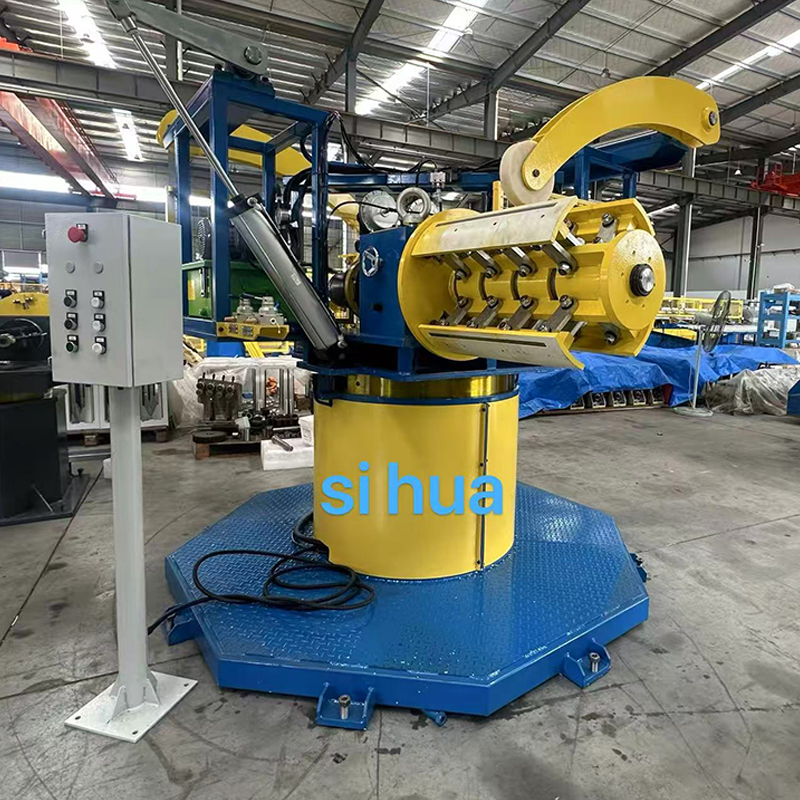 Upright Rack Heavy-Duty Decoiler with Hydraulic ExpansionThis double-head rotating hydraulic decoiler provides early feeding and tension monitoring at the line's front end. Its load-cell-based reporting helps prevent strip-feeding issues before they damage downstream forming equipment, making it a critical first sensor point.View Product →
Placing sensors on the uncoiler, pre-punch station, each forming stand, and the final cut-off unit creates a complete condition profile of the entire line. The more evenly the sensors are distributed, the faster the system can localize the source of a developing fault.
Collecting data is only the first step. A fully functional predictive maintenance workflow follows a recognizable sequence:
Punching operations provide a clear example. An eight-axis servo punching machine for solar photovoltaic bracket lines continuously reads encoder positions and servo torque values. When servo torque starts to rise while the punch position drifts, the model interprets the pattern as tool wear and triggers an inspection before profile quality is affected.
 8-Axis Servo Punching Solar PV Bracket Roll Forming MachineThis eight-axis servo punching machine tracks encoder positions and torque values to detect tool wear patterns. Its flexible punching adjustments and integrated hydraulic station support predictive maintenance by converting sensor data into actionable inspection triggers before profile quality degrades.View Product →
Manufacturers that apply IoT-based predictive maintenance to roll forming lines commonly see improvements within the following ranges:
Reduction in unplanned downtime when condition-based alarms replace calendar-based maintenance.
Lower maintenance cost because emergency repairs and secondary component damage are avoided.
Longer bearing and gearbox life when lubrication failure and overheating are caught early.
Beyond these numbers, predictive maintenance has a direct effect on product quality. A roll gap that drifts by a few hundredths of a millimeter can produce defective profiles for hours before a manual inspection catches the problem. Vibration and load monitoring detect the drift within minutes, protecting both the tooling and the production schedule.
Companies do not need to replace a complete roll forming line to start using predictive maintenance. Existing machines can be retrofitted with vibration, temperature, and current sensors without major changes to the control system. For lines that already use programmable logic controllers, position and load data can usually be extracted through the PLC interface. When the control system is very old, a retrofit is limited to add-on sensors, but that is often enough to cover the most critical bearings and tooling.
New machines take the concept further. A stud and track roll forming machine with automatic width, height, and thickness change works like a data-driven production cell: every changeover is stored as a recipe, and every positioning step is documented by sensors. The resulting dataset makes predictive algorithms even more accurate, because the system can separate the effect of a tool change from the effect of gradual wear.
 Stud and Track Roll Forming Machine with Automatic Change and PackingThis automatic width, height, and thickness change machine functions as a data-driven production cell. Every changeover is stored as a recipe, and sensor-documented positioning steps enable more accurate predictive algorithms by separating tool-change effects from gradual wear.View Product →
Reliable communication between sensors, gateways, and analytics software is essential. Plant network design should include industrial-grade switches, segmented networks, and strong access controls. Data ownership is another point to clarify early: the machine builder, the sensor supplier, and the plant should agree on who owns the operational data and how it can be used.
For teams evaluating their options, a metal forming machine selection guide can help clarify which connectivity and automation features are worth paying for. It is also useful to examine real-world roll forming installations to understand how complete lines are instrumented in actual production.
Predictive maintenance is a practical technology, but it is not a plug-and-play feature. The following challenges are common in roll forming environments:
Starting with a pilot installation on one line, measuring the results for three to six months, and then extending the rollout step by step reduces both financial and operational risk.
Preventive maintenance follows a fixed schedule, such as replacing gearbox oil every 2,000 operating hours. Predictive maintenance follows the actual condition of the equipment. Oil is replaced when sensor data indicates that contamination, temperature, or viscosity has reached a critical level. This approach avoids unnecessary work and catches failures earlier.
Yes. In most cases, vibration, temperature, and electrical current sensors can be installed by an experienced integrator without major mechanical modification. Position and load monitoring may require access to PLC registers or additional encoders, which is feasible on most machines built within the last 15 years.
Payback depends on line utilization and the true cost of downtime. In a two-shift operation where an unexpected failure stops production for several hours, typical payback periods are between 6 and 18 months, including savings from reduced spare-part consumption and improved first-pass quality.
Industry 4.0 is already practical for roll forming shops of every size. IoT sensors, connected controllers, and machine learning algorithms are available at a cost that fits mid-size manufacturers, and the benefits, including fewer breakdowns, lower maintenance spending, and more consistent profile quality, appear within a few production cycles. Companies that start with one well-instrumented line and a clear data strategy will set the benchmark for efficient, predictable roll forming in the coming years.

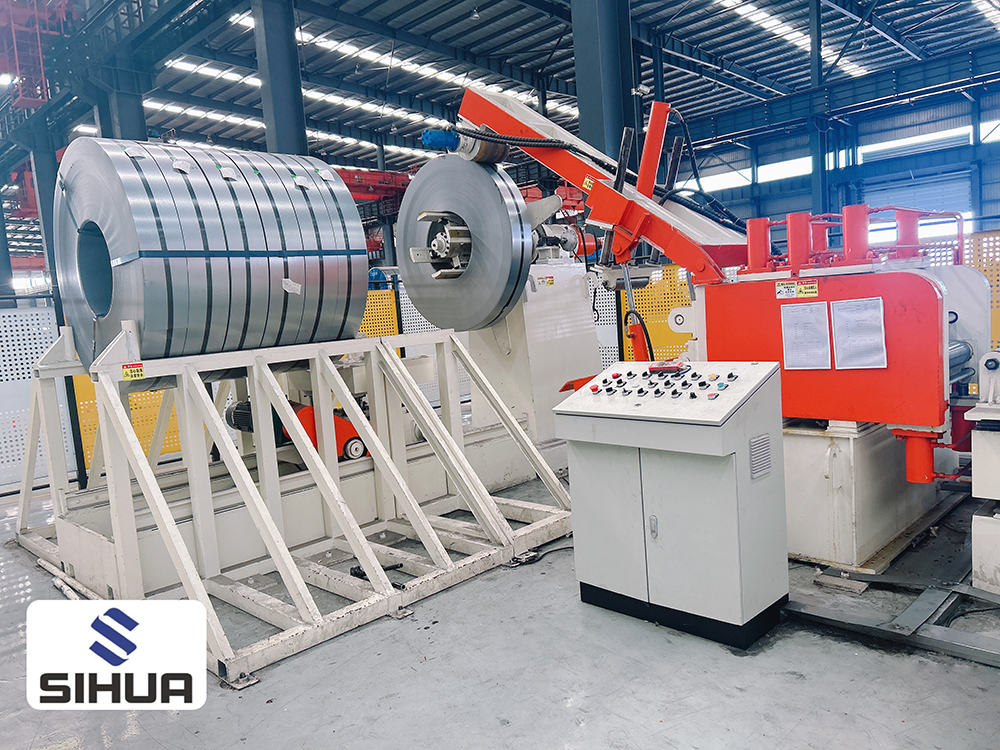
wide material single decoiler Leveling machine and Machine for punching small holes on both sides All the upper and lower rollers are connected to a worm gear reducer.This makes the for...
See Details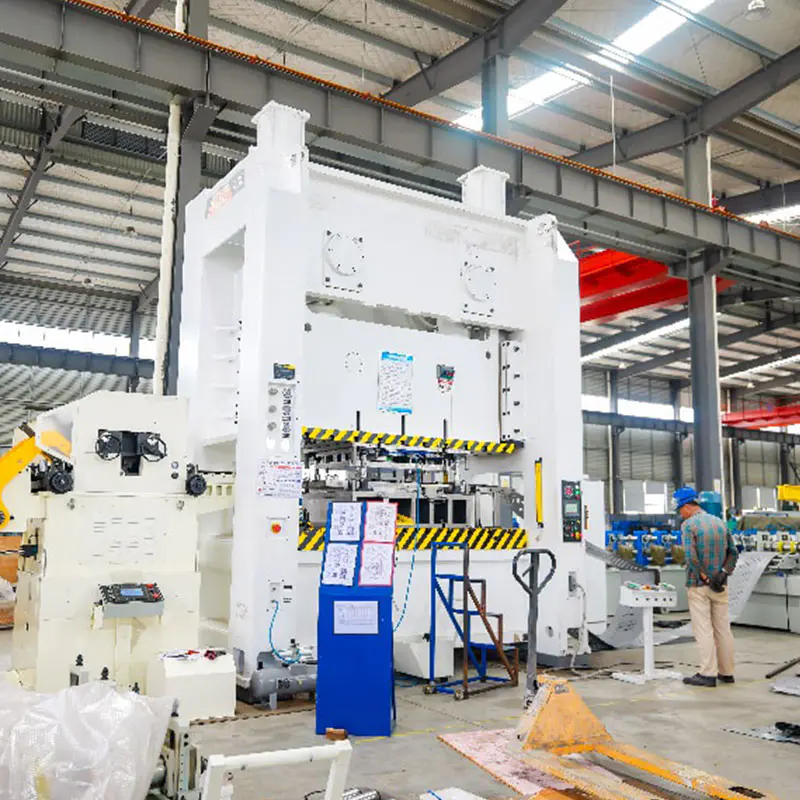
Decoiler System 3-in-1 Decoiler Straightener Feeder Capacity: 5 tons hydraulic coil mandrel expansion, servo feeding & straightening. Punching machine 400 Ton Power Press Capacity: ...
See Details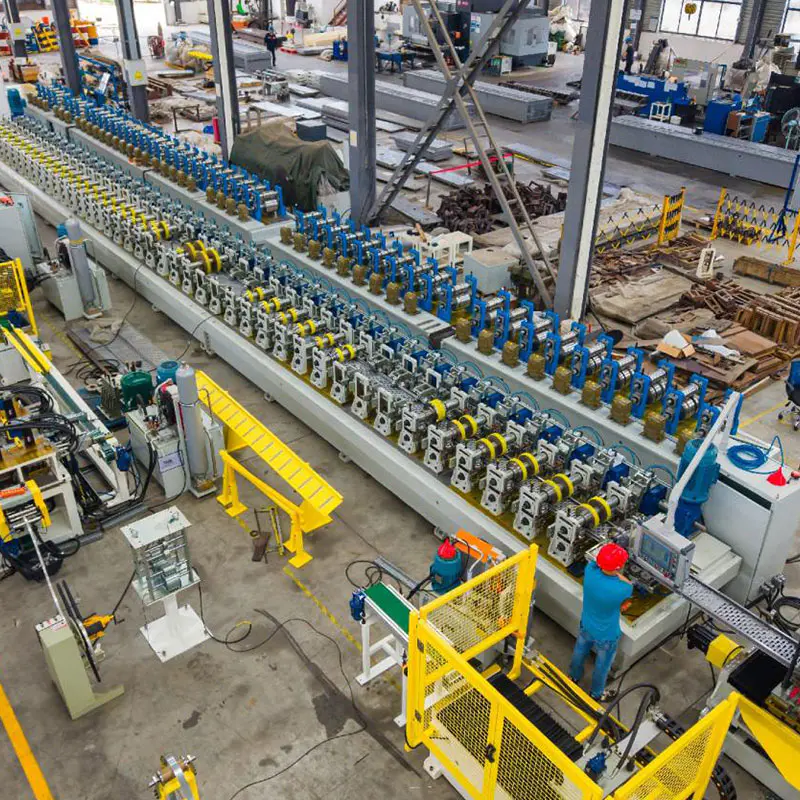
Decoiler System COMBI 3/1 decoiler lever and feeder Capacity: 3-8 tons high feeding accuracy, fully automatic operation, widely used for metal coil stamping Punch Press Unit Punching fo...
See Details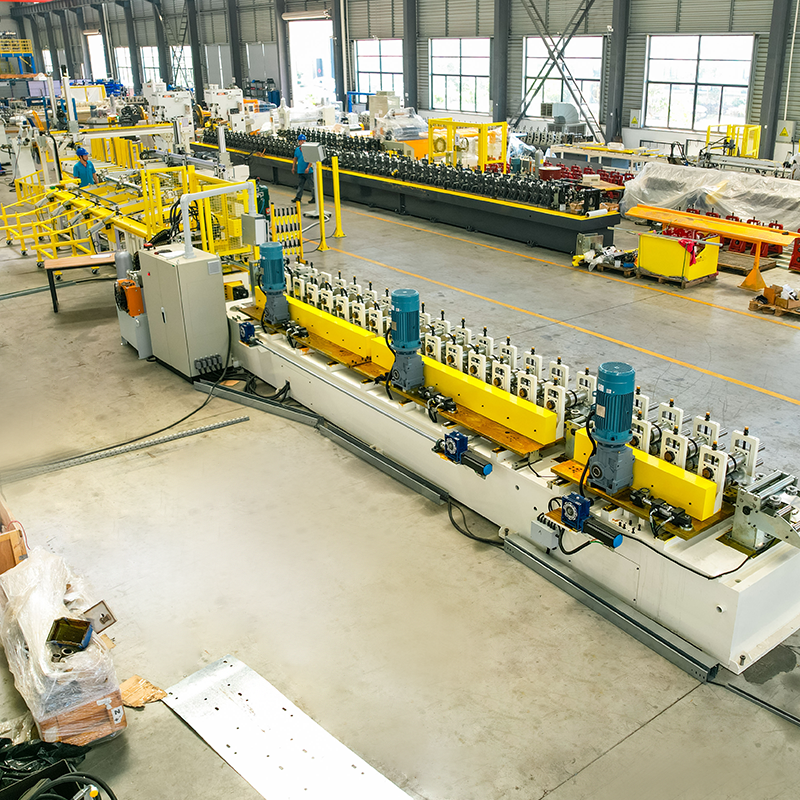
CU automatic width-change roll forming machine, chain drive, automatic packing. Economical double-head hydraulic decoiler, 3 tons per side, manual brake Automatic width and height chang...
See Details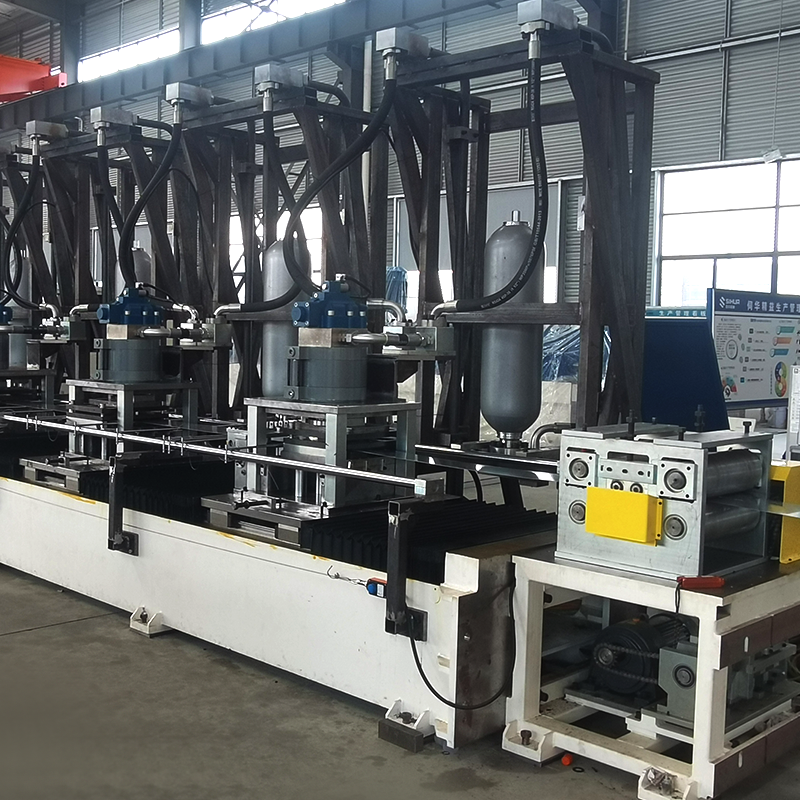
8-Axis servo punching solar PV bracket roll forming machine, flexible adjustment of punching position. Material decoiler with storage platform and robotic arm Feeder (to provide power f...
See Details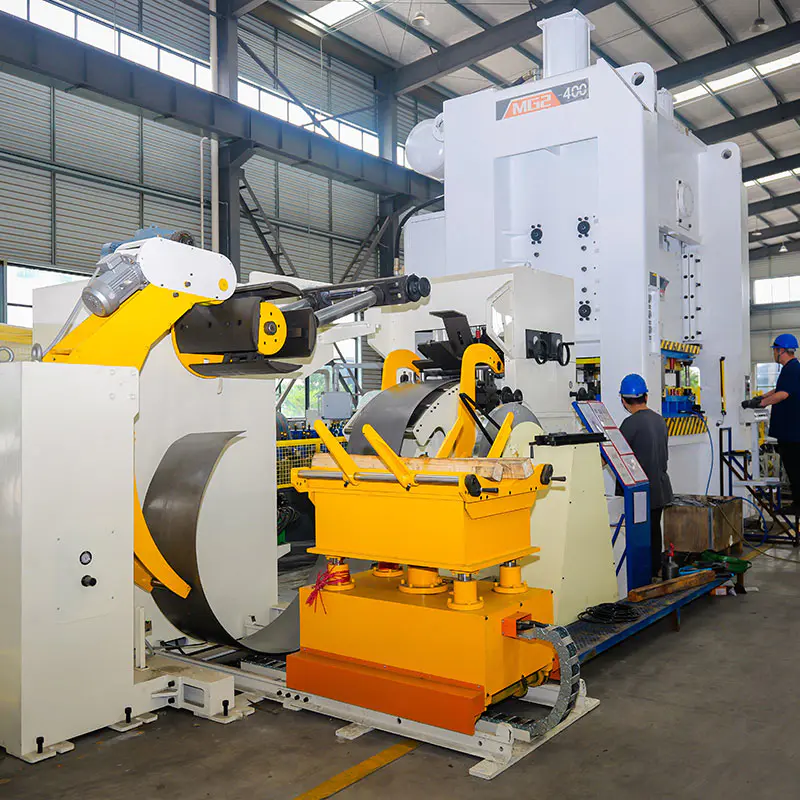
3-in-1 Decoiler Straightener Feeder System · 3-in-1 Decoiler Straightener Feeder capacity: 5 tons Hydraulic mandrel expansion Servo-driven straightening & feeding Synchronized signal wit...
See DetailsDon't hesitate to contact when you need us!
Contact Information
PRODUCTS
Mobile


 English
 Español
 русский