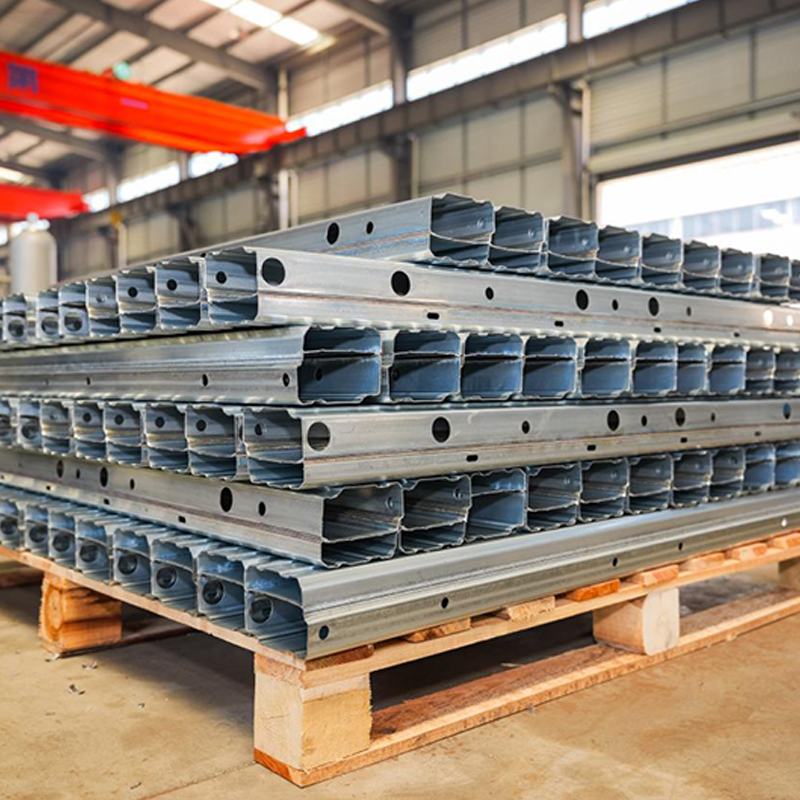
An automotive high-strength profile roll forming machine is designed for producing high-strength body profiles for the automotive industry. It is widely used in manufacturing vehicle structural components such as body frames, reinforcement parts, and other critical load-bearing elements. Using advanced cold roll forming technology, the machine precisely forms high-strength steel and other alloy materials into profiles that meet automotive manufacturing standards, ensuring excellent strength, stiffness, and dimensional stability.
The machine can efficiently process metal coils/sheets of different thicknesses and specifications, making it suitable for producing a wide range of automotive components, including body support structures, chassis reinforcements, and door frame profiles. Precise forming ensures consistent dimensional accuracy and surface quality, meeting the automotive industry’s strict requirements for strength and safety.
Equipped with a PLC control system and a user-friendly touchscreen interface, operation is simple and intuitive. Users can flexibly adjust production parameters for different vehicle models and accurately control forming speed, bending angle, and cutting length. Automated feeding, cutting, and scrap discharge improve productivity and reduce manual errors.
Also, the machine features a robust and durable structure for stable long-term operation in high-intensity production environments, helping reduce maintenance costs. The profiles produced can enhance vehicle structural strength and overall safety performance, supporting automakers in improving product competitiveness.
Service & Success Stories
Specializing in efficient production, helping to upgrade the global construction industry
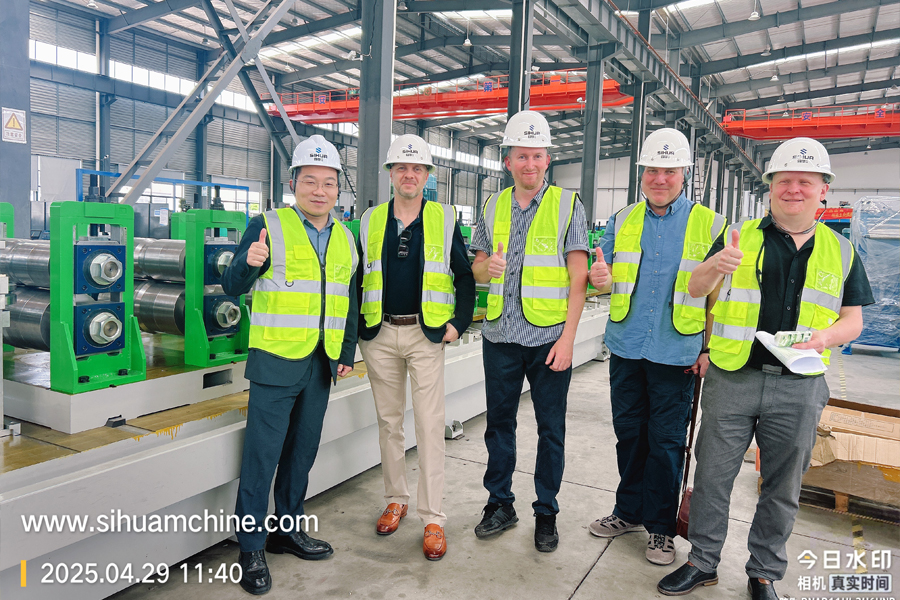
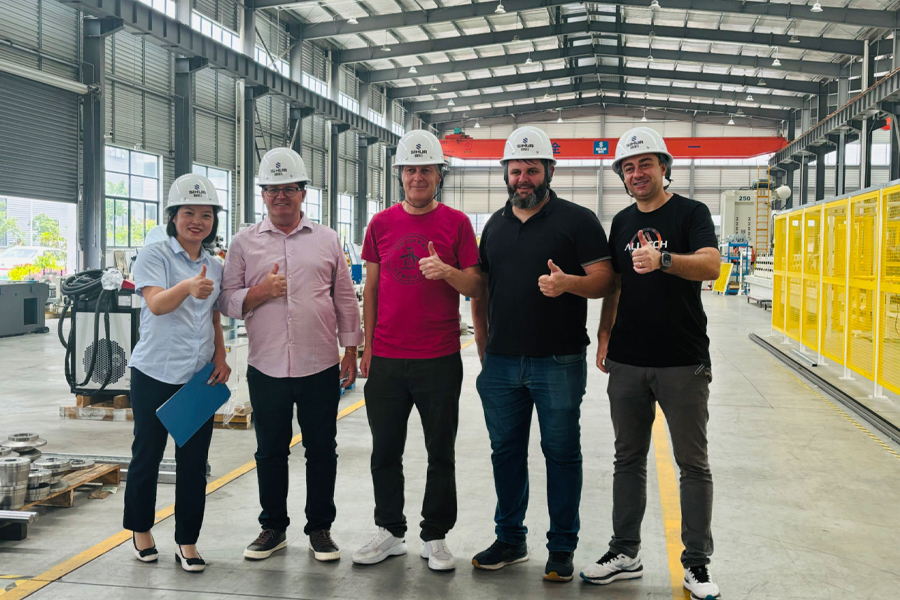


Introduction In modern manufacturing processes, especially within the metalworking, construction, and automotive industries, heavy-duty decoilers play a crucial role in ensuring smooth and efficient o...
READ MOREThe Flying Shear Roll Forming Machine is a critical technology in modern manufacturing, combining high-speed shearing technology with roll forming. It enhances production efficiency and precision. As ...
READ MOREWhen choosing between a fully automated and a semi-automated strut channel roll forming machine, the core answer is straightforward: full automation delivers higher throughput, lower labor costs, and...
READ MORESelecting a production line for high-strength automotive components is a critical investment. Engineers and procurement managers must evaluate technology, material compatibility, precision, and long-t...
READ MOREIn the modern automotive industry, the demand for lighter, safer, and more fuel-efficient vehicles has driven significant innovation in manufacturing technologies. At the heart of this evolution is the Vehicle Car High Strength Profile Machine, a specialized roll forming system designed to produce complex, high-strength components from advanced materials. This article delves into the core technical aspects, key parameters, and industry trends surrounding this essential equipment, with insights into the expertise of leading manufacturers like Shanghai Sihua Precision Machinery Co., Ltd.
The primary function of a Vehicle Car High Strength Profile Machine is to transform high-strength steel (HSS) and advanced high-strength steel (AHSS) coils into precise structural components. Unlike traditional stamping, roll forming is a continuous bending process ideal for creating uniform, lightweight, and rigid parts with consistent cross-sections.
Manufacturers like Shanghai Sihua Precision Machinery Co., Ltd. specialize in this domain, holding 42 utility model patents and 11 invention patents, reflecting continuous innovation in precision forming and automation for these critical safety parts.
The efficiency and output quality of a high-strength profile machine depend on a precise set of interconnected parameters. These parameters guide the design of the production line and its capability to meet stringent automotive standards.
| Parameter Category | Specific Parameter & Description |
|---|---|
| Material Type | High-Strength Steel (HSS), Advanced High-Strength Steel (AHSS), Hot-Formed Steel, and complex-phase steels. The machine must handle yield strengths often exceeding 980 MPa or even 1500 MPa for hot-stamped equivalents. |
| Material Thickness | Typically ranges from 0.8 mm to 3.5 mm for structural automotive parts, with some reinforcements requiring even thicker gauges. |
| Material Width (Strip) | Varies based on the final unfolded profile, generally up to 400 mm but can be wider for specific components like floor cross members. |
| Parameter Category | Specific Parameter & Description |
|---|---|
| Forming Speed | Modern automated lines, such as those developed by Shanghai Sihua, operate at speeds from 15 m/min to 40 m/min, balancing throughput with material spring-back characteristics. |
| Forming Stations (Passes) | Complex automotive profiles require 12 to 24 forming stations. More passes ensure gradual deformation, minimizing stress and spring-back in high-strength materials. |
| Cutting Tolerance (Length) | High-precision flying cut-off dies guarantee length tolerances of ≤ ±1 mm per 3000 mm to ensure consistent assembly fit. |
| Angle & Twist Tolerance | Maintaining angle tolerance of ≤ ±0.5° and twist under 1 mm/m is critical for the structural integrity and assembly of the final vehicle. |
| Parameter Category | Specific Parameter & Description |
|---|---|
| Roll Material & Treatment | Rolls are typically made from tool steels like Cr12MoV or SKD11, hardened and precision ground to withstand the high pressures of forming AHSS. |
| Control System | Advanced PLC with a user-friendly HMI touchscreen. This allows for storing multiple part recipes, real-time parameter adjustment (speed, length), and integrated fault diagnosis, a core competency of Shanghai Sihua's automated machinery. |
| Quick Changeover | Modern systems are designed for rapid tooling and stack changes to minimize downtime between different production runs, a key factor in just-in-time automotive manufacturing. |
Forming ultra-high-strength steel presents unique challenges, primarily spring-back and material hardness.
The fundamental difference lies in robustness and precision. A standard roll former is designed for lighter-gauge, lower-strength materials like those in construction (e.g., drywall profiles). A Vehicle Car High Strength Profile Machine is built on a much heavier frame to withstand the immense forces required to bend AHSS (over 1000 MPa). It features more powerful drive systems, specially coated and hardened tool steel rolls to resist wear, and more advanced PLC controls with higher torque requirements to manage the material's spring-back accurately. Manufacturers like Shanghai Sihua Precision Machinery Co., Ltd. engineer their machines specifically for these demanding automotive applications, as evidenced by their extensive patent portfolio in this niche.
Roll forming allows for the creation of complex, closed-section geometries from a single piece of high-strength steel, which is impossible or very costly with stamping. These engineered profiles, such as side impact beams and roof arches, are designed to absorb and distribute crash energy more effectively. Because the grain structure of the steel is continuously formed rather than stamped, the part retains its full material strength without weak points. This results in a "cage of strength" around the vehicle's occupant cell, enhancing overall crashworthiness and passenger protection while enabling lightweighting for better fuel efficiency.
Production speeds vary based on part complexity, material strength, and line automation. For typical structural parts like door beams or chassis rails, modern automated lines operate at line speeds between 15 and 40 meters per minute. However, this is the forming speed. The effective production rate also depends on the cut length of each part. A PLC-controlled line with a high-speed flying die, a specialty of Shanghai Sihua, ensures that cutting occurs on-the-fly without stopping the material, maximizing overall throughput and achieving the desired production cadence for high-volume automotive manufacturing.
High-strength roll forming is the preferred method for manufacturing long, prismatic parts with constant cross-sections. The most common applications include:
These parts benefit from the process's consistency, material utilization, and ability to incorporate local features like holes and notches during the forming process.
Selecting a supplier is a strategic decision. Key factors include:
Don't hesitate to contact when you need us!
Contact Information
PRODUCTS
Mobile


 English
 Español
 русский