Content
Selecting a production line for high-strength automotive components is a critical investment. Engineers and procurement managers must evaluate technology, material compatibility, precision, and long-term operational costs. This guide provides a detailed, technical analysis of the key factors involved in choosing a Vehicle Car High Strength Profile Machine and its associated systems, helping you make an informed decision for manufacturing components like chassis rails, door beams, and bumper profiles.
A complete roll forming line for chassis components is an integrated system. Understanding each part's role is essential for evaluating overall line performance and suitability for high strength steel chassis components machine applications.
The line begins with handling the raw material coil. For high-strength steels, this system must manage significant weight and tension. Two main types are used:
| Uncoiler Type | Capacity Range | Best Application |
|---|---|---|
| Manual Pyramid Uncoiler | Up to 3 tons | Short production runs, lighter gauge materials, lower budget lines. |
| Hydraulic Double-Sided Uncoiler | 5 to 15 tons | Continuous, high-volume production of automotive parts, handling heavy AHSS coils. |
A hydraulic uncoiler with an auto-expanding mandrel is preferred for automotive grades to ensure tight coil control and prevent slippage during high-tension feeding. It is typically paired with a coil car for safe and efficient loading.
The roll forming stations are the heart of the machine. Their design dictates the final part's accuracy and the line's ability to handle high-strength materials. A key differentiator is the roller material and its heat treatment.
The number of forming stations directly impacts part quality. Forming high-strength steel too aggressively leads to defects.
Forming AHSS generates significant friction and heat. An effective lubrication system is crucial.
Modern lines integrate stamping operations to create holes, notches, and cutouts while the material is moving. This is typically done with hydraulic presses.
The final cut to length is a critical precision operation. Flying shears are standard for high-productivity lines.
Door impact beams are critical safety components, often with complex, closed cross-sections (like hat shapes or even tubular profiles formed from a single blank). The equipment for this task has specific requirements.
The process starts with a tailored blank. The material is typically ultra-high strength steel (e.g., 1500 MPa tensile strength). A precise uncoiling and straightening unit is vital to ensure a flat, stress-free strip enters the forming stations. The strip width is calculated precisely from the final unfolded profile geometry.
Forming a closed section is a multi-stage process. It often involves:
First, pre-forming the blank into a U or hat shape. Second, bringing the edges together in subsequent stations. Finally, some lines integrate a high-frequency welding station to seam the closed profile, followed by post-weld sizing and cooling stations to ensure the final shape meets tight dimensional specs.
Door beams must fit precisely within the door cavity and perform predictably in a crash. Key tolerances are extremely tight.
Cross-sectional profile tolerance: Typically ±0.3 mm to ±0.5 mm. Any deviation can affect fit-up with brackets or the door inner panel.
Longitudinal twist: Often less than 1 degree per meter. Excessive twist makes assembly impossible.
Length tolerance: For a beam 1 meter long, ±1.0 mm is a common standard, dictated by the precision of the flying cut-off die.
To eliminate secondary operations, modern vehicle door reinforcement beam production equipment often includes end-forming stations and piercing presses at the end of the line. This can flatten, notch, or pierce mounting holes into the beam's ends before the final cut-off, using a servo-driven mechanism synchronized with the main forming speed.
In-line quality control is essential. Common methods include:
Vision systems to check hole presence and profile dimensions.
Ultrasonic testing for welded seams to ensure penetration and bond integrity.
Automated destructive testing of samples, such as pull tests on welds or crush tests on profile sections, performed offline at set intervals.
The cost of an auto body frame roll forming system price is determined by several engineering and commercial factors. It is a capital investment that must be justified by production requirements and part quality.
Larger machines cost more. The overall length of the line is driven by the number of forming stations, which is determined by part complexity. A line producing a 3-meter side rail for a truck will be significantly longer and more expensive than a line for a 1-meter cross-member. The width of the forming area also impacts cost, as wider stations require more robust construction.
Automation is a major cost driver.
| Automation Level | Control Features | Relative Cost Impact |
|---|---|---|
| Semi-Automatic | Basic PLC for speed control, manual tooling changes, independent punching units. | Baseline |
| Fully Automatic with Recipe Control | Advanced PLC/HMI with recipe storage for different parts, automatic lubrications, integrated fault diagnostics. | +15% to 25% |
| Industry 4.0 Ready | Full servo-electric drives, remote monitoring, data acquisition for OEE, automatic tool change systems. | +30% to 50%+ |
The choice between servo and hydraulic drives for the main forming mill and auxiliary functions like punching and cutting affects both initial price and operational cost.
Tooling (rolls and dies) is a significant, often separate, cost. The complexity of the part profile directly dictates tooling cost. A simple open section requires simpler, less expensive rolls than a complex closed section with multiple bends and features. The material for the rolls (as discussed earlier) also adds cost; hardened tool steel rolls are more expensive than standard steel but last much longer.
The choice of components from global brands (e.g., Siemens, Allen-Bradley, Bosch Rexroth) versus regional or lower-cost alternatives influences the price. Premium components offer better reliability, global support, and longer lifespans, which is a key consideration for manufacturers aiming for minimal downtime.
The final price includes the scope of supply beyond the machine itself. This covers engineering for integration into the factory, on-site installation and commissioning, travel and living expenses for service engineers, and formal training programs for the customer's operators and maintenance technicians. A comprehensive service package is essential for a successful project launch.
Modern bumper beams require exceptional strength and energy absorption. An AHSS bumper profile manufacturing machine is specifically engineered to handle the most demanding steel grades.
Bumper profiles typically use material thicknesses ranging from 1.2 mm to 2.5 mm. The specific thickness is determined by the design requirements and steel grade. A thinner, higher-strength grade (e.g., 1.4 mm MS1500) can replace a thicker, lower-strength material, contributing to vehicle lightweighting.
To prevent corrosion, automotive steels often have protective coatings. The roll forming process must preserve these coatings.
Spring-back is the elastic recovery of the material after forming, which is severe in AHSS. Compensation is built into the roll tooling design. Methods include:
AHSS is highly abrasive. Managing roll wear is critical for maintaining part quality over time. Strategies include:
Maximizing uptime and part quality requires a structured approach to maintenance and optimization for any high strength profile production line.
| Component | Typical Lifespan (AHSS Production) | Wear Indicator |
|---|---|---|
| Forming Rolls | 6 months - 2 years (dependent on material and coating) | Visible wear lines, loss of profile dimension, surface pitting |
| Punching/Notching Dies | 50,000 - 200,000 hits | Burr formation on punched holes, chipped edges |
| Cut-off Blades | Every 3-6 months | Dull edges causing a rough cut surface or length inaccuracies |
| Guide Bearings | 1-2 years | Increased play, vibration, noise |
Profile defects are common but can be systematically diagnosed.
Incoming material thickness can vary slightly. This can cause forming pressure to be too high or too low, leading to defects. Many modern mills allow for micro-adjustment of roller gaps on the fly. A general rule: the gap should be set slightly less than the nominal material thickness (e.g., 0.05 mm less) to ensure good contact but not excessive pressure.
Inaccurate cut lengths are often caused by incorrect encoder wheel calibration or slippage, or worn blades. To calibrate, measure the actual part length against the target and adjust the encoder pulse count in the PLC. Check the encoder wheel for wear and ensure it maintains firm contact with the material. Finally, inspect cut-off blades for dullness, which can cause the material to push back during cutting.
Older lines can be upgraded with new sensors, data acquisition systems, and a line management system. This allows for:
Even the best machine underperforms without skilled people. Comprehensive training should cover:
Production speeds are highly dependent on part complexity and material. For simpler chassis rails or bumper beams, line speeds of 15 to 25 meters per minute are common. For complex door beams with integrated welding and multiple punching operations, the speed might be lower, ranging from 8 to 15 meters per minute to ensure all processes are accurate.
Tooling changeover time is a key productivity factor. For a line without automatic tool change, changing a full set of rolls for a different profile can take a team of two technicians 4 to 8 hours. Lines designed with features like quick-release spindles, cartridge-type roll stands, or automated roll change systems can reduce this time to under 1 hour.
It depends on the line's design. A universal line can produce families of parts with similar forming characteristics, such as various chassis cross-members or body pillars, by changing tooling. However, a line optimized for very long, heavy chassis rails is unlikely to be efficient at producing short, complex body reinforcements like B-pillars due to differences in material handling, press tonnage, and cut-off requirements. Lines are typically designed for a specific part family.
A reliable manufacturer should have ISO 9001 certification for quality management systems. For automotive suppliers specifically, IATF 16949 certification is the global standard, demonstrating a commitment to continuous improvement, defect prevention, and waste reduction in the automotive supply chain. Additionally, the manufacturer should be able to provide material certifications for the components they use (e.g., rollers, bearings).
Precision and durability are engineered in. Key factors include: a robust, stress-relieved welded steel frame; the use of high-precision, pre-loaded bearings in all forming stations; rolls made from hardened tool steel (e.g., D2, M2) with precision grinding; and a high-quality PLC control system with closed-loop feedback for speed and position control. Regular maintenance, as outlined above, is also essential to preserve these qualities.

wide material single decoiler Leveling machine and Machine for punching small holes on both sides All the upper and lower rollers are connected to a worm gear reducer.This makes the for...
See Details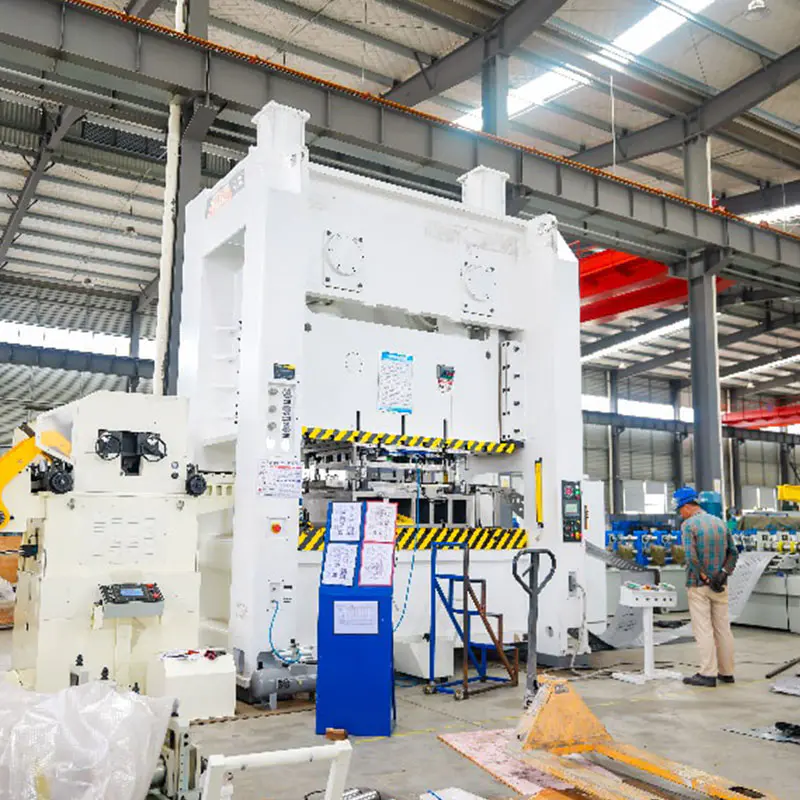
Decoiler System 3-in-1 Decoiler Straightener Feeder Capacity: 5 tons hydraulic coil mandrel expansion, servo feeding & straightening. Punching machine 400 Ton Power Press Capacity: ...
See Details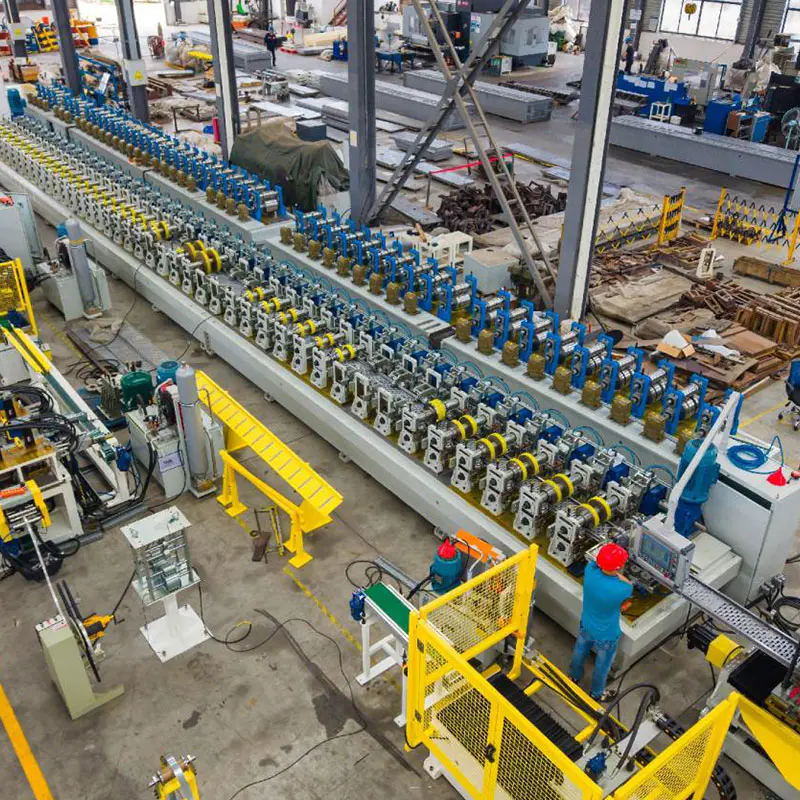
Decoiler System COMBI 3/1 decoiler lever and feeder Capacity: 3-8 tons high feeding accuracy, fully automatic operation, widely used for metal coil stamping Punch Press Unit Punching fo...
See Details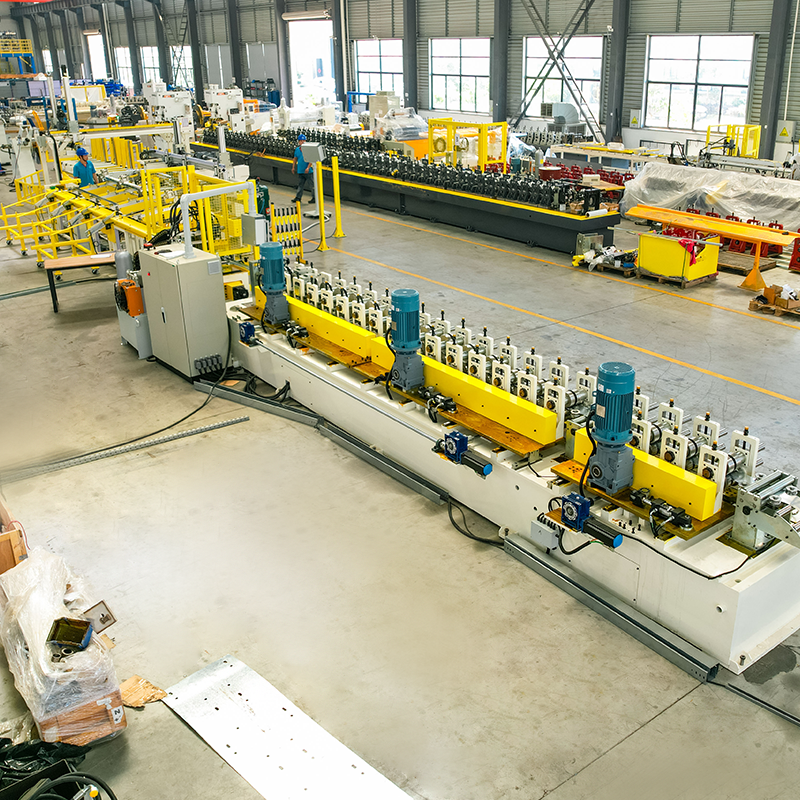
CU automatic width-change roll forming machine, chain drive, automatic packing. Economical double-head hydraulic decoiler, 3 tons per side, manual brake Automatic width and height chang...
See Details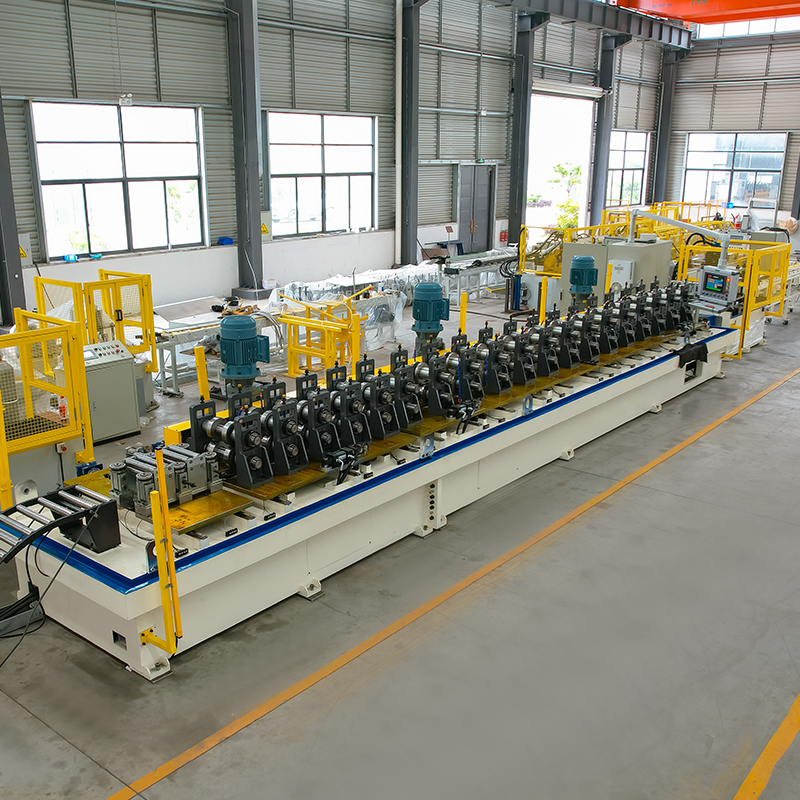
Solar bracket auto change width roll forming machine Material decoiler with storage platform and robotic arm Leveling machine(A leveling machine is required before using a punch press.)...
See Details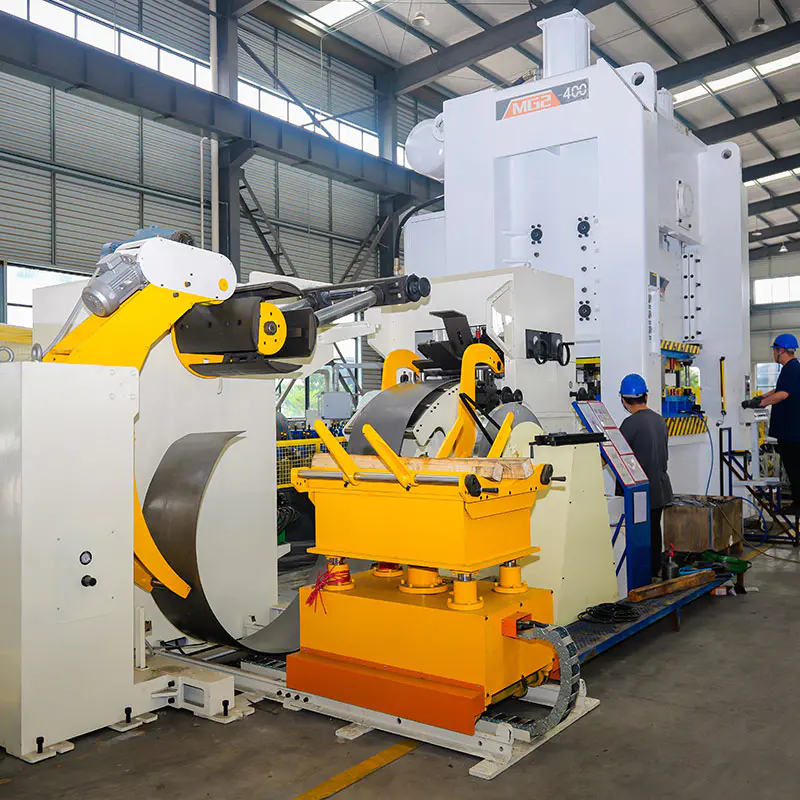
3-in-1 Decoiler Straightener Feeder System · 3-in-1 Decoiler Straightener Feeder capacity: 5 tons Hydraulic mandrel expansion Servo-driven straightening & feeding Synchronized signal wit...
See DetailsDon't hesitate to contact when you need us!
Contact Information
PRODUCTS
Mobile


 English
 Español
 русский