Content
When choosing between a fully automated and a semi-automated strut channel roll forming machine, the core answer is straightforward: full automation delivers higher throughput, lower labor costs, and more consistent product quality, while semi-automation offers a lower initial investment and greater flexibility for low-volume or highly varied production runs. For manufacturers producing strut channels at scale, the productivity gains and long-term cost savings of full automation typically outweigh the higher upfront expenditure within 18 to 36 months. However, the right choice depends on your production volume, workforce availability, product variety, and capital budget.
This article breaks down every meaningful difference between the two machine types — from output rates and labor requirements to maintenance, quality control, and total cost of ownership — so you can make a well-informed decision for your facility.
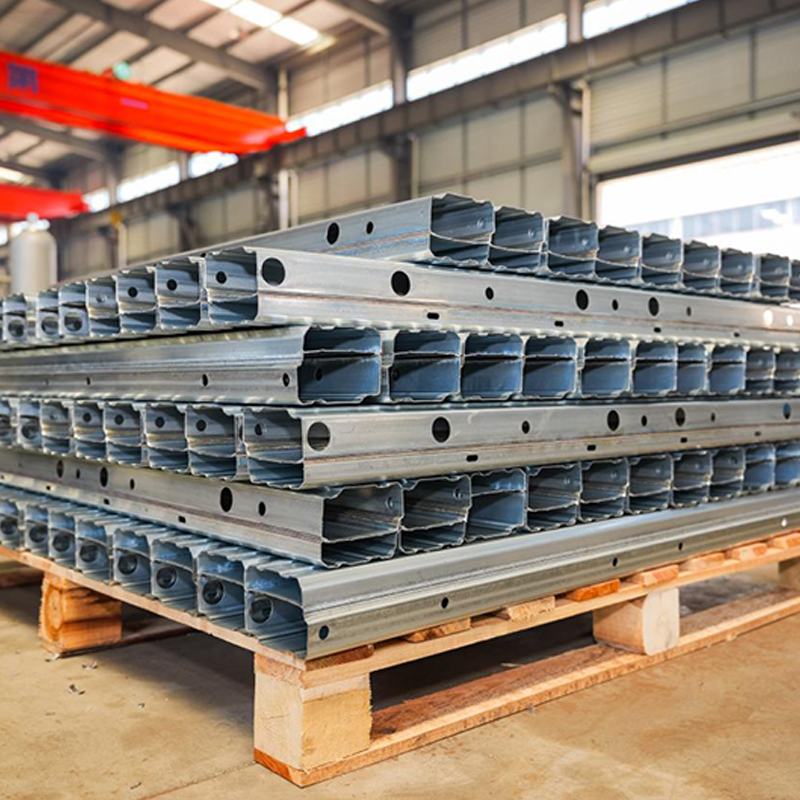
A strut channel roll forming machine is a specialized piece of metal forming equipment that continuously bends and shapes steel coil stock into standardized strut channel profiles — the C-shaped or U-shaped metal framing components widely used in electrical, plumbing, HVAC, and structural support systems.
The machine feeds a flat metal strip through a series of progressively shaped roller dies. Each die station incrementally bends the material until it reaches the final cross-sectional profile. Depending on the configuration, the line may also punch holes, cut to length, stack finished pieces, and bundle output — all in a single continuous process.
There are two primary automation levels on the market today:
Understanding the precise boundaries of each type is essential before evaluating their respective benefits.
One of the most significant differences between fully automated and semi-automated machines is raw production capacity. In a continuous production environment, fully automated strut channel lines can achieve forming speeds of 30 to 60 meters per minute, with some high-capacity systems reaching 80 m/min. Semi-automated machines typically operate in the range of 15 to 30 m/min, partly because operators must pause the line for manual tasks such as removing finished parts or replenishing coil stock.
To put this in practical terms:
| Parameter | Fully Automated | Semi-Automated |
| Typical forming speed | 30 – 80 m/min | 15 – 30 m/min |
| Estimated daily output (8 hrs) | 14,400 – 38,400 m | 7,200 – 14,400 m |
| Operator-caused downtime | Minimal (5 – 10%) | Moderate (15 – 30%) |
| Shift staffing needed | 1 supervisor | 2 – 4 operators |
For a manufacturer producing strut channel on a contract basis for construction supply chains, doubling daily output without doubling headcount is a compelling argument for full automation.
Labor is often the largest variable operating cost in metal forming. A semi-automated strut channel roll forming machine typically requires two to four operators per shift to manage coil loading, finished part handling, stacking, and quality spot-checks. Over a two-shift, five-day week, that translates to 80 to 160 operator-hours per week dedicated to one machine.
A fully automated line, by contrast, usually requires only one trained supervisor per shift to monitor the control panel, respond to fault alerts, and perform periodic quality checks. The automated systems handle coil feeding via motorized uncoilers and straighteners, move finished parts to collection bins or conveyors automatically, and stop the line with fault codes rather than requiring an operator to detect problems visually.
Assume an average operator wage of $18 per hour (a conservative benchmark in manufacturing regions across North America and Europe). For a semi-automated machine requiring three operators per shift across two shifts per day:
A fully automated line with one supervisor per shift:
The annual labor saving of roughly $122,500 per line is substantial. Over a five-year machine lifecycle, that represents over $600,000 in labor savings — a figure that can more than offset the premium paid for full automation hardware.
Dimensional accuracy is critical in strut channel production. End-use applications in electrical conduit support, cable trays, and structural frameworks require channel profiles to meet tight tolerances — typically within ±0.3 mm on flange width and ±0.5 mm on overall height. Inconsistent parts cause problems during installation and can trigger costly returns or rework.
In a semi-automated machine, human operators control or adjust several variables manually — feeding speed, cut-to-length timing, and occasionally roller gap settings. Human error, fatigue, and inconsistent technique introduce variability. Studies of manual metal forming operations consistently show that operator-influenced processes generate defect rates 3 to 8 times higher than equivalent automated processes.
A fully automated roll forming line uses closed-loop servo drives and real-time feedback sensors to maintain consistent strip tension, forming speed, and cut length. CNC punch positioning ensures hole patterns are accurate to within 0.1 mm. Laser or encoder-based length measurement systems replace manual gauge checks.
Industry benchmarks suggest:
On a production run of 50,000 meters of strut channel per day, the difference between 0.5% and 3% scrap represents 1,250 meters of wasted material. At a material cost of $2.50 per meter, that is $3,125 in daily material waste, or over $800,000 annually if running five days a week.
Not all strut channel production is identical. Manufacturers often need to switch between multiple profile sizes — 41x21mm, 41x41mm, 41x62mm, and others — as well as between different steel grades and coating types. Setup time between profile changes directly impacts production efficiency.
On a semi-automated line, changing profiles typically requires manually adjusting multiple roller stations, replacing punch tooling, and recalibrating cut-to-length mechanisms. Experienced toolmakers often take 2 to 4 hours to complete a full profile changeover. During this time, the line produces nothing. If a facility runs three to four changeovers per week, that is 6 to 16 hours of weekly nonproductive machine time.
Modern fully automated strut channel roll forming machines increasingly feature quick-change cassette tooling systems and servo-driven roller positioning. On these machines, a profile changeover can be executed in 20 to 45 minutes by calling up a saved recipe from the HMI (human-machine interface). The controller automatically positions servo rollers, adjusts punch timing, and resets speed parameters.
This speed advantage is critical for manufacturers serving diverse customers or operating in a job-shop environment where short runs of multiple profiles are the norm.
It is worth noting that semi-automated machines can sometimes accommodate highly non-standard profile modifications more easily, since a skilled operator can make manual micro-adjustments that a fixed automated program cannot. For prototype work or extremely low-volume specialty profiles, this hands-on flexibility has genuine value.
Strut channel requires punching of the characteristic slotted holes along the web of the channel. The integration of punching, cutting, and downstream handling is one of the areas where full automation creates the most measurable value.
On a semi-automated machine, punching may be performed as a separate offline operation, requiring the operator to transfer formed channel to a secondary press for hole punching. This adds labor, introduces the possibility of misalignment, and breaks the continuous flow of the production line.
A fully automated line integrates in-line servo-controlled punching directly into the forming process. The punch unit fires in synchronization with the strip feed speed, maintaining consistent hole spacing — typically 50.8 mm (2 inches) center-to-center — regardless of line speed. No secondary operation is needed, and no material handling between stations is required.
Fully automated lines typically feature flying shear or rotary cut-to-length systems that cut the channel without stopping the line. Cut lengths are programmable and repeatable to within ±1 mm. Finished pieces are automatically conveyed to a collection table or stacking unit.
Semi-automated machines more commonly use stop-and-cut systems, where the strip feed pauses during cutting. This reduces effective line speed and requires an operator to remove finished pieces from the cut-off zone before the next piece can be processed.
A counterintuitive concern about full automation is that more sophisticated machines must consume more energy. In practice, the opposite is often true on a per-unit-produced basis.
Fully automated lines use servo motors and variable frequency drives (VFDs) that precisely match motor output to demand. Servo systems consume energy proportional to actual mechanical work performed rather than running at full draw continuously. Well-designed automated roll forming lines can consume 15% to 25% less energy per meter of finished product compared to older semi-automated lines running fixed-speed AC motors, particularly when the automated line is running at higher throughput speeds that amortize fixed energy overhead across more output.
Additional energy efficiency features commonly found on fully automated machines include:
Maintenance strategy and cost are often underweighted in purchase decisions but have a profound impact on total cost of ownership over a 10 to 20-year machine life.
Semi-automated strut channel machines have simpler electrical and control systems, which means a broader range of technicians can service them. The main wear components are forming rollers, punch tooling, and cut-off blades. Roller sets for strut channel typically need replacement or regrinding every 5 to 15 million meters of production depending on material hardness and coating type.
The lower initial complexity translates to lower maintenance skill requirements, and spare parts tend to be less expensive. However, because semi-automated machines rely more on operators for process stability, wear issues may go undetected longer, leading to increased scrap before problems are identified and corrected.
Automated machines have more sophisticated control systems — servo drives, encoders, PLCs, HMIs — that require trained technicians to service. Electrical and electronic components are typically more expensive to replace than purely mechanical parts. However, these systems also include predictive maintenance capabilities that semi-automated machines lack:
These features mean that unplanned downtime events — the most expensive form of machine failure — are significantly less common on automated lines. Planned maintenance costs more per hour but occurs on a schedule, while unplanned failures on semi-automated lines can halt production with no warning.
The most frequently cited barrier to full automation is higher upfront cost. This concern is legitimate and deserves an honest assessment.
Pricing varies significantly based on forming speed, profile complexity, integration level, and origin of manufacture. As a general benchmark:
| Machine Type | Approximate Price Range | Typical Speed |
| Semi-automated, basic | $30,000 – $80,000 | 10 – 20 m/min |
| Semi-automated, advanced | $80,000 – $150,000 | 20 – 30 m/min |
| Fully automated, standard | $150,000 – $350,000 | 30 – 50 m/min |
| Fully automated, high-speed | $350,000 – $600,000+ | 50 – 80 m/min |
Consider a scenario where a manufacturer upgrades from a semi-automated line ($100,000) to a fully automated line ($280,000). The incremental investment is $180,000. With the savings identified earlier:
Total annual savings: approximately $337,500. At this rate, the incremental investment of $180,000 is recovered in less than 7 months. Even in more conservative scenarios with lower production volumes, payback periods of 18 to 36 months are typical for high-volume strut channel producers.
Metal roll forming involves moving machinery, sharp material edges, and high-force mechanical operations. Safety is both a moral imperative and a regulatory requirement in most jurisdictions.
Because semi-automated machines require operators to work in close proximity to the forming area — removing parts, adjusting guides, or clearing jams — the risk of contact injuries is higher. Despite guarding requirements, the frequency of human interaction with the machine increases exposure to pinch points, sharp edges, and moving material.
Operator fatigue on long shifts also elevates risk. Repetitive manual handling of heavy strut channel pieces (a 6-meter length of 12-gauge steel strut weighs approximately 6 to 9 kg) over an 8-hour shift accumulates significant physical stress, increasing ergonomic injury rates.
Fully automated lines are designed to minimize the need for operators to enter the machine's working envelope during production. Key safety features standard on modern automated machines include:
Reduced operator interaction directly reduces the probability of lost-time injuries, which carry costs far beyond direct medical expenses — insurance premium increases, regulatory investigation, production disruption, and reputational impact all compound the direct injury cost.
The modern manufacturing environment increasingly demands real-time production data for quality management systems, customer traceability requirements, and continuous improvement programs. This is an area where fully automated machines offer capabilities that semi-automated systems fundamentally cannot match.
A fully automated strut channel roll forming machine with a modern PLC and HMI system can continuously log and report:
This data can be exported to ERP systems, quality management platforms, or cloud dashboards. For manufacturers pursuing ISO 9001 certification, export market compliance, or supply chain traceability requirements from large-volume customers, this built-in data infrastructure is increasingly a prerequisite, not a luxury.
Semi-automated machines typically lack the sensor infrastructure to generate this data automatically. Production records depend on manual operator logging, which is inherently incomplete, inconsistent, and subject to transcription error. Reconstructing production history after a quality complaint is difficult and time-consuming. As customers and regulators raise traceability expectations, this gap becomes a competitive disadvantage.
Business growth requires production infrastructure that can scale. When evaluating strut channel roll forming machine options, it is worth thinking not just about current demand but about where your production requirements will be in three to five years.
A fully automated line can often increase effective output by adding a second shift or extending production hours, since minimal additional staffing is required. If one automated supervisor can manage the line, doubling production by adding a second shift increases labor cost by only 33% (one additional supervisor) while doubling output. This gives automated operations exceptional production elasticity.
Furthermore, many automated lines are designed for modular expansion — adding a second punching head, extending the output conveyor, or integrating a bundle strapping unit can be done without replacing the core machine.
Scaling a semi-automated operation requires proportionally more labor. Doubling output typically requires doubling staffing. In labor markets with low unemployment or high wage inflation, this creates a structural cost ceiling for semi-automated manufacturers. The machine itself may be capable of faster production, but the human handling steps become the bottleneck that prevents throughput increases without corresponding headcount increases.
There is no universally correct choice between fully automated and semi-automated strut channel roll forming machines. The decision should be driven by a clear-eyed assessment of specific business conditions.
Regardless of automation level, when evaluating any strut channel roll forming machine, buyers should assess the following specifications carefully:
Installation and commissioning typically takes 5 to 15 days depending on machine complexity and facility preparation. Fully automated lines require proper electrical supply (often three-phase, 380V to 480V), compressed air for pneumatic components, and a flat, level concrete floor. Operator training is usually included in the commissioning process.
In most cases, a full automation upgrade is not cost-effective because the core machine architecture — motor types, control system, conveyor integration — is fundamentally different. A more practical path is to purchase a semi-automated machine initially and plan a full machine replacement when volume justifies the investment.
Most standard strut channel machines process steel in the range of 1.5 mm to 3.0 mm thickness. Some heavy-duty machines handle up to 4.0 mm. Always verify the rated thickness range for the specific machine and ensure it covers all gauges your customers require.
Roller life depends on material hardness, coil surface condition, and forming speed. For standard pre-galvanized steel, roller sets typically last 8 to 15 million meters before requiring regrinding or replacement. High-speed automated lines may consume roller life faster but compensate through higher overall production volume.
Yes. Most strut channel roll forming machines are designed to accommodate tooling sets for multiple standard profiles. On semi-automated machines, changeover is manual and tim
The production line for vehicle B-profile automotive chassis reinforcement beams involves several key processes to ensure High-strength, precision, and durability for vehicle applications. Key e...
See Details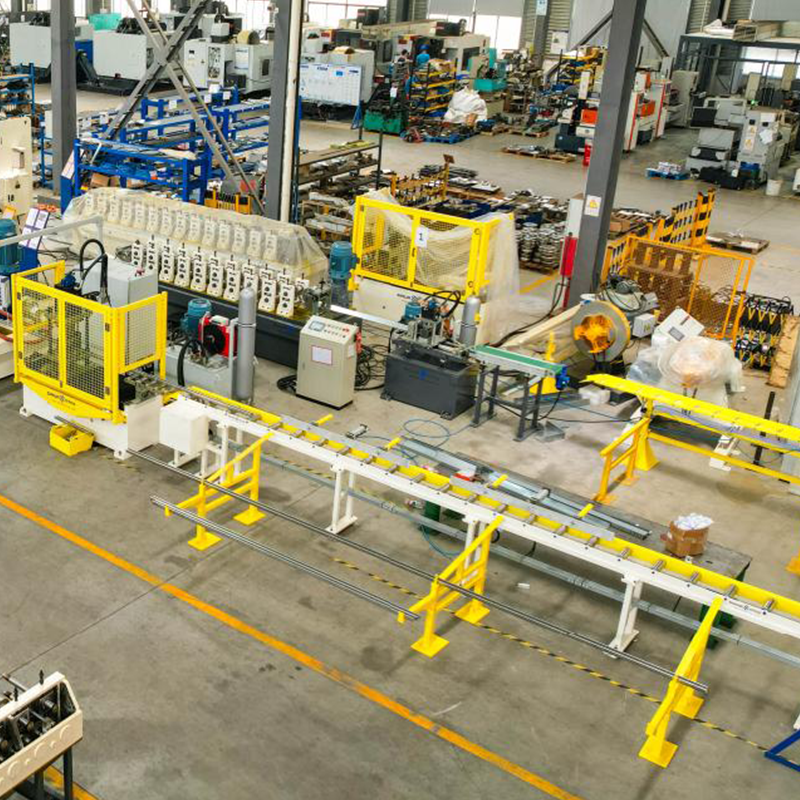
SS304 unistruct profile cassette roll forming machine Leveling machine(A leveling machine is required before using a punch press.) Yadon/Yangli 125-ton press machine (optional) Fle...
See Details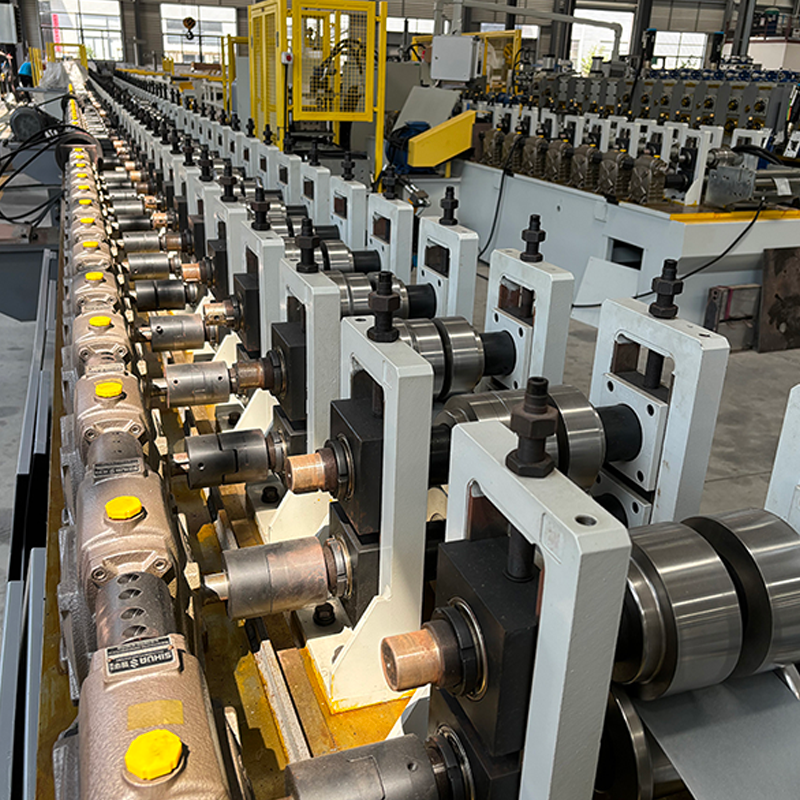
PV frame window door profile roll forming machine Worm gear reducers with different reduction ratios can be selected to achieve different production speeds. Straightening seats are used t...
See Details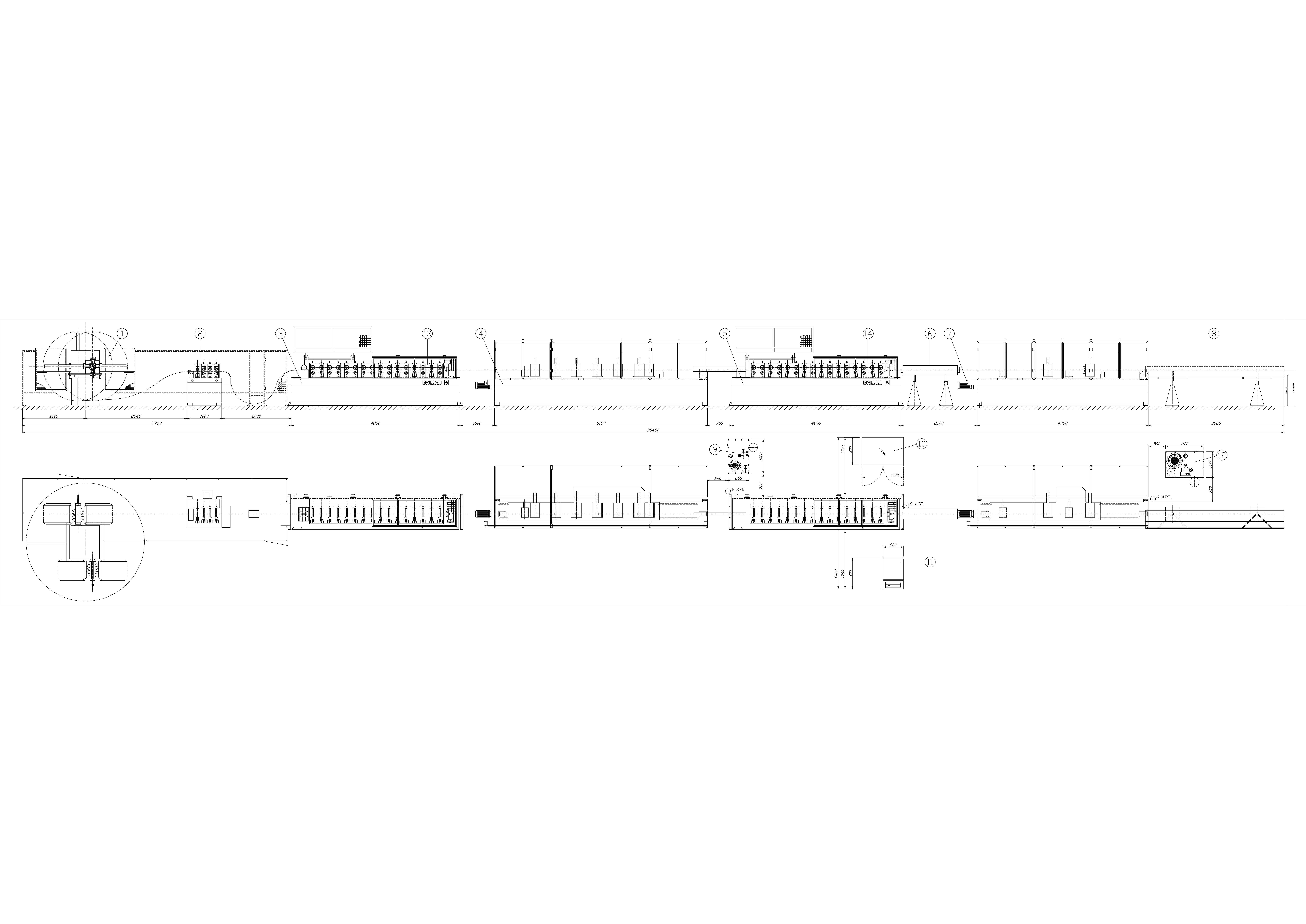
UT FUT UDT ceiling T-grid bar roll forming machine main and cross layout (Main and Cross) UT ceiling T-grid profiles and (Main and Cross) FUT ceiling T-grid profiles can be produced in just ...
See Details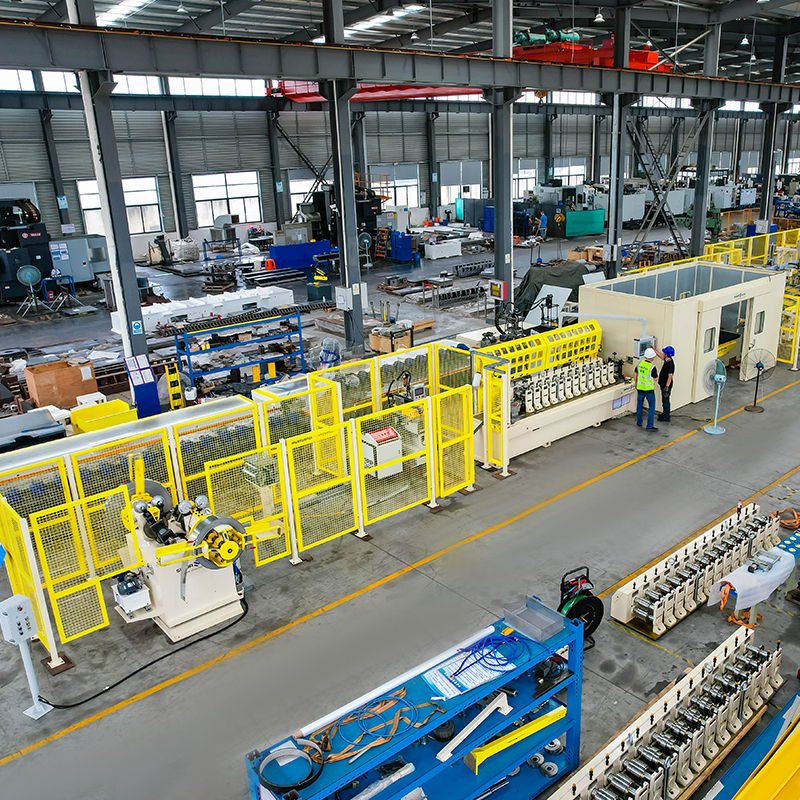
Automatic rotating double-head hydraulic decoiler with no-material detection, 5 tons per side. Quick-change cassette roll forming machine (changeover takes 30 minutes). Cutting without ...
See Details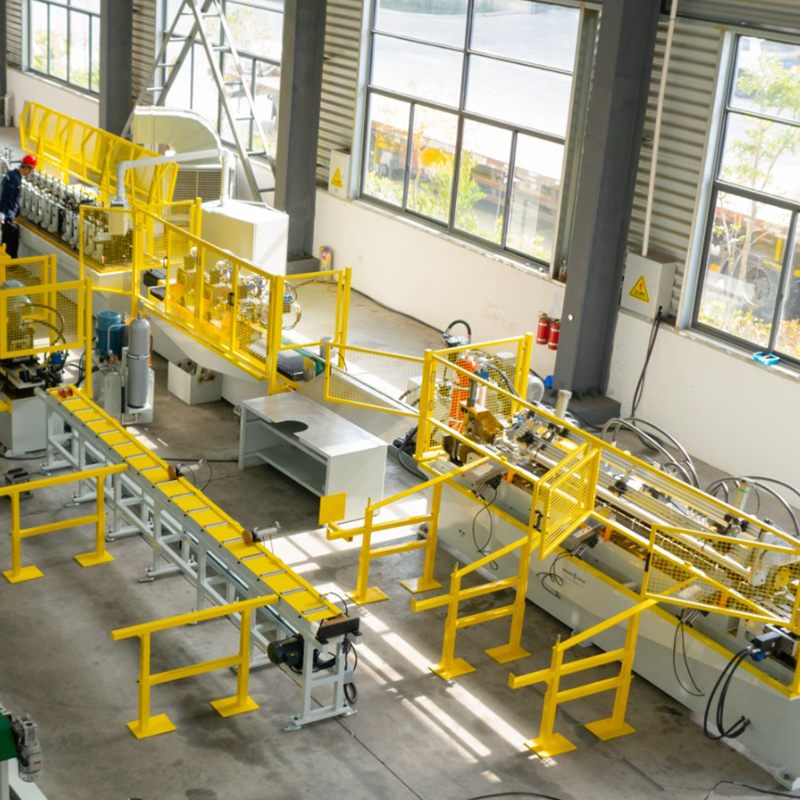
Double-head pre-painted steel hydraulic expanding/contracting uncoiler, double-head galvanized steel expanding/contracting uncoiler, pre-painted steel storage bracket, belt reduction. The 5-...
See DetailsDon't hesitate to contact when you need us!
Contact Information
PRODUCTS
Mobile


 English
 Español
 русский