Content
In the landscape of modern metal fabrication, the shift toward energy-efficient machinery is no longer just an environmental consideration—it is a critical economic imperative. Among the most significant advancements in this area is the 8-Axis Servo Punching Machine. Unlike conventional hydraulic or mechanical presses that consume power continuously, this technology introduces a paradigm shift in how electrical energy is utilized during the punching process. This article delves into the specific engineering and operational principles that answer the question: Why is energy consumption lower in an 8-axis servo punch?
To understand the energy savings, one must first grasp the fundamental difference in drive mechanisms. A traditional hydraulic punch press relies on an electric motor running continuously to maintain hydraulic pressure in an accumulator or pump system. This means that even when the machine is idle—waiting for material loading or tool changes—it is still drawing significant power to keep the system primed.
Key Difference: An 8-axis servo punch, driven by AC servo motors, operates on a strict "on-demand" basis. The motor only draws electrical current when the ram is actually moving to perform a punching, forming, or tapping operation.
This distinction yields substantial savings. During the "non-processing" portions of the cycle—such as turret rotation, material positioning, or dwell times—the servo motor is either idle or consuming a negligible amount of power required for holding torque, often reducing standby consumption by over 40% compared to a continuously running hydraulic pump.
In hydraulic systems, the pump motor runs constantly to maintain pressure. In the 8-axis machine, the servo drive stops entirely when the machine pauses. This absence of "idle loss" is the largest contributor to the machine's low operating costs, making it analogous to a hybrid vehicle that turns off its combustion engine at red lights, while a hydraulic press is akin to a traditional car idling continuously.
A significant portion of energy waste in conventional systems is due to parasitic losses—energy consumed by supporting components. The design of the 8-axis servo punch eliminates these entirely.
| Energy Consumption Factor | Hydraulic Punch Press | 8-Axis Servo Punch Press |
|---|---|---|
| Primary Pump | Runs continuously | Nonexistent (Direct drive) |
| Cooling Systems | Required to cool hydraulic oil | Minimal or none |
| Standby Power | High (maintaining pressure) | Negligible (motor off) |
| Friction Losses | High (oil pumping, valves) | Low (direct mechanical link) |
By removing the hydraulic pump, valves, and cooling systems, the machine reduces the energy required just to keep the system operational. This also reduces waste heat generated in the workshop, lowering the load on facility air conditioning systems—a secondary energy saving often overlooked.
The intelligent motion control in an 8-Axis Servo Punching Machine goes beyond simple start-stop functionality. One of the most advanced features contributing to low energy consumption is regenerative braking.
When the servo motor decelerates the ram or other axes (such as the sheet positioning tables), it acts as a generator. The kinetic energy released during braking is converted back into electrical energy. Instead of dissipating this energy as heat (through a resistor), the machine sends it back to the main power supply via a common DC bus to be reused by other axes.
For instance, during a high-speed punching sequence, the ram must accelerate and decelerate rapidly. The deceleration phase generates surplus energy. On an 8-axis machine:
Hydraulic presses cannot offer this feature. They convert excess energy into heat, requiring additional energy (and water) to cool the system down.
Energy consumption isn't just about the amount of power drawn during a hit; it's also about the time taken to perform the stroke. The servo system provides superior control over the motion profile.
By using sophisticated algorithms, the 8-axis servo can modify acceleration and speed at different points in the stroke. This capability allows the motor to operate at peak efficiency during the punch, but also allows for rapid retraction and positioning. The "pendulum movement" capability, where the ram moves up and down continuously without stopping at the top dead center, saves time and energy during non-processing strokes, reducing wasted motion and consequently wasted energy.
The operational benefits of the 8-Axis Servo Punching Machine translate directly into lower electricity bills and reduced cooling costs.
Yes, it consumes a minimal amount, primarily to power the control electronics and sensors. However, the main servo motor does not draw current, unlike a hydraulic pump which continues to run. This drastically reduces standby power consumption.
For most high-volume sheet metal fabrication operations, the energy savings of 40%-50% combined with reduced maintenance costs (no oil changes) and improved uptime typically result in a rapid return on investment, often in under three years.
Primarily on the main ram and the high-speed servo axes (X and Y). These axes are the heaviest and undergo the most frequent acceleration and deceleration, making them ideal for energy recapture through the common DC bus system.
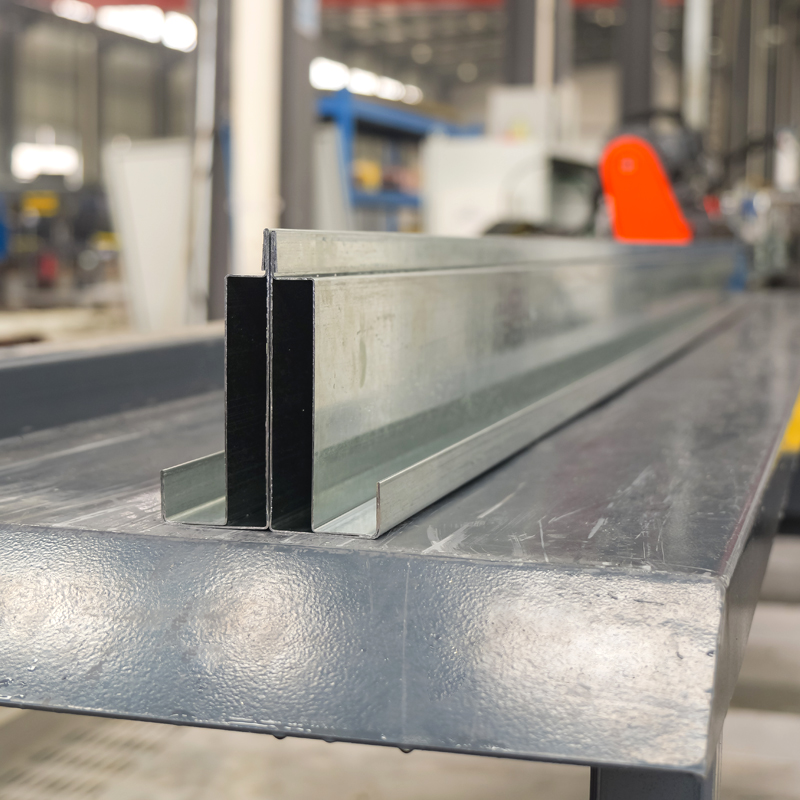
5-ton capacity hydraulic Decoiler with wagon Energy storage Frame beam roll forming machine Forming machine steps are 56 Precision profile size+-0.3mm Servo moving saw cutting off syste...
See Details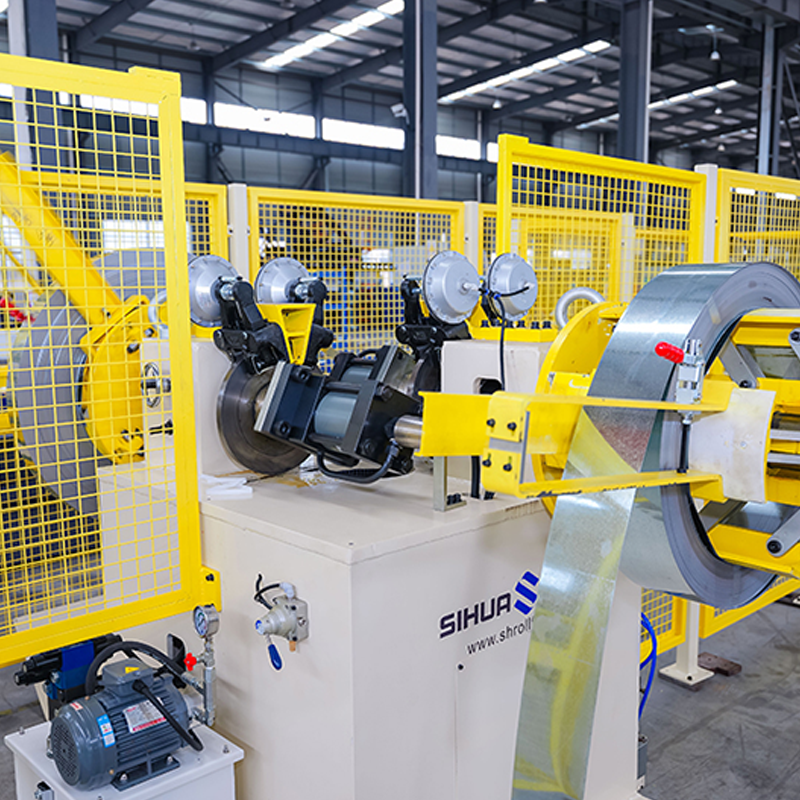
Automatic rotating double-head hydraulic decoiler with no-material detection, 5 tons per side. Laser power and welding length are adjustable to accommodate steel strips of various thicknesse...
See Details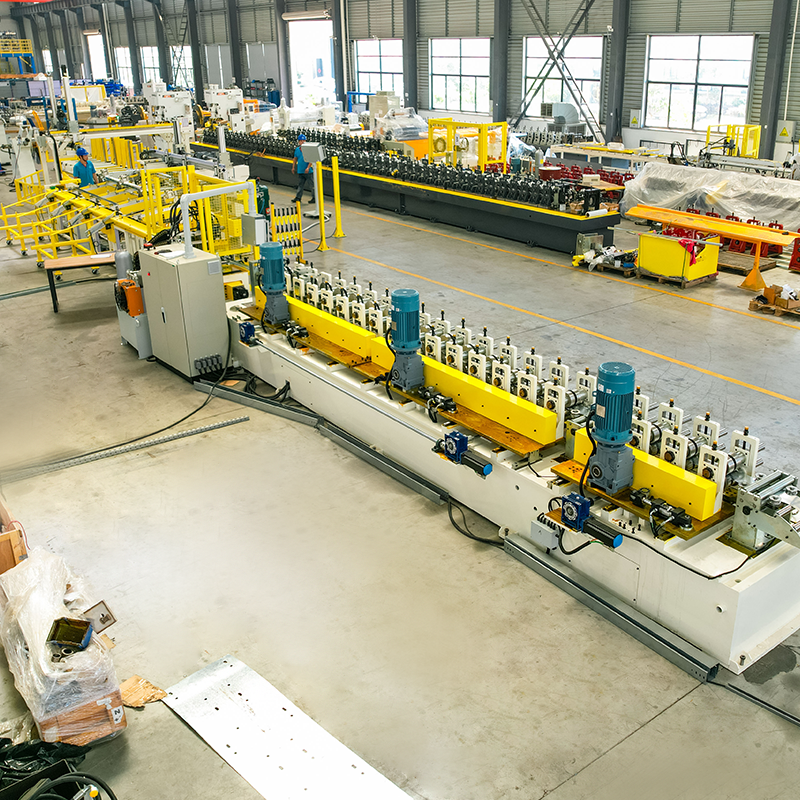
CU automatic width-change roll forming machine, chain drive, automatic packing. Economical double-head hydraulic decoiler, 3 tons per side, manual brake Automatic width and height chang...
See Details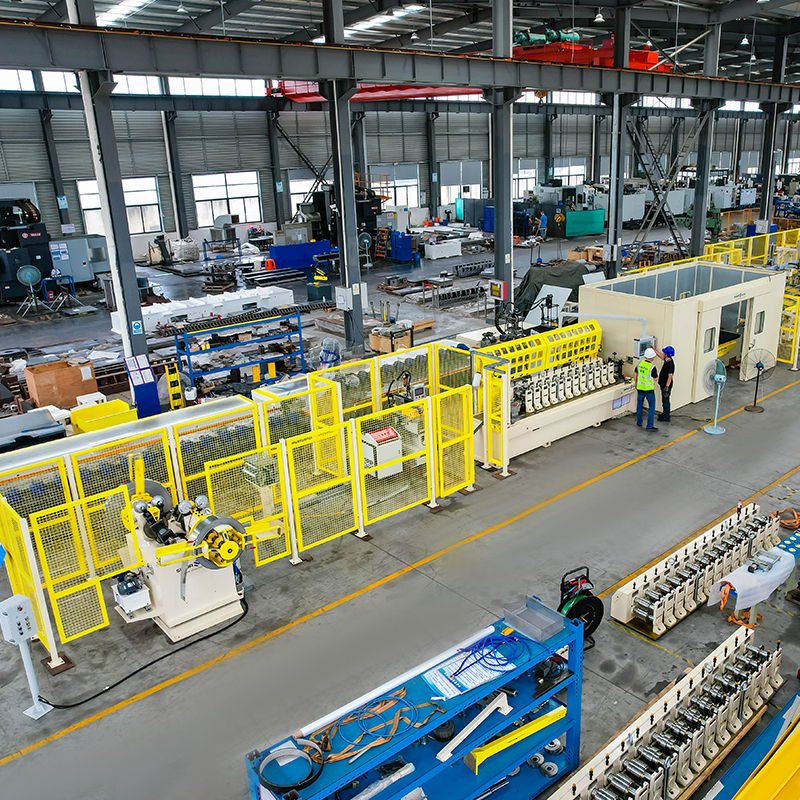
Automatic rotating double-head hydraulic decoiler with no-material detection, 5 tons per side. Quick-change cassette roll forming machine (changeover takes 30 minutes). Cutting without ...
See Details
Double-head pre-painted steel hydraulic expanding/contracting uncoiler, double-head galvanized steel expanding/contracting uncoiler, pre-painted steel storage bracket, belt reduction. The 5-...
See Details
Solar bracket auto change width roll forming machine Material decoiler with storage platform and robotic arm Leveling machine(A leveling machine is required before using a punch press.)...
See DetailsDon't hesitate to contact when you need us!
Contact Information
PRODUCTS
Mobile


 English
 Español
 русский