Content
In the world of industrial storage solutions, the terms upright rack and pallet rack are often used interchangeably. However, when it comes to the machinery that produces them, there is a distinct and important difference. Understanding the distinction between an Upright Rack Roll Forming Machine and a pallet rack roll forming machine is critical for any manufacturer or warehouse operator looking to invest in production equipment. While both are used to create components for storage systems, they are optimized for different profiles, load capacities, and production goals. This article provides a deep-dive, technical comparison to help you determine which machine aligns with your manufacturing requirements.
To understand the machinery, one must first understand the products they create. A pallet racking system is a complete structure, but its fundamental components are the beams (horizontal load bearers) and the uprights (vertical frames). The term "pallet rack roll forming machine" is often used as a broad category for equipment that produces components for this system. However, in precise industry terminology, this machine is typically configured to produce the beams or the entire frame structure, while a dedicated Upright Rack Roll Forming Machine is specifically engineered to produce the vertical columns.
The upright, also known as the vertical frame or column, is the structural backbone of any racking system. It is a vertical support that must bear the entire weight of the stored goods, which is transferred from the beams. These components are characterized by their specific cross-sectional shapes—often L-shaped, C-shaped, or a special heavy-duty C-type—and feature a series of punched holes or slots for adjustable beam placement. The design and strength of the upright are paramount to the safety and longevity of the entire storage system.
Conversely, a pallet rack is the complete structure comprising uprights, beams, and wire decking. When we discuss a "pallet rack roll forming machine," it is frequently an umbrella term for a line that can produce both the uprights and the structural components of the system, though often, the term specifically refers to the machine that produces the structural or step beams. The key takeaway is that while all upright rack machines produce pallet rack components, not all pallet rack machines are designed to produce the specialized upright profile efficiently.
The differences between these two machines lie in their engineering, forming stations, and capabilities. A standard pallet beam machine is relatively straightforward, while an upright rack machine is a complex, high-precision piece of equipment. Below is a detailed breakdown of the technical distinctions.
| Feature | Upright Rack Roll Forming Machine | Pallet Rack (Beam) Roll Forming Machine |
|---|---|---|
| Primary Product | Upright columns, vertical frames (L/C/Special C profiles) | Step beams, cross beams, horizontal structural members |
| Complexity | High. Requires more forming stations (18-24) for complex bends and shapes. | Medium. Fewer stations are needed for simpler "U" or "C" channel geometries. |
| Material Thickness | Typically heavier gauge for load-bearing capacity (1.5mm up to 3.0mm or more). | Typically lighter gauge (1.2mm - 2.0mm) as beams support horizontal loads differently. |
| Punching & Hole Patterns | Critical. Requires high-precision pre-punching or in-line punching for teardrop or slotted holes with specific spacing (e.g., 50mm or 75mm intervals). | Less complex. May only require end cutting and simple holes for connection clips. |
| Drive & Transmission | Often utilizes heavy-duty gearbox drives for high torque to handle thick steel. | May utilize a simpler chain transmission system due to lighter material loads. |
Investing in a specialized machine ensures that the specific geometry and structural integrity of the upright are maintained. The Upright Rack Roll Forming Machine is not just for producing a shape; it must also consistently produce a profile with the rigidity required for high-rise storage. The number of forming stations, the roller material (often GCr15 or Cr12MoV with high hardness ratings), and the structural strength of the machine frame (often 35-45mm thick steel plates) are all designed to handle the significant stress of shaping thick coils.
This specialization extends to material selection. While a standard machine can handle galvanized steel, the upright machine is calibrated for robust materials like high-yield strength carbon steel (A570/A572) and heavy-gauge galvanized steel.
The manufacturing line for an upright rack differs significantly in its configuration and optional components to ensure precision and efficiency.
A complete line for a Upright Rack Roll Forming Machine usually includes advanced ancillary equipment:
One of the most valued features of modern upright rack machines is the ability to produce multiple profiles on a single machine. This can be achieved by adjusting spacers between forming rollers, or more efficiently, via fully automatic width adjustment systems controlled through a PLC (Siemens or similar). This allows manufacturers to switch between L-shape, C-shape, or other specialized upright designs quickly, minimizing downtime. Standard pallet beam machines typically lack this level of complex reconfiguration.
It is imperative to address a common confusion in the industry: the difference between structural racking and roll-formed racking.
A structural racking system is made by welding or bolting together heavy, hot-rolled steel components. These are thicker, lower-gauge steels designed for extremely heavy loads and high impact resistance. This type of racking is robust and durable, often used in environments where forklift impact is a major concern, but it comes at a significantly higher cost and longer lead time.
Conversely, roll-formed racking is created by cold-rolling steel through the machines discussed in this article. The steel is shaped at room temperature, relying on its geometry for strength. While not as impact-resistant as structural steel, it is more cost-effective, modular, and easily adjustable, making it ideal for a wide range of selective or push-back racking applications. The Upright Rack Roll Forming Machine is specifically designed for this cold-roll forming process, optimizing the shape and strength of the steel to meet strict load requirements.
When deciding which machine to purchase, manufacturers must evaluate several factors beyond just the output profile:
Industry practices show that roll-formed racking—produced by an upright rack machine—is best applied to facilities that store seasonal, changing products where adjustability is key. Retail warehouses and third-party logistics (3PL) centers favor this because beams can be easily repositioned in 2-inch increments to accommodate varying SKU sizes. In contrast, the structural welded frame is suitable for more permanent, high-impact storage scenarios.
The primary output is the vertical column, or upright, used in pallet racking systems. These are the main vertical supports that bear the load.
Yes, many modern machines are designed with adjustable spacers or automated width adjustment systems, allowing them to produce various profiles like L-shape, C-shape, or specialized heavy-duty designs.
Not necessarily. While they are related, the upright machine is a specialized subset. A "pallet rack machine" is a broader term that often refers to the machine producing the beams. The upright machine is specifically designed for the complex vertical frame.
Depending on the configuration, these machines typically handle thicknesses from 1.5mm up to 3.0mm or more for heavy-duty applications.

wide material single decoiler Leveling machine and Machine for punching small holes on both sides All the upper and lower rollers are connected to a worm gear reducer.This makes the for...
See Details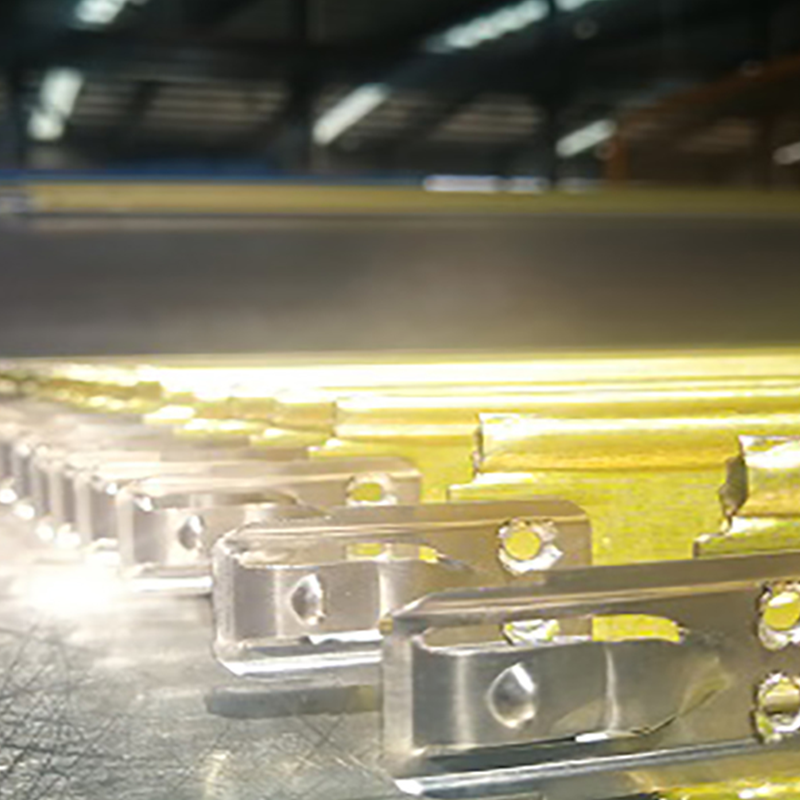
3.Alloy hook cross T-bar roll forming machine is a specialized piece of equipment engineered for producing T-shaped steel bars with integrated alloy hooks. These components are widely utiliz...
See Details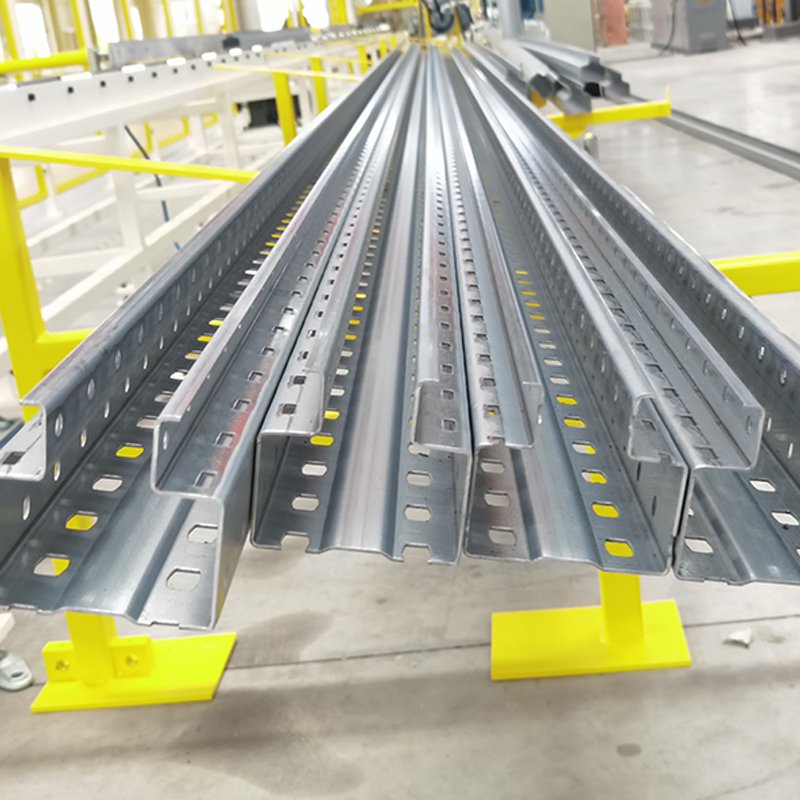
Upright rack roll forming machine, steel yield strength 250–550 MPa Single-head manual decoiler with feeding trolley Leveling before the press machine Yangli/Yadon press machine (o...
See Details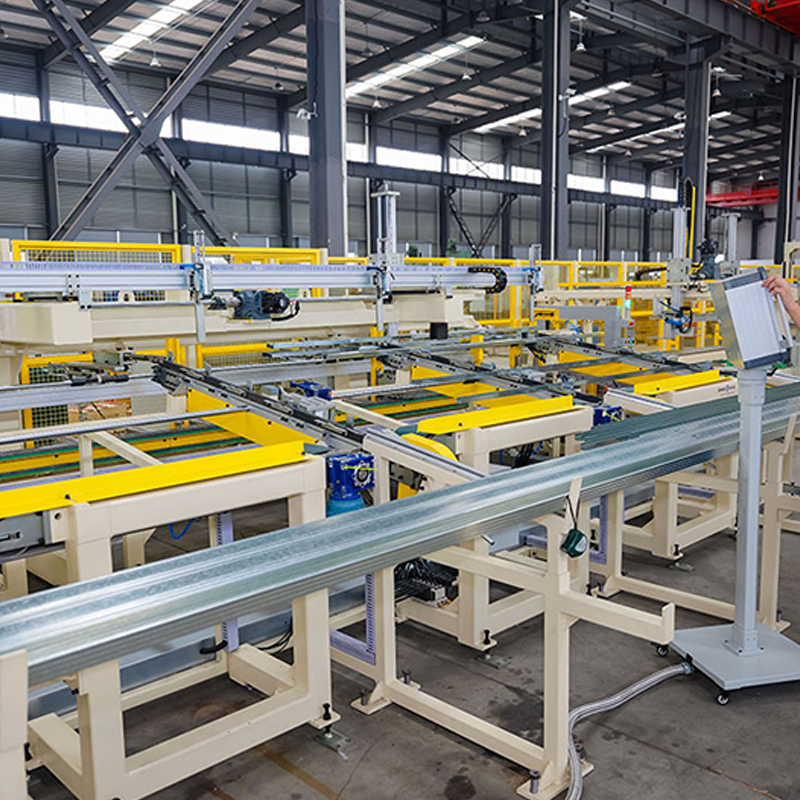
Automatic button flipping machine Flipping speed: 120 meters per minute. Flips the metal profile and snaps it on. Small bundle packing machine Large bundle palletizer Large-bu...
See Details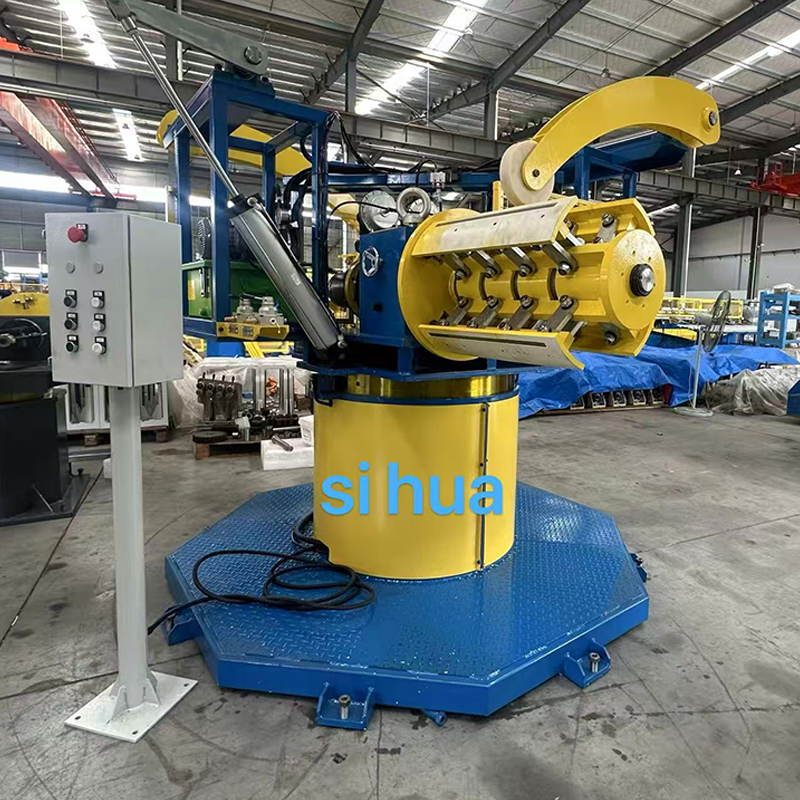
Double head rotating hydraulic heavy-duty decoiler.This equipment can automatically stop synchronously with the forming machine, and features hydraulic expansion and contraction as well as automa...
See Details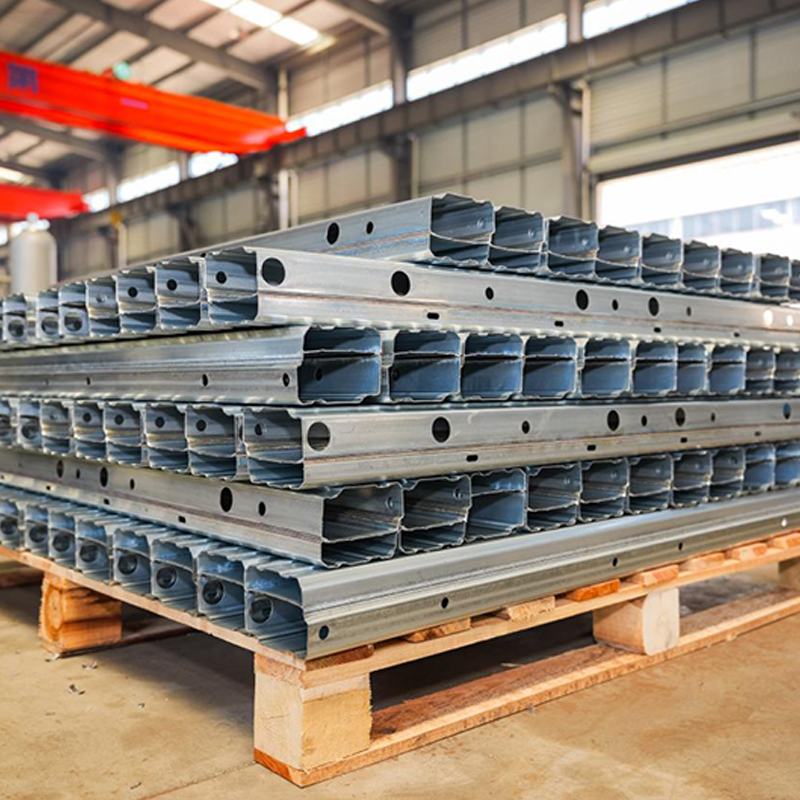
The production line for vehicle B-profile automotive chassis reinforcement beams involves several key processes to ensure High-strength, precision, and durability for vehicle applications. Key e...
See DetailsDon't hesitate to contact when you need us!
Contact Information
PRODUCTS
Mobile


 English
 Español
 русский