Content
A ceiling t bar manufacturing process converts a flat galvanized steel coil into a precisely shaped T-grid profile through a continuous sequence of uncoiling, straightening, punching, roll forming, cutting, and stacking. The entire process runs automatically, controlled by a central PLC that synchronizes every station. At the start, a motorized decoiler holds a coil weighing up to 10 tonnes and feeds the strip into the line at a controlled tension. A straightener with a series of pinch rollers removes the coil set, delivering a perfectly flat strip to the punching station because any curvature at this stage would misalign the slots and holes later in the process.
Understanding how does a ceiling t grid roll forming machine work means following the strip through each station. After straightening, the strip enters a servo-driven punching press that stamps the slots, holes, and notches required for cross tee connections and hanger wire attachment. The press operates in precise coordination with the line speed, ensuring that the slot spacing — typically 600 mm or 625 mm centre-to-centre — is maintained within a tolerance of ±0.3 mm. Once punched, the strip moves into the roll forming section where a sequence of paired roller stands progressively bends the flat metal into the final T-shaped profile without cutting, heating, or adding any filler material.
What is the roll forming process for ceiling profiles? It is a cold-forming method that passes a metal strip through a series of roller dies, each station making a small incremental bend. For a ceiling T-grid profile, the flat strip first has its edges bent upward to form the two flanges on the face of the tee, while the central portion is gradually folded to create the vertical web and the bulb at the top. A typical line uses 12 to 18 forming stands, with the first few stands initiating the bends and the later stands refining the angles until the final cross-section is achieved. The key to a straight, wrinkle-free tee lies in the flower pattern — the sequence of cross-sectional shapes that the strip takes at each station. An incorrectly designed flower over-stretches the outer fibres of the metal and creates a curved or twisted finished product.
The rollers themselves are made from induction-hardened tool steel with a surface hardness above HRC 58, ground to the exact profile of each intermediate stage. They rotate on high-precision tapered roller bearings that maintain alignment under the forming pressure. Unlike a press brake that forms the entire profile in one hit, roll forming applies the bending moment gradually over the length of the line. This gives the metal time to flow into shape without cracking the galvanized coating, preserving the corrosion resistance that is essential for ceiling grids installed in humid environments such as kitchens, bathrooms, and air-conditioned commercial spaces.
How are ceiling t bars manufactured at scale? The answer is an automatic production line for ceiling grid profiles that integrates all stations under a single control system. After the strip exits the roll forming stands, it is a continuous length of fully formed T-bar traveling toward the cutting station. A servo-driven flying shear moves synchronously with the line speed, clamping the moving profile and shearing it to the programmed length — commonly 3600 mm or 3660 mm for main tees, and shorter lengths for cross tees — while the line continues to run. The cut piece then transfers to a run-out table or an automatic stacker that aligns the tees into neat bundles ready for packaging.
The automation extends to quality control. An inline encoder continuously measures the strip feed length and sends corrections to the shear if the cut length drifts. Some high-end lines include a laser or camera inspection system that checks the profile dimensions and the slot positions on every piece, rejecting any that fall outside the tolerance band. How to manufacture metal ceiling grid systems efficiently reduces to this seamless integration: the decoiler feeds steadily, the punch press fires at exactly the right moment, the roll formers maintain their calibrated gaps, and the shear cuts to length — all without human intervention except for coil changes and occasional quality spot checks. A single operator can supervise the entire line.
To understand how is suspended ceiling grid made, the table below breaks down each station in an automatic production line for ceiling grid profiles and what it contributes to the finished product.
| Station | Function | Effect on Quality |
|---|---|---|
| Hydraulic decoiler | Pays out steel coil at controlled tension | Prevents jerking that misaligns punch registration |
| Straightener | Removes coil curvature; feeds flat strip forward | Curved strip at punching station produces skewed slots |
| Servo punching press | Stamps slots, holes, and notch profiles | Positional accuracy ±0.3 mm ensures cross tee fit |
| Roll forming stands (12–18 pairs) | Progressively bend strip into T-shaped profile | Flower design prevents springback and twisting |
| Servo flying shear | Cuts moving profile to programmed lengths | Cut length accuracy ±1 mm at line speed |
| Automatic stacker | Collects, aligns, and bundles finished tees | Reduces handling damage and manual sorting time |
The roll forming process for ceiling t grid is a compromise between speed and material behaviour. Steel strip has a memory — known as springback — that tries to unbend the profile after it exits each roller station. The roll designer compensates by slightly over-bending at each stage so that the metal relaxes into the exact target angle. The bulb at the top of the T is particularly challenging to form without creating a visible crack or thinning the galvanized coating. It is typically formed in the final four to six stations, with the metal folded over a mandrel and compressed into a tight, multi-layered shape that resists bending along the length of the tee.
The result of the entire process is a ceiling grid component that is straight within 2 mm over a 3.6-meter length, with a consistent face width and slot alignment. This precision is what allows a suspended ceiling to be assembled from components produced months apart, on different machines, and still present a perfectly flat, seamless grid. Whether the question is how does a ceiling t grid roll forming machine work or how are ceiling t bars manufactured, the answer converges on a tightly integrated production line where the raw steel enters at one end and emerges at the other as a finished architectural component, ready to support a ceiling that will hang for decades.
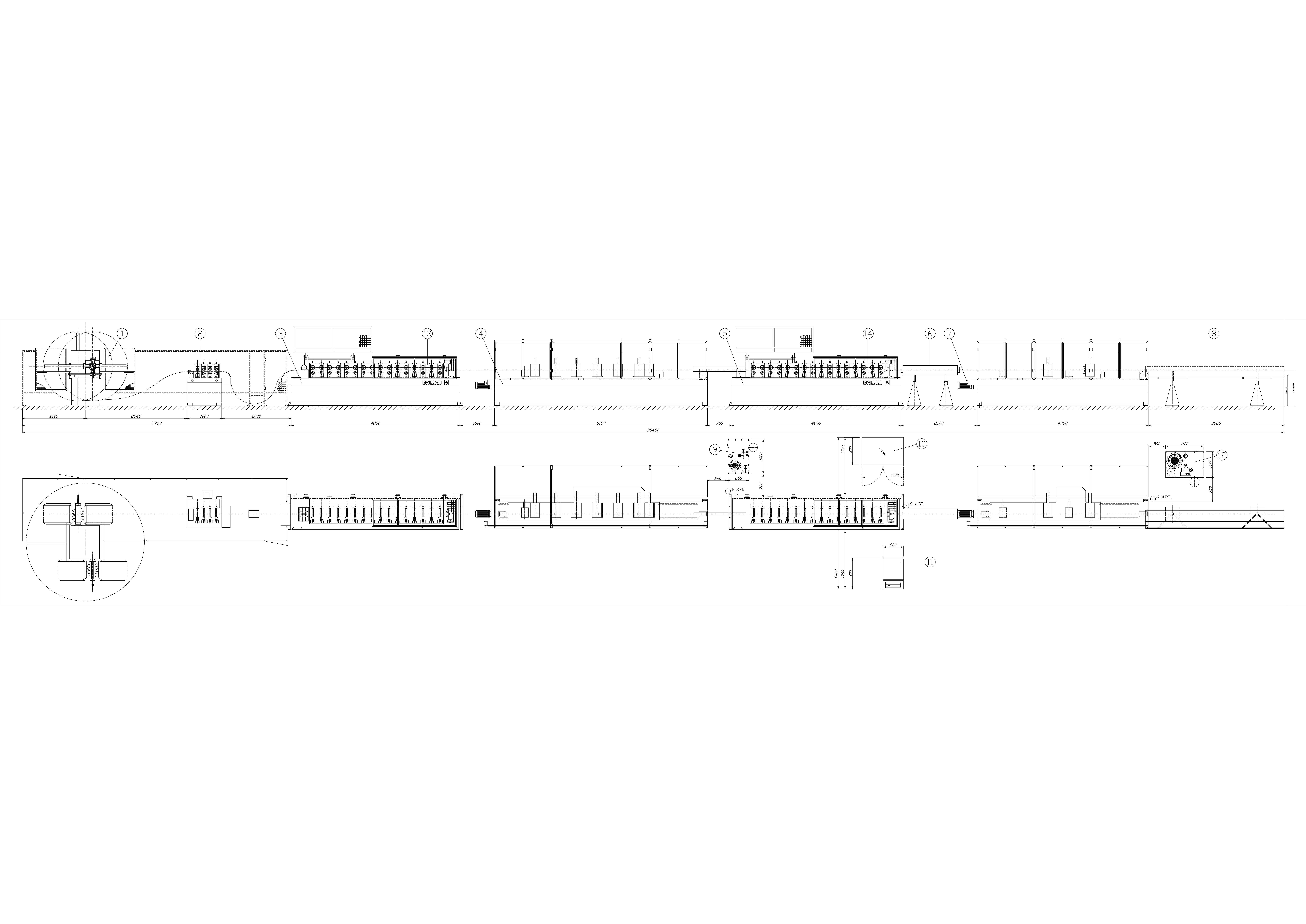
UT FUT UDT ceiling T-grid bar roll forming machine main and cross layout (Main and Cross) UT ceiling T-grid profiles and (Main and Cross) FUT ceiling T-grid profiles can be produced in just ...
See Details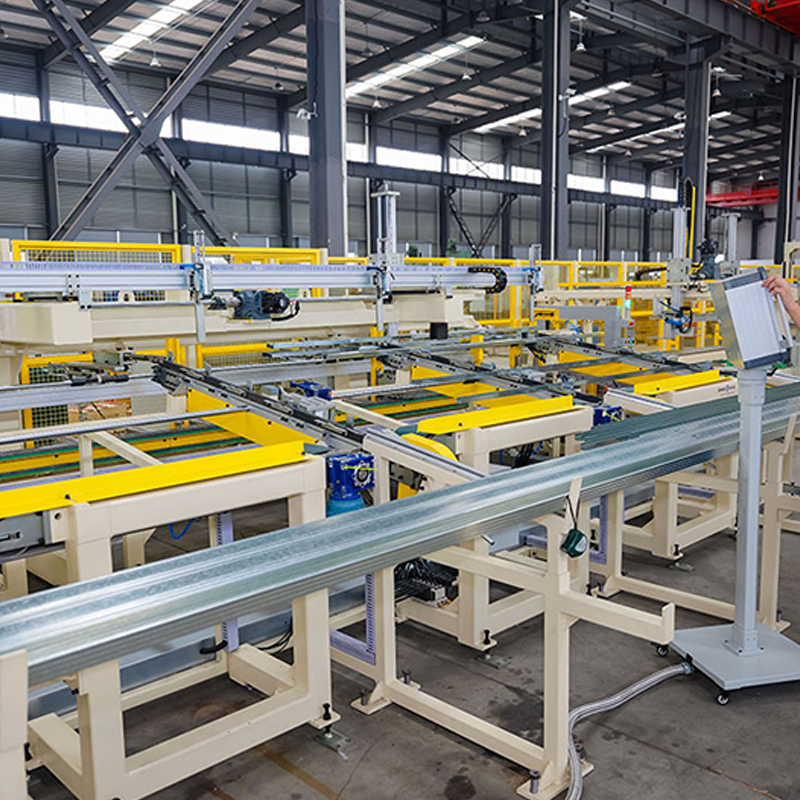
Automatic button flipping machine Flipping speed: 120 meters per minute. Flips the metal profile and snaps it on. Small bundle packing machine Large bundle palletizer Large-bu...
See Details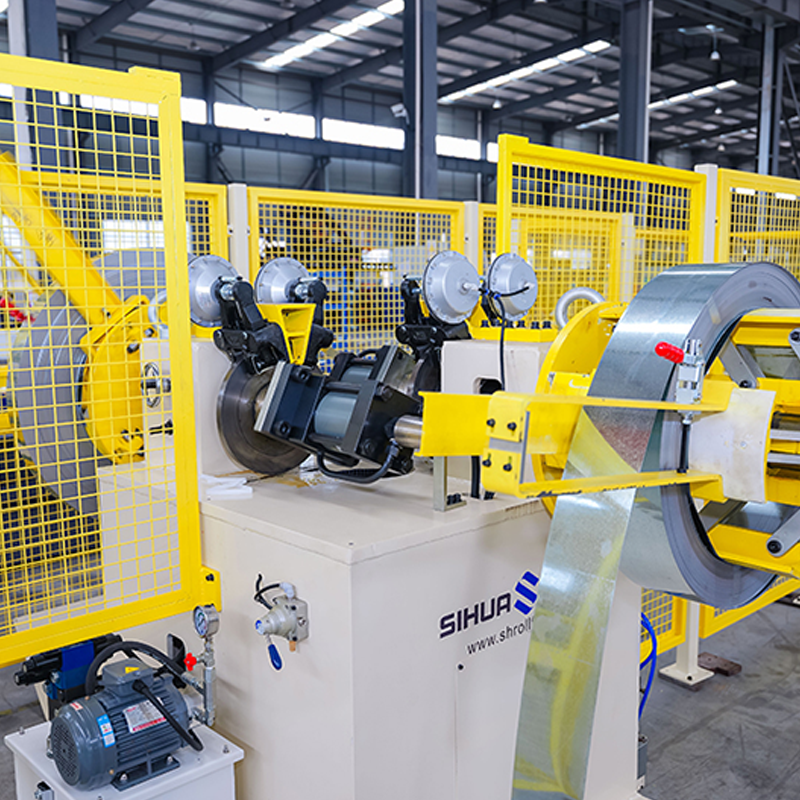
Automatic rotating double-head hydraulic decoiler with no-material detection, 5 tons per side. Laser power and welding length are adjustable to accommodate steel strips of various thicknesse...
See Details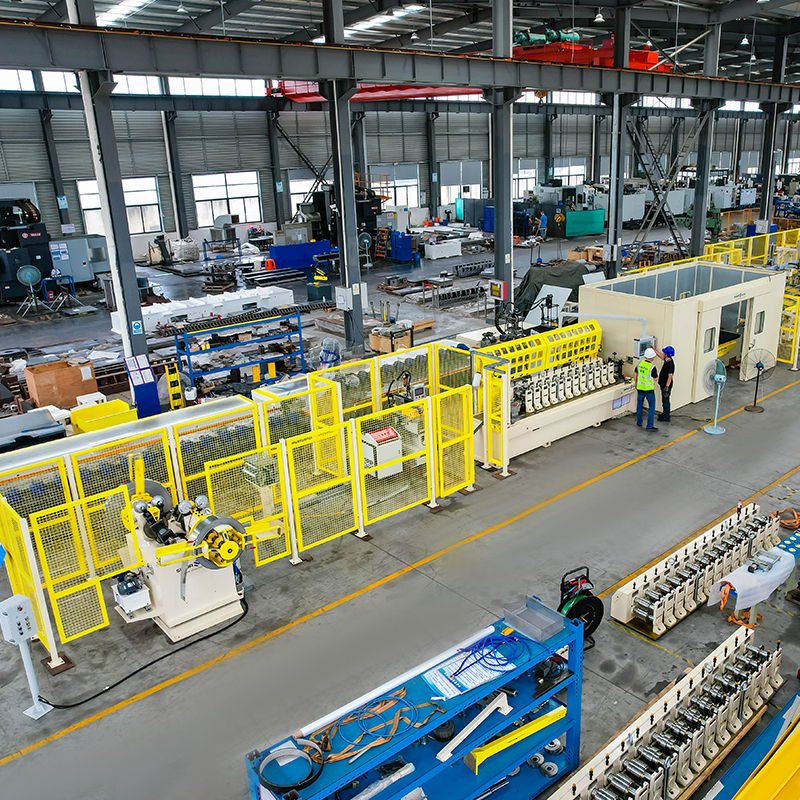
Automatic rotating double-head hydraulic decoiler with no-material detection, 5 tons per side. Quick-change cassette roll forming machine (changeover takes 30 minutes). Cutting without ...
See Details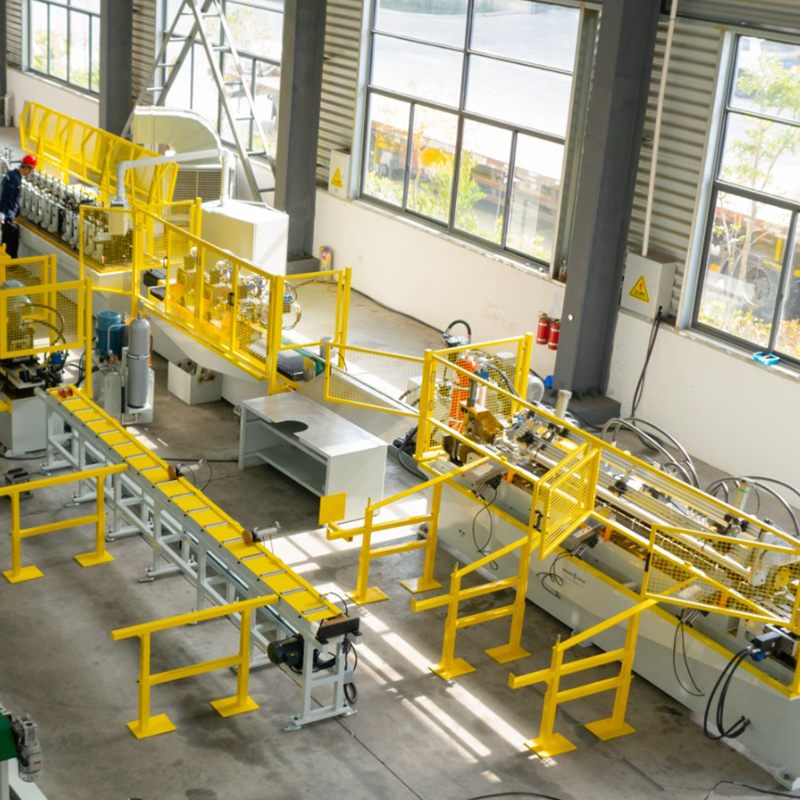
Double-head pre-painted steel hydraulic expanding/contracting uncoiler, double-head galvanized steel expanding/contracting uncoiler, pre-painted steel storage bracket, belt reduction. The 5-...
See Details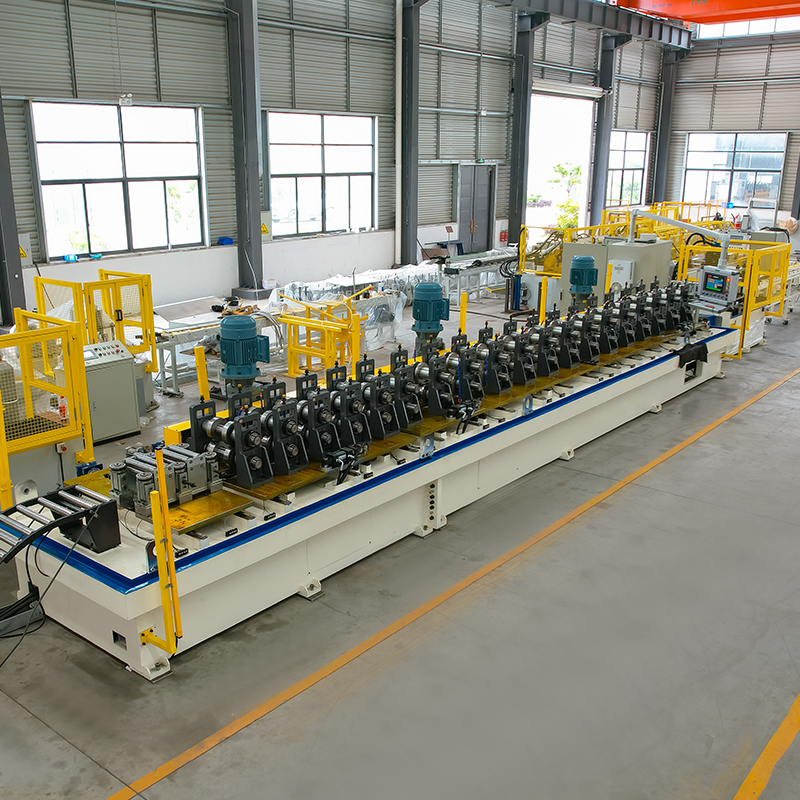
Solar bracket auto change width roll forming machine Material decoiler with storage platform and robotic arm Leveling machine(A leveling machine is required before using a punch press.)...
See DetailsDon't hesitate to contact when you need us!
Contact Information
PRODUCTS
Mobile


 English
 Español
 русский