Content
A roll forming machine is a continuous metal forming system that progressively bends a long strip of coiled sheet metal into a uniform cross‑sectional profile at room temperature. Unlike stamping or press braking, which form discrete parts in individual strokes, roll forming feeds the metal through a consecutive series of roller dies, each performing a small increment of the total bend until the final shape emerges at the exit. Understanding what is a roll forming machine and its unique process opens up cost‑effective production routes for everything from roofing panels and door frames to complex automotive structural rails, often running at line speeds exceeding 30 meters per minute around the clock.
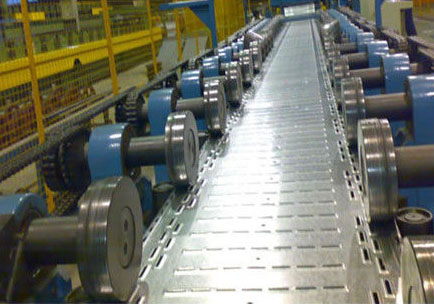
To understand how does a roll forming machine work, it helps to picture a series of paired roller dies arranged along a bed. A decoiler feeds a flat metal strip into the first stand, where two contoured rollers grip the edges and start forming a slight bend. The strip then passes through subsequent stands — typically 10 to 30 pairs — each applying a small additional deformation. Because the metal is not heated above its recrystallization temperature, the entire operation is called the cold roll forming process.
The science behind how does cold roll forming process work lies in the controlled plastic deformation of the metal. As the strip advances, the bending radius at each stand is carefully calculated to stay within the material’s strain limits, avoiding cracking or thinning. The final pass sets the exact profile dimensions, after which a cutoff press shears the formed length to the required size without stopping the line. Modern lines can integrate additional in‑line operations — such as piercing, notching, embossing, or even welding — so that a finished component emerges from a single pass. This continuous nature is the defining characteristic: a roll former can run for hours without interruption, producing hundreds of meters of identical profile.
When evaluating what are the advantages of roll forming, the most significant is the marriage of speed and precision with minimal material waste. Because the metal is formed cold, its tensile strength actually increases slightly through work hardening, while the surface finish remains pristine. The process can achieve longitudinal tolerances within ±0.5 mm over several meters and repeat that accuracy over millions of parts.
The choice between roll forming process vs stamping process and roll forming vs press brake bending rests on part geometry, volume, and length. The following table captures the critical differences.
| Characteristic | Roll Forming | Stamping | Press Brake Bending |
|---|---|---|---|
| Process type | Continuous forming from coil | Batch forming of discrete blanks | Discrete bends on pre‑cut sheets |
| Optimal production volume | High — 10,000+ linear meters | Medium to high — 5,000+ parts | Low to medium — 1 to 5,000 pieces |
| Part length capability | Virtually unlimited length | Limited by press bed size | Limited by machine length |
| Material waste | Under 5% | 15–25% (skeleton scrap) | Minimal |
| Tooling cost | Moderate — amortized over high volumes | High for complex progressive dies | Low — simple V‑dies |
| Profile complexity | Uniform cross‑section, can have intricate features | High — 3D forms, embossments | Limited to linear bends |
In the roll forming process vs stamping process decision, if the part has a uniform profile and is needed in lengths beyond 1–2 meters, roll forming is almost always more economical. Stamping dominates when parts are small, intricate, and require deep drawing or multi‑planar forming. For roll forming vs press brake bending, press brakes remain the tool of choice for prototypes, very short runs, and profiles that may change frequently. However, once production volumes rise above a few thousand pieces, the speed and consistency of roll forming typically offset the higher initial tooling investment within the first production year.
A frequent question is what materials can be roll formed, and the answer covers a wide spectrum of ductile metals. Because cold working requires the material to elongate without fracturing, formability is the key material property.
The typical thickness range for roll forming spans from 0.15 mm (foil gauge) up to about 6.5 mm (heavy structural sections). Coil widths can exceed 2,000 mm in dedicated lines. Material must be supplied as level‑wound coil with consistent thickness and width; any variation propagates through the line and can cause twist or wave in the finished profile.
Knowing how to choose a roll forming machine involves matching the line's specifications to the most demanding profile in your product range. The decision process focuses on six key factors:
It is equally important to select a supplier who can provide roll design engineering using finite element simulation. Properly simulated roll flower diagrams predict forming strains and prevent trial‑and‑error on the shop floor, which is the single largest source of start‑up delay on a new profile.
Several interacting variables answer what affects roll forming machine performance, and they must be controlled simultaneously to produce straight, dimensionally accurate parts.
Operators monitor strip straightness at the exit with laser sensors or simple straight‑edges and adjust individual roll stands laterally or vertically to correct tracking errors. A line equipped with a closed‑loop straightening system can maintain quality without stopping the line.
A disciplined roll forming machine maintenance guide is what separates a line that runs trouble‑free for years from one plagued by unscheduled stoppages and quality drift. The mechanical demands — continuous high‑pressure rolling, vibration, and exposure to metal fines — make a schedule non‑negotiable.
The payoff for rigorous maintenance is not just reliability but also part quality. A well‑maintained roll forming line will hold consistent profile dimensions for 10–20 years of production, with only routine roll polishing and bearing replacements. Given that the capital cost of a complete line can range from $50,000 to over $500,000, protecting that asset through scheduled care is one of the highest‑return investments a manufacturing manager can make.

wide material single decoiler Leveling machine and Machine for punching small holes on both sides All the upper and lower rollers are connected to a worm gear reducer.This makes the for...
See Details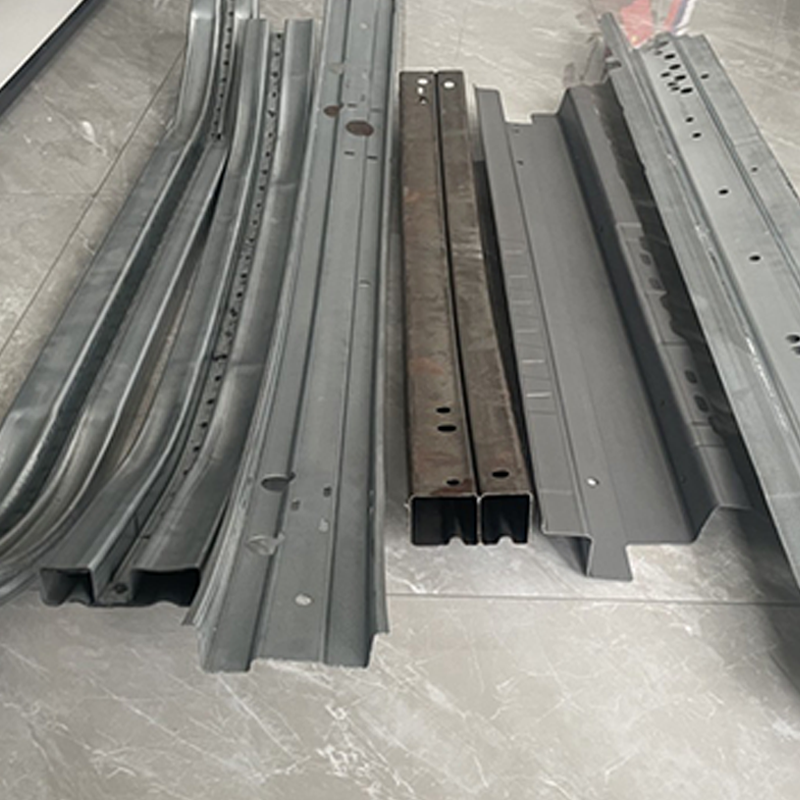
Roller Die Display Automobile front anti-collision beam-bending mold Anti-collision beam rolling bend mechanism Mold Real Shots Stamping Continuous Die Continuous Mold Display Stamping ...
See Details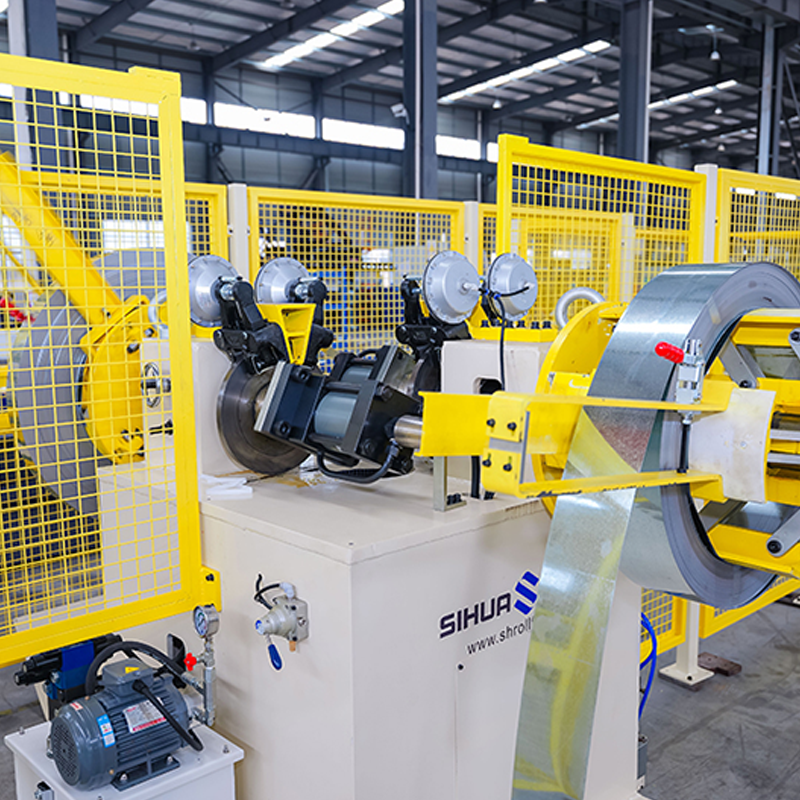
Automatic rotating double-head hydraulic decoiler with no-material detection, 5 tons per side. Laser power and welding length are adjustable to accommodate steel strips of various thicknesse...
See Details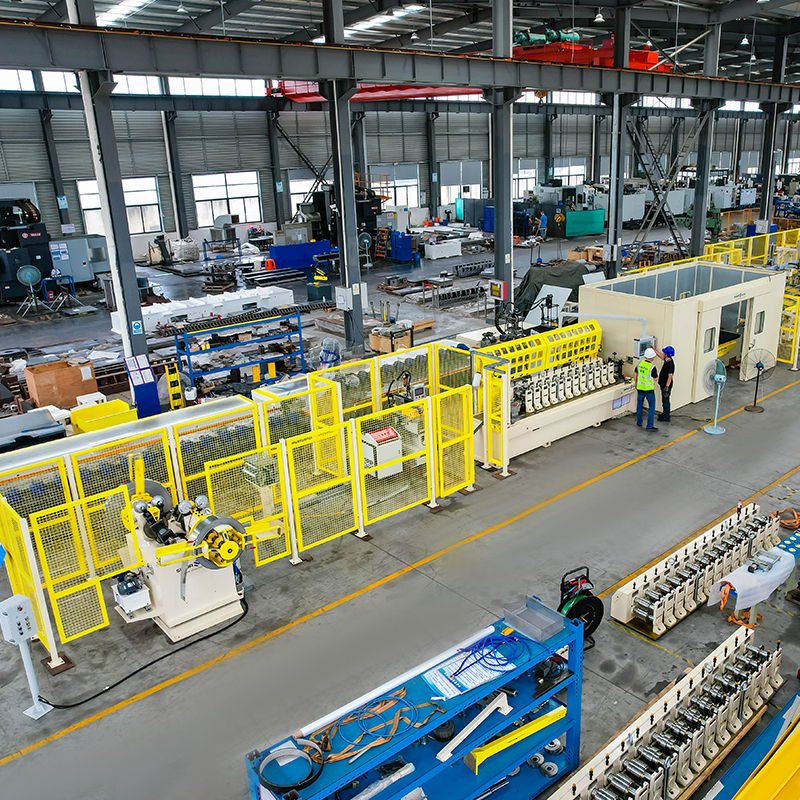
Automatic rotating double-head hydraulic decoiler with no-material detection, 5 tons per side. Quick-change cassette roll forming machine (changeover takes 30 minutes). Cutting without ...
See Details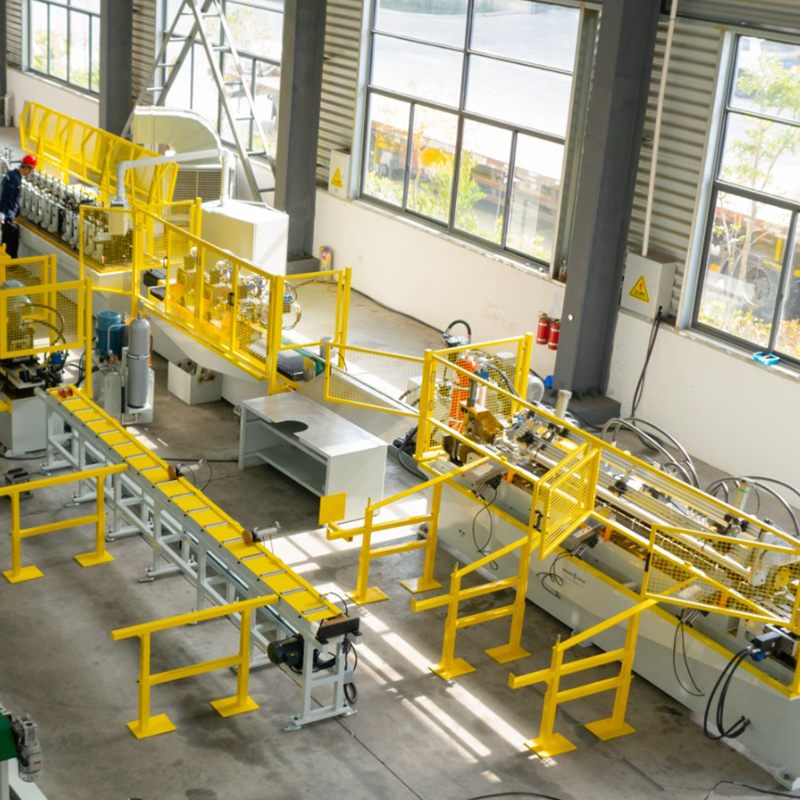
Double-head pre-painted steel hydraulic expanding/contracting uncoiler, double-head galvanized steel expanding/contracting uncoiler, pre-painted steel storage bracket, belt reduction. The 5-...
See Details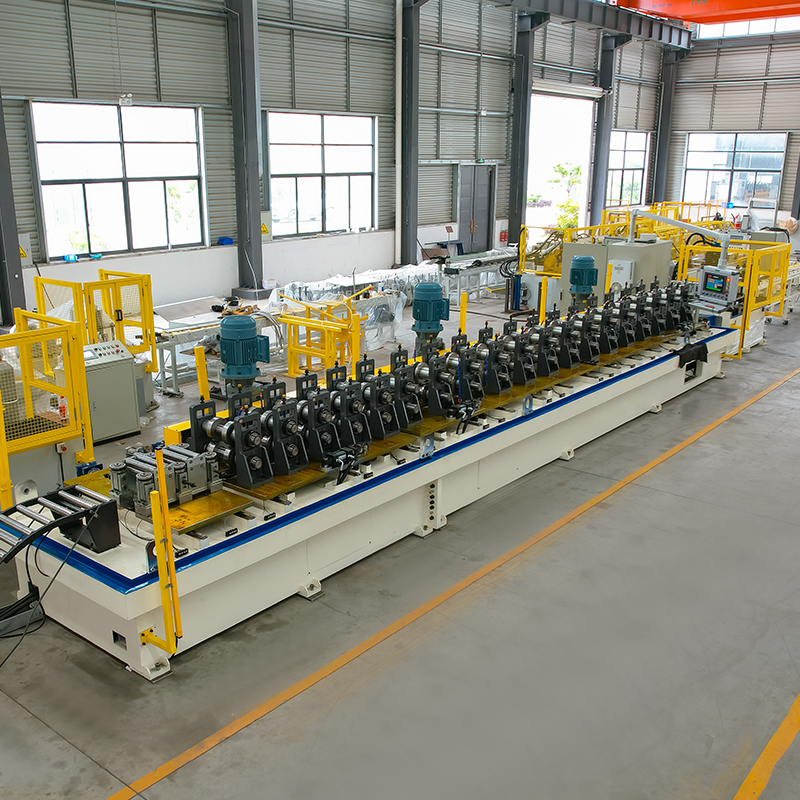
Solar bracket auto change width roll forming machine Material decoiler with storage platform and robotic arm Leveling machine(A leveling machine is required before using a punch press.)...
See DetailsDon't hesitate to contact when you need us!
Contact Information
PRODUCTS
Mobile


 English
 Español
 русский