Content
Selecting the right roll forming machine is a strategic decision that directly impacts product quality, production speed, and overall profitability. Whether you are producing steel framing for high‑rise buildings, cable trays for infrastructure, or precision profiles for solar farms, the machine must match the specific demands of the material, the profile geometry, and the required output. This guide walks through the key considerations for how to choose a roll forming machine for metal profiles across different industries, from steel and construction to solar mounting and storage racks, and explains the tangible benefits of automatic and high‑speed systems.
The process of how to choose a roll forming machine for metal profiles starts with a detailed analysis of the profile itself and the production environment. The most critical factors include:
A thorough upfront specification that accounts for all these elements ensures that the selected machine will run the intended profiles at full speed without quality issues, day after day.
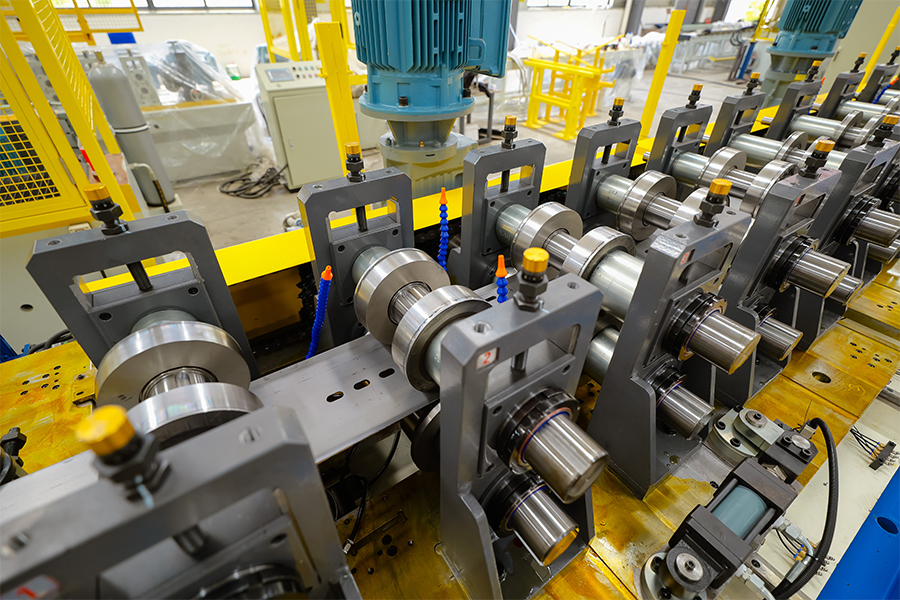
A roll forming machine for steel profiles must be engineered to handle the unique challenges of ferrous materials. Steel, particularly high‑strength low‑alloy (HSLA) grades used in automotive and structural applications, exhibits significant springback — the tendency of the metal to partially return to its original shape after bending. Compensating for springback requires roll designers to overbend the material by a precise angle that is determined through finite element analysis or extensive empirical data.
Beyond springback, the abrasive nature of steel accelerates roll wear. Rolls for steel processing are typically made from tool steel such as D2 or high‑carbon, high‑chromium grades, hardened to 60–62 HRC, and often coated with titanium nitride to extend service life. The drive train must deliver sufficient torque at the low speeds that heavy steel gauges demand, frequently employing gearboxes with ratios that multiply motor output while maintaining precise synchronization between stands. For manufacturers running steel coil above 3 mm in thickness, a machine with individually driven roll stands and robust shaft diameters of at least 60 mm is strongly recommended.
A roll forming machine for construction industry applications is typically a high‑output line that produces long, uniform profiles such as metal roofing sheets, wall cladding, purlins, and floor decking. These profiles are characterized by their length — often exceeding 12 meters — and the need for precise interlocking edges that ensure weathertight assembly on site. The machine must maintain dimensional accuracy over thousands of linear meters to guarantee that every sheet fits correctly.
Construction roll formers are frequently designed with interchangeable roll cassettes, allowing a single line to produce multiple profiles. This flexibility is critical for building material suppliers who must switch between trapezoidal roofing, corrugated sheets, and wall panels within the same shift. Quick‑change systems can reduce the changeover time from several hours to under 30 minutes, directly improving machine utilization. Given the outdoor storage and exposure that construction materials face, many lines also integrate an in‑line embossing station for brand marking and a flying cutoff saw that cleanly severs the formed sheet without distorting the profile.
The rapid growth of photovoltaic installations has created a specialized demand for a roll forming machine for solar mounting systems. These machines produce the structural rails, C‑channels, and purlins that support solar panels on rooftops and in ground‑mount farms. The profiles are frequently made from hot‑dip galvanized steel, zinc‑aluminum‑magnesium coated steel, or aluminum to resist decades of outdoor exposure.
Precision is paramount for solar mounting components. The profile must fit tightly with connectors and clamps to ensure the entire array remains stable under wind loads. Dimensional tolerances of ±0.3 mm across the cross‑section are common. Additionally, solar rail profiles often include pre‑punched holes at regular intervals for mounting bolts. To eliminate a secondary drilling step, the roll forming line integrates a servo‑driven punching press that operates in synchronization with the line speed, placing holes with a positional accuracy of ±0.5 mm along the length. Machines designed for this sector frequently feature stainless steel‑clad rolls to prevent any zinc transfer that could compromise the corrosion resistance of the coated strip.
A roll forming machine for cable tray production is engineered to form the distinctive return flanges and stiffening ribs that give cable trays their load‑bearing capacity. These profiles, used to support electrical and data cables in commercial and industrial buildings, require smooth, burr‑free edges to prevent cable insulation damage during installation. The forming sequence must carefully control the edge radius to avoid sharp corners.
Cable tray lines often run steel coil from 0.8 mm to 2.0 mm thick, with widths up to 600 mm. The profiles may be ladder type, perforated, or solid bottom. To produce perforated cable tray, the machine incorporates an in‑line punching station that creates hundreds of holes per meter at high speed. The challenge is to maintain structural integrity — the punching and forming must be precisely synchronized so that holes do not weaken critical bend lines. Additionally, many modern cable tray lines include an automatic stacking system that counts and bundles finished pieces, enabling lights‑out operation for extended periods.
Light‑gauge steel framing for interior partitions and ceilings is produced on a roll forming machine for drywall profiles. These profiles — primarily U‑track and C‑stud — are formed from thin galvanized steel, typically 0.4 mm to 1.2 mm thick, at very high speeds. A dedicated drywall profile line can run continuously at 60 to 120 meters per minute, outputting over 40,000 linear meters in a single shift.
At such speeds, material feeding and straightness control become the critical bottlenecks. The entry section must include a precision leveler that removes coil set, and the roll tooling must be polished to a mirror finish to minimize friction and zinc pickup. Because drywall studs are often punched with service holes for electrical and plumbing lines, the roll former incorporates a flying punching die that can operate at the full line speed. The punched holes must be positioned accurately within ±1.0 mm of the specified location to align with pre‑drilled holes in the connecting tracks. A well‑designed drywall profile line integrates all these functions into a single, compact footprint suitable for installation in a standard factory bay.
Warehouse shelving and pallet racking systems depend on a roll forming machine for storage rack production. The uprights and beams that form the backbone of racking structures are typically made from high‑strength steel with a yield strength of 350–550 MPa to support heavy loads. These profiles are distinguished by numerous punched slots, teardrop holes, or keyhole patterns that allow shelves to be clipped in at adjustable heights.
The roll forming line for storage racks must handle the combined stresses of forming a complex section while simultaneously punching a dense pattern of holes. To prevent distortion, the punching and forming stations are arranged in alternating sequence — punches are applied while the strip is still flat, and forming progresses only after the hole pattern is complete. The cutoff is typically performed with a hydraulic shear that cuts through the thick, work‑hardened section without deforming the profile. Storage rack profiles often exceed 10 meters in length, so the run‑out table and automatic stacker must handle long, heavy parts gently to avoid bending.
Investing in an automatic roll forming machine transforms the production floor from a labor‑intensive operation into a streamlined, high‑output cell. The automatic roll forming machine benefits are immediately visible in reduced direct labor: one operator can manage multiple lines that run without manual intervention, from coil loading to finished product stacking.
The high speed roll forming machine advantages are particularly relevant for high‑volume, thin‑gauge products. Running at 60 m/min or faster, these machines dramatically lower the cost per meter. A line that operates at 80 m/min can produce the same output in one shift that a standard 30 m/min line would require two shifts to complete, effectively halving energy and labor expenses per unit. However, high speed demands superior coil handling and a precision entry guide system to prevent strip wander. The payoff is a rapid return on investment in industries where profit margins depend on throughput.
When an off‑the‑shelf machine cannot meet the exact profile, material, or integration requirements, custom roll forming machine solutions become necessary. Custom engineering allows the line to be tailored around a specific product family, optimizing the number of roll stands, the in‑line punching layout, and the exit handling system to exactly match the production workflow.
A custom solution might involve a uniquely long bed to accommodate a profile that requires gradual forming to avoid stress cracking, or a specialized roll cassette system that enables rapid changeover between dozens of similar but distinct shapes. It may also include robotic stacking and palletizing, integration with enterprise resource planning systems, or remote diagnostic connectivity for predictive maintenance. While the initial engineering and tooling cost is higher, a properly specified custom roll forming machine typically achieves a payback within 12–18 months through higher productivity and lower scrap. The key is to collaborate with a manufacturer that has deep roll design simulation capability, ensuring that the machine performs exactly as intended from the very first coil.

wide material single decoiler Leveling machine and Machine for punching small holes on both sides All the upper and lower rollers are connected to a worm gear reducer.This makes the for...
See Details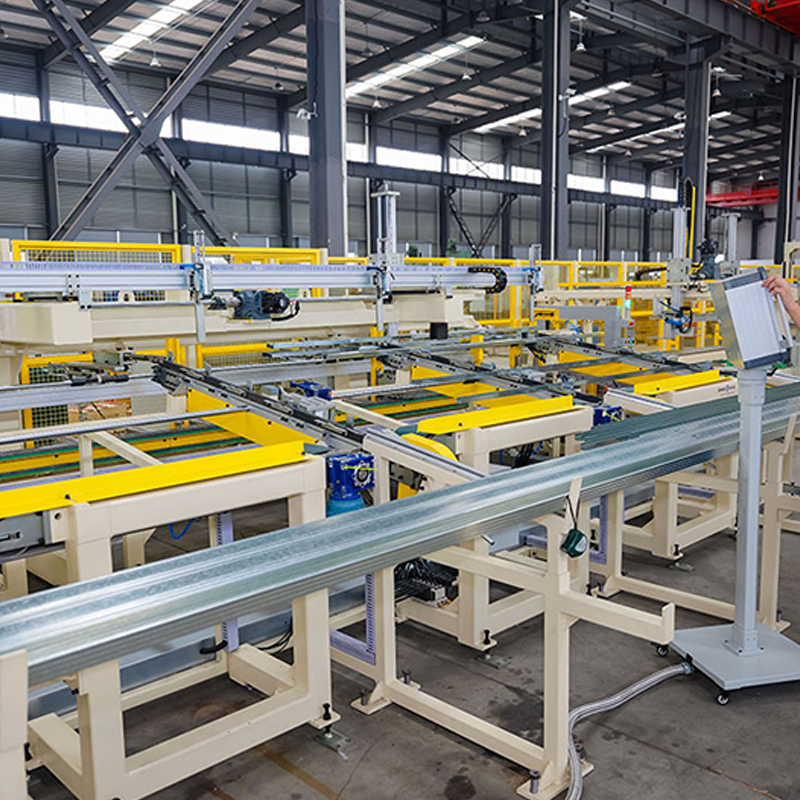
Automatic button flipping machine Flipping speed: 120 meters per minute. Flips the metal profile and snaps it on. Small bundle packing machine Large bundle palletizer Large-bu...
See Details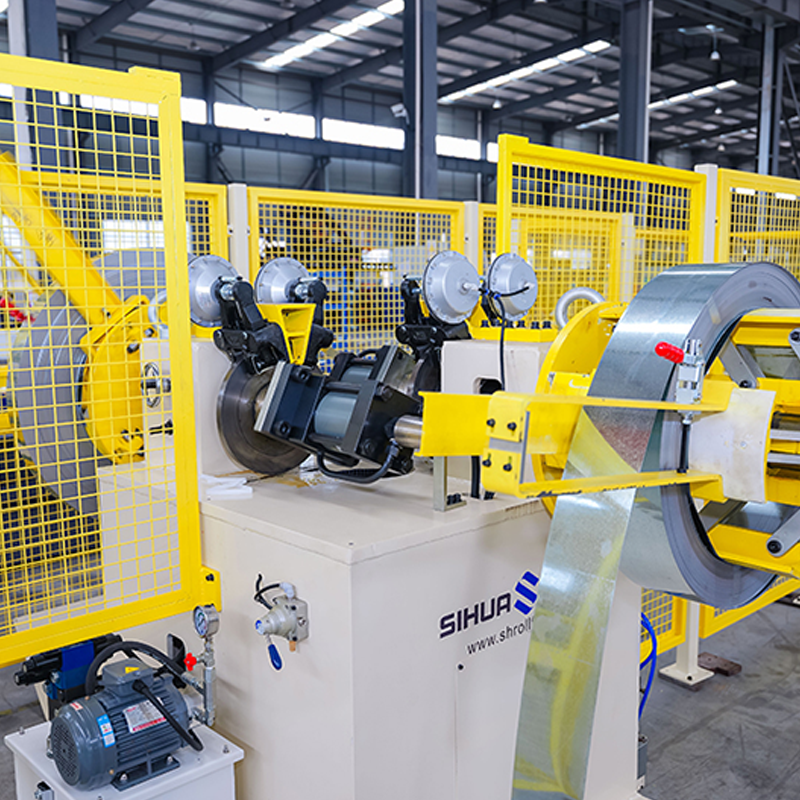
Automatic rotating double-head hydraulic decoiler with no-material detection, 5 tons per side. Laser power and welding length are adjustable to accommodate steel strips of various thicknesse...
See Details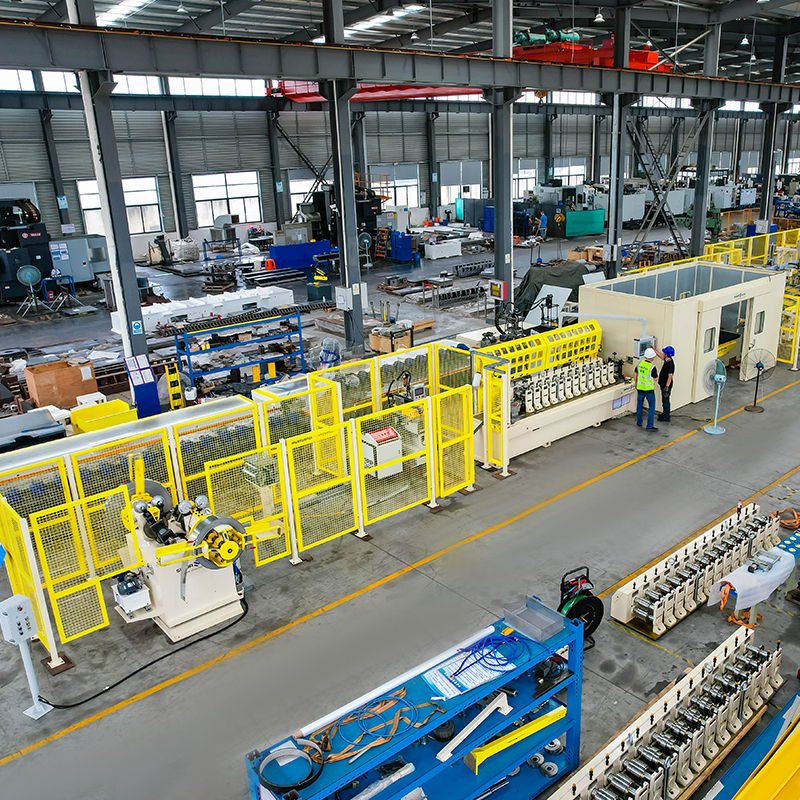
Automatic rotating double-head hydraulic decoiler with no-material detection, 5 tons per side. Quick-change cassette roll forming machine (changeover takes 30 minutes). Cutting without ...
See Details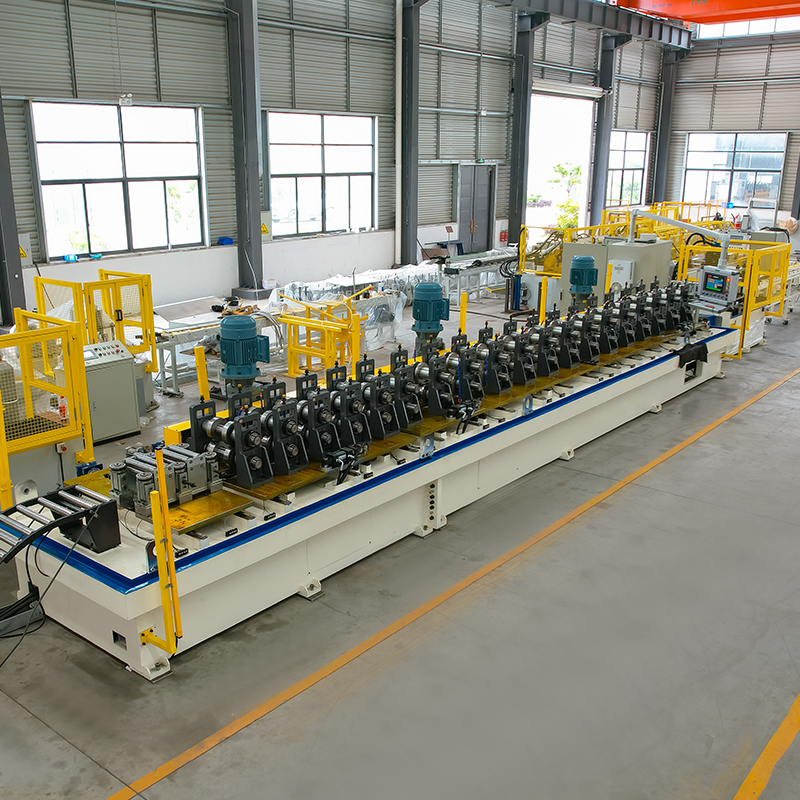
Solar bracket auto change width roll forming machine Material decoiler with storage platform and robotic arm Leveling machine(A leveling machine is required before using a punch press.)...
See Details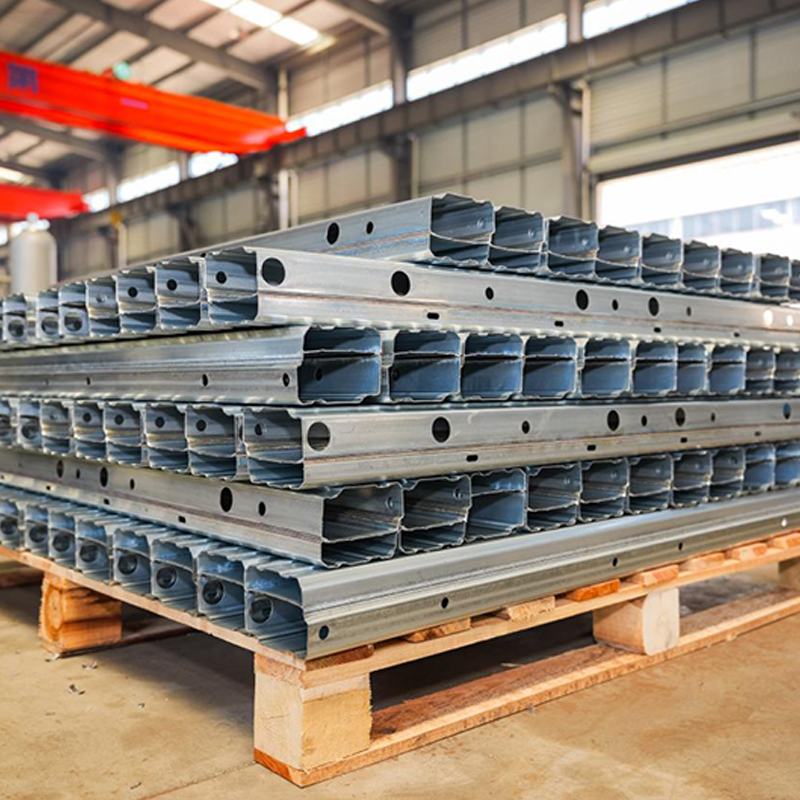
The production line for vehicle B-profile automotive chassis reinforcement beams involves several key processes to ensure High-strength, precision, and durability for vehicle applications. Key e...
See DetailsDon't hesitate to contact when you need us!
Contact Information
PRODUCTS
Mobile


 English
 Español
 русский