Content
A profile forming machine is industrial equipment that continuously shapes flat metal strip or sheet into a specific cross-sectional profile through a series of progressive forming stations. Each station incrementally bends the material closer to the final geometry until the desired shape is achieved at the end of the production line. The process — known as roll forming — requires no heating of the workpiece, operates at high speed, and produces profiles of consistent dimensional accuracy across unlimited run lengths.
Profile forming machines are used across construction, automotive, appliance, solar energy, and logistics industries to manufacture structural sections, framing components, roofing and cladding panels, cable trays, racking systems, door frames, window mullions, and hundreds of other linear metal profiles. The defining advantage of the process is its ability to produce complex, tight-tolerance cross-sections at production rates typically ranging from 10 to 60 meters per minute, with minimal material waste and low per-unit tooling cost at volume.
The production sequence on a profile forming line follows a fixed mechanical logic. Material enters as a coil, passes through a series of driven roller stations, and exits as a finished profile that is cut to length. The major process stages are:
A programmable logic controller (PLC) governs line speed, cut-to-length programming, servo axis coordination, and fault monitoring. Modern lines store multiple job programs, enabling changeover between product specifications by recalling saved parameters and — on quick-change tooling designs — re-tooling within 15 to 30 minutes.
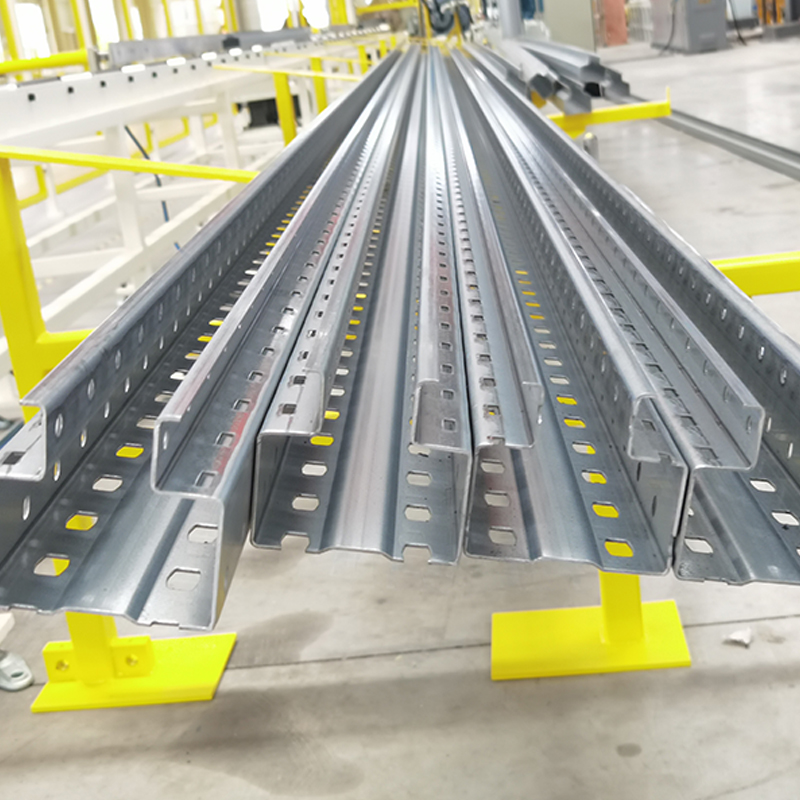
Profile forming machines are broadly classified by their mechanical architecture, tooling configuration, and the range of profiles they are designed to produce.
Designed for high-volume production of one specific profile, these machines are optimized for speed and uptime rather than flexibility. Tooling is permanently or semi-permanently installed, and changeover is not a design priority. Common applications include roofing sheet lines, highway guardrail lines, and structural stud lines serving large construction supply chains.
Used by service centers and contract manufacturers producing multiple profile specifications for different customers. Shaft spacings, roll cassettes, and guide assemblies are designed for rapid swap-out. Some designs use a cassette system in which entire roll sets for a given profile are pre-assembled off-line and exchanged as a single unit, reducing changeover time to under 20 minutes.
An advanced category in which forming roll positions are CNC-adjustable, allowing the machine to produce variable cross-sections along the length of a single part or to switch between profile families without physical tooling changes. These machines serve automotive body panel production and architectural facade applications where profile geometry varies across components.
Compact, trailer-mounted or container-housed machines used in roofing and cladding installation to produce panels on-site from coil stock, eliminating transport damage and enabling cut-to-exact-length production without waste. Widely used in metal roofing contracting.
Profile forming machines process virtually all cold-formable metals. The material and thickness range of a given machine is determined by its shaft diameter, motor power, frame rigidity, and roll material specification.
| Material | Typical Thickness Range | Common Applications |
|---|---|---|
| Galvanized / pre-painted steel | 0.3 – 3.0 mm | Roofing, cladding, studs, purlins |
| Hot-rolled structural steel | 2.0 – 12.0 mm | Structural sections, highway barrier, racking uprights |
| Stainless steel | 0.3 – 3.0 mm | Food processing equipment, architectural trim |
| Aluminum | 0.5 – 4.0 mm | Window frames, solar panel frames, curtain wall |
| Copper / brass | 0.2 – 1.5 mm | Electrical bus bars, decorative profiles |
High-strength steels — including advanced high-strength steel (AHSS) grades used in automotive structural components — require machines with reinforced frames and higher-capacity drive systems due to the elevated spring-back and forming forces involved. Roll material also changes accordingly: standard rolls are machined from GCr15 bearing steel hardened to 58–62 HRC, while abrasion-resistant coatings such as chrome plating or carbide overlays are specified for stainless or high-strength materials to extend roll life.
When specifying or comparing profile forming machines, the following parameters directly determine capability, output quality, and total cost of ownership:
Profile forming is one of several processes available for producing linear metal sections. Understanding where it outperforms alternatives — and where it does not — is central to correct process selection.
The forming rolls are the precision heart of any profile forming machine. Roll design determines dimensional accuracy, surface finish, and the range of materials the line can process. Poor roll design manifests as edge wave, longitudinal bow, twist, or surface marking — defects that may be difficult to attribute to tooling without experience.
Modern roll design is performed using finite element analysis (FEA) software that simulates the progressive deformation of strip through each station, predicts spring-back, and optimizes flower pattern geometry before any steel is cut. This simulation-based approach has substantially reduced development time and first-article scrap rates compared to traditional trial-and-error tooling development.
Tooling longevity is a significant operating cost factor. Roll life is influenced by material hardness and abrasiveness, line speed, lubrication, and roll hardness specification. For standard galvanized steel production, well-maintained rolls typically last 800,000 to 1,500,000 linear meters before re-grinding is required. Stainless steel and high-strength applications shorten this interval considerably.

wide material single decoiler Leveling machine and Machine for punching small holes on both sides All the upper and lower rollers are connected to a worm gear reducer.This makes the for...
See Details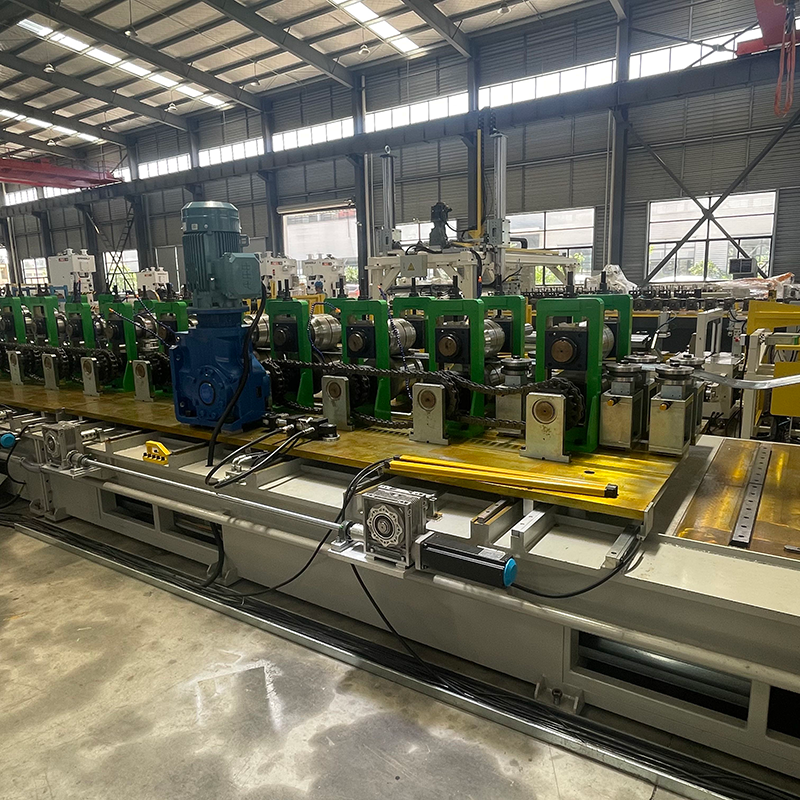
CUZ sigma roll forming machine Heavy-duty single-head decoiler, capacity 5-ton. Leveling machine(A leveling machine is required before using a punch press.) Yadon/Yangli 125–250-to...
See Details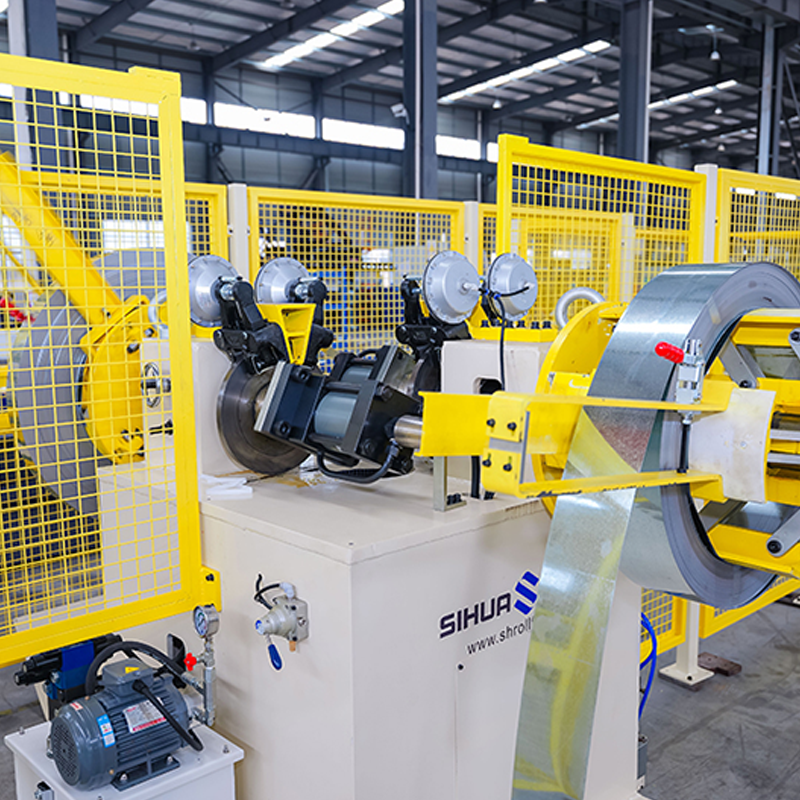
Automatic rotating double-head hydraulic decoiler with no-material detection, 5 tons per side. Laser power and welding length are adjustable to accommodate steel strips of various thicknesse...
See Details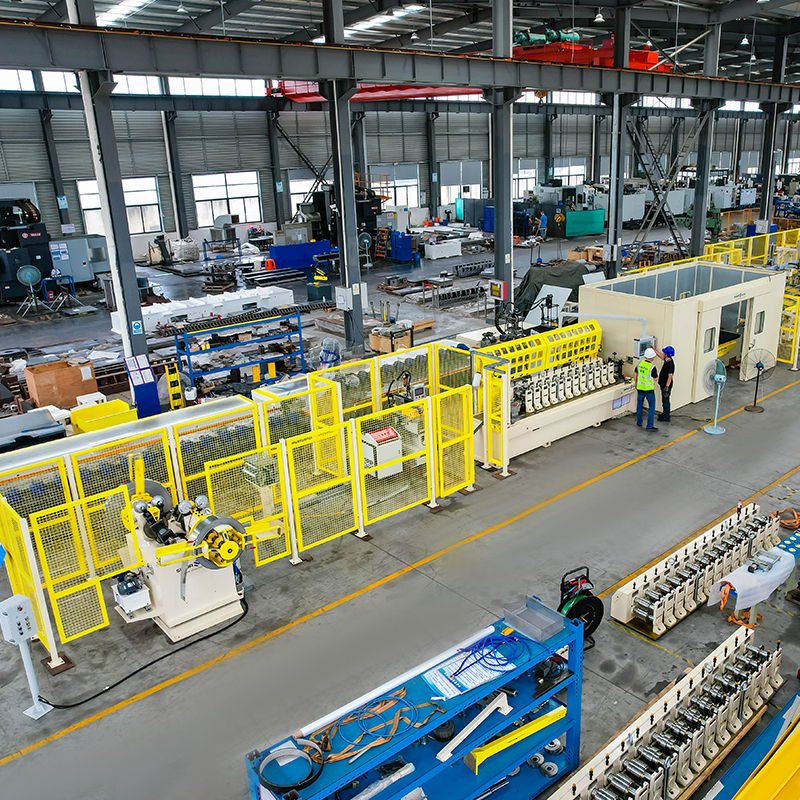
Automatic rotating double-head hydraulic decoiler with no-material detection, 5 tons per side. Quick-change cassette roll forming machine (changeover takes 30 minutes). Cutting without ...
See Details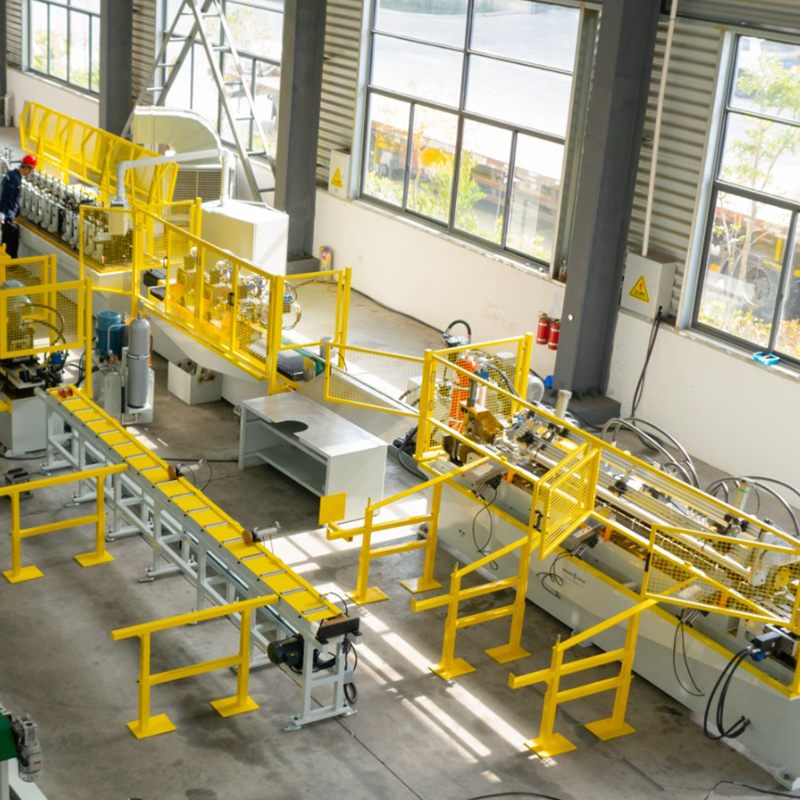
Double-head pre-painted steel hydraulic expanding/contracting uncoiler, double-head galvanized steel expanding/contracting uncoiler, pre-painted steel storage bracket, belt reduction. The 5-...
See Details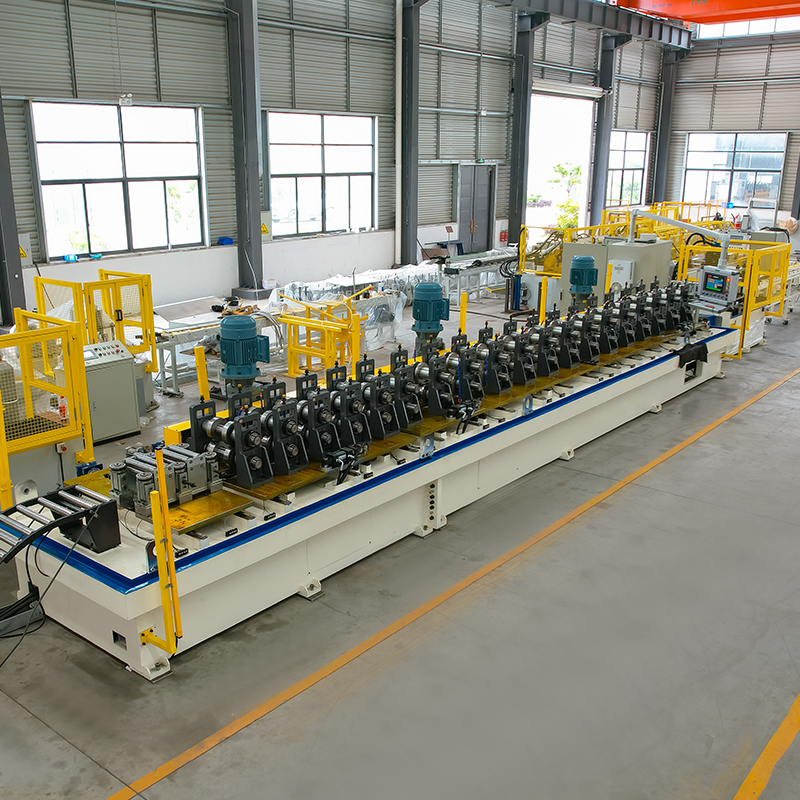
Solar bracket auto change width roll forming machine Material decoiler with storage platform and robotic arm Leveling machine(A leveling machine is required before using a punch press.)...
See DetailsDon't hesitate to contact when you need us!
Contact Information
PRODUCTS
Mobile


 English
 Español
 русский