Content
Selecting the correct input material for a Drywall Profile Roll Forming Machine is the single most critical decision that affects product quality, tooling life, production efficiency, and final profile performance. Unlike general sheet metal forming, drywall profiles demand strict dimensional tolerances, consistent mechanical properties, and specific coating behaviors because these profiles serve as structural framing components in partition walls, ceiling systems, and fire-rated assemblies.
This guide provides a comprehensive, practical breakdown of every material parameter you must evaluate before feeding a coil into your roll former. We go beyond generic steel grades and examine real-world production constraints, coating interactions with roll dies, edge condition effects on straightness, and the trade-offs between cost and formability. Whether you produce C-studs, U-tracks, furring channels, or ceiling tees, the material choices outlined here directly impact your rejection rate, tooling replacement frequency, and downstream customer satisfaction.
The vast majority of drywall profiles are produced from low-carbon steel strips, but the specific grade and processing route vary significantly based on the final application. Below is a detailed breakdown of the primary base metal categories used globally.
Commercial steel represents the most common starting material for standard interior drywall studs and tracks. It offers a balanced combination of formability and strength for general construction. Typical yield strength ranges from 170 to 240 MPa, with tensile strength between 270 and 340 MPa. This grade is suitable for non-load-bearing partitions where dimensional accuracy matters more than structural capacity. The roll forming machine handles CS material with minimal roller wear, provided the surface cleanliness is maintained.
FS grades are specifically engineered for cold forming operations. They exhibit higher elongation values (typically 28-32% in 50mm gauge length) compared to commercial steel, which reduces the risk of corner cracking during tight radius bending. For drywall profiles that require multiple bends within a short web section – such as box-type studs or reinforced tracks – FS material is the preferred choice. Many experienced production managers keep FS coils as their primary inventory because it provides a wider process window for roll gap adjustments.
When drywall profiles must carry axial loads or serve as part of a shear wall system, structural steel grades become necessary. Grade 33 (230 MPa yield) and Grade 40 (276 MPa yield) are commonly specified in commercial and institutional projects. However, higher strength materials demand more robust roll forming machines with increased driven stations and heavier frames. The springback effect also becomes more pronounced, requiring over-bending compensation in the last forming passes. We have observed that structural steels above 350 MPa yield strength significantly accelerate roller wear on uncoated tooling, so carbide-coated rolls are often recommended for prolonged runs.
Production note: Never assume that a steel grade certified for hot-rolled sections will perform identically in cold-roll-formed profiles. The bending direction relative to the rolling direction of the original strip creates anisotropic properties – always test a sample coil from each new heat number before full production.
The surface coating on the steel coil is not an afterthought – it directly influences friction behavior inside the roll forming mill, the final profile's corrosion resistance, and compatibility with fire-rated construction requirements. Below is a systematic comparison of the most widely used coatings for drywall profile production.
| Coating Type | Coating Mass (g/m²) | Formability Rating | Typical Application |
|---|---|---|---|
| Hot-dip galvanized (G30-G90) | 90-275 | Excellent (G30-G60) / Good (G90) | Standard interior & exterior walls |
| Electro-galvanized | 20-60 | Very good (uniform thickness) | Precision profiles with tight tolerances |
| Aluminized (Type 1 & 2) | 40-80 (Al coating) | Moderate (lower lubricity) | Ceiling systems requiring heat reflection |
| Prepainted (Polyester, PVDF) | N/A (film thickness 15-30 μm) | Fair (risk of marring) | Architectural exposed profiles |
The physical dimensions of the input coil determine not only the final profile geometry but also the setup time, scrap rate, and overall line utilization. A Drywall Profile Roll Forming Machine is typically engineered around a specific range of strip widths and thicknesses. Operating outside these ranges invites quality defects and mechanical stress.
The required strip width is calculated from the developed cross-section of the final profile, accounting for bend allowances and corner radii. For a standard C-stub with a web of 92mm, flanges of 40mm, and lips of 8mm, the developed width typically ranges between 195mm and 205mm, depending on the inner bend radius. The roll forming machine's entry guide must accommodate a strip width tolerance of +/- 1.5mm without causing edge wave or center buckling. Wider strips beyond the machine's rated capacity increase the load on the side rolls and can deflect the roll shafts, producing a bow along the profile length.
Coil Weight
2-5 tons – standard for manual loading
5-10 tons – optimal for automated lines
Coil ID
508mm (20") – most common mandrel size
610mm (24") – for heavy-gauge coils
Coil OD
Up to 1200mm – standard range
Over 1500mm – requires heavy-duty uncoiler
The mechanical behavior of the steel strip under cold deformation is governed by several key parameters. Understanding these properties allows you to predict how the material will react in each forming station and make proactive adjustments to roll gaps, side guides, and straightening units.
As the strip passes through consecutive roll stands, it undergoes work hardening, which increases its yield strength and reduces ductility. For a typical drywall profile formed in 14 to 18 stations, the yield strength at the exit can be 15-25% higher than the incoming coil value. This phenomenon must be accounted for when specifying the final profile's load-bearing capacity. Materials with a low initial yield strength (below 200 MPa) tend to exhibit excessive elongation during forming, resulting in a longer final profile than the cut length setting.
The minimum elongation requirement for drywall profile materials is typically 22% in a 50mm gauge length. Lower elongation values correlate with increased cracking at the outside radius of bends, especially for profiles with sharp corners (inner radius less than 1.5 times thickness). Many manufacturers conduct a simple 180-degree bend test on each new coil lot to validate formability before loading it onto the uncoiler.
Rockwell hardness (typically HRB 50-70 for drywall steels) has a direct relationship with roll wear rates. Harder materials – often resulting from higher carbon content or cold-rolling reduction – generate more abrasive wear on the roll forming tools. In high-volume production environments, we recommend using D2 tool steel or powder metallurgy rolls when forming steels above HRB 65 to maintain profile geometry over extended campaigns without re-grinding.
The quality of the strip edges is an often-overlooked parameter that heavily influences the straightness and surface finish of the final drywall profile. Most steel coils are supplied with either mill edges or slit edges, and the distinction is critical for roll forming performance.
Key edge-quality check: Run your thumb along both edges of the strip. A sharp burr exceeding 0.1mm in height will progressively scratch the roll surface and create galling marks on the profile flange. The solution is to specify a secondary edge-deburring pass or choose coils with a "smooth edge" option from the slitter.
Most drywall profiles require hole punching – for screw connections, service passages, or acoustic performance. The material's behavior under punching is as important as its behavior under bending. Softer materials (below 220 MPa yield) produce clean holes with minimal burr height, while harder materials tend to create jagged edges that require secondary deburring.
The punching unit on a Drywall Profile Roll Forming Machine operates at high cycle rates – often exceeding 60 strokes per minute. Materials with high elongation values exhibit less springback around the punched hole, resulting in a flatter web surface. Conversely, materials with low elongation (below 22%) tend to dome upward around the hole, which interferes with stacking and subsequent handling.
| Material Type | Burr Height (mm) | Punch Wear Rate | Recommended Clearance |
|---|---|---|---|
| CS (low yield) | 0.05-0.12 | Low | 6-8% of thickness |
| FS (forming grade) | 0.08-0.18 | Medium | 8-10% of thickness |
| Structural (Grade 40) | 0.15-0.30 | High | 10-12% of thickness |
To systematically select the optimal material for your drywall profile production, follow this seven-step workflow that integrates technical, operational, and commercial factors.
Even with careful material selection, certain defects emerge during production. Below is a practical troubleshooting guide linking material properties to specific profile defects.
Hot-rolled steel is generally not recommended for drywall profiles because it has a thicker oxide layer (scale), wider thickness tolerances, and lower surface quality compared to cold-rolled steel. The scale can abrade the forming rolls quickly and produce inconsistent profile dimensions. However, if pickled and oiled hot-rolled coils are used, they can be formed but typically yield a rougher surface finish that is unacceptable for exposed or painted applications.
Most standard drywall profile roll forming machines are rated for thicknesses between 0.4mm and 1.2mm. Heavy-duty models can handle up to 1.5mm or even 2.0mm, but this requires reinforced roll stands, larger diameter shafts, and higher motor power. Always consult your machine's technical data plate before running thicker materials, as exceeding the rated capacity can permanently damage the gearbox and roll bearings.
Yes. Prepainted coils generally require slower forming speeds (20-30% reduction) to prevent paint marring or flaking at the bend zones. Galvanized and electro-galvanized coils can be run at maximum rated speeds because the zinc coating acts as a solid lubricant. Aluminized coils fall in between, as the aluminum-silicon coating has moderate lubricity but can build up on the rolls over time, necessitating frequent cleaning stops.
The correct strip width is determined by the developed length of the cross-section, which is the sum of all straight web segments plus the bend allowances for each corner. A practical approach is to cut a sample strip, mark the bend lines, fold it manually or with a brake press, and then measure the flat length before folding. This empirical method is often more reliable than theoretical calculations, especially for complex asymmetrical profiles.
Commercial steel (CS Type B) with a G40-G60 hot-dip galvanized coating offers the best cost-to-performance ratio for high-volume interior stud production. It provides adequate formability, acceptable corrosion resistance, and consistent mechanical properties across multiple coil shipments. For projects requiring higher strength, Grade 33 structural steel adds roughly 10-12% to the material cost but reduces the profile weight for the same load capacity, sometimes offsetting the higher unit price.
Stainless steel is rarely used for standard drywall profiles due to its high cost, work-hardening rate, and abrasive nature. If required for specialized architectural or marine applications, you must use a roll forming machine with carbide-coated rolls, increased forming power, and a dedicated lubrication system. Running stainless on standard carbon-steel tooling will cause rapid roll wear and unacceptable surface galling within a few hundred meters.
Improper coil storage – especially exposure to moisture or temperature extremes – can degrade the surface quality and alter the mechanical properties through aging. Galvanized coils stored in humid conditions develop white rust (zinc hydroxide), which increases friction during forming. Coils that are stored vertically for long periods can develop a permanent "coil set" (curvature) that makes feeding difficult. Always store coils horizontally on padded saddles in a dry, climate-controlled area and use them on a first-in, first-out basis.
Yes. Ceiling tee profiles typically have thinner webs and longer flanges, which require higher elongation materials to achieve the sharp 90-degree bends without cracking. Wall studs, on the other hand, prioritize strength and straightness. For ceiling tees, forming steel (FS) with a minimum 30% elongation is preferred, while wall studs can use commercial steel with 25% elongation. Additionally, ceiling tees often use lighter gauges (0.45-0.55mm) compared to wall studs (0.55-0.75mm).

wide material single decoiler Leveling machine and Machine for punching small holes on both sides All the upper and lower rollers are connected to a worm gear reducer.This makes the for...
See Details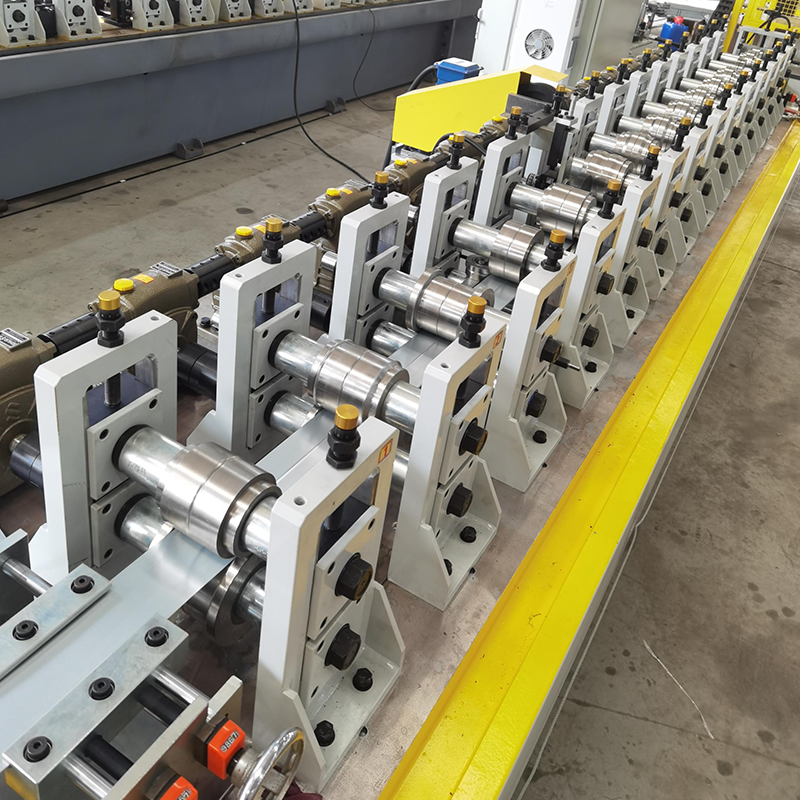
Drywall worm gear reducer roll forming machine, simple model, not a quick-change cassette type, economical and affordable. (It can be upgraded to a quick-change cassette type which can produce di...
See Details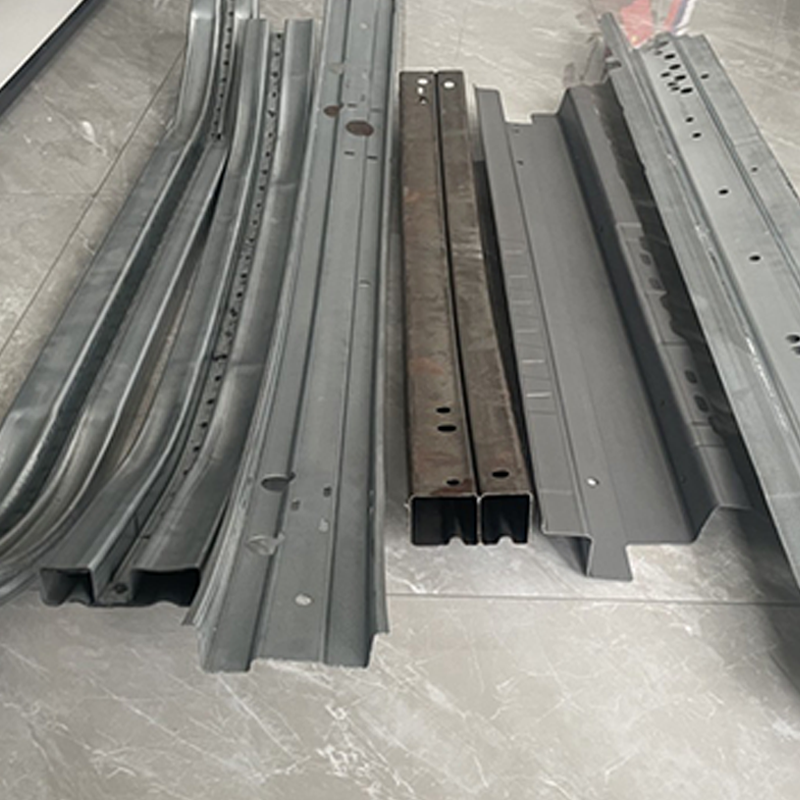
Roller Die Display Automobile front anti-collision beam-bending mold Anti-collision beam rolling bend mechanism Mold Real Shots Stamping Continuous Die Continuous Mold Display Stamping ...
See Details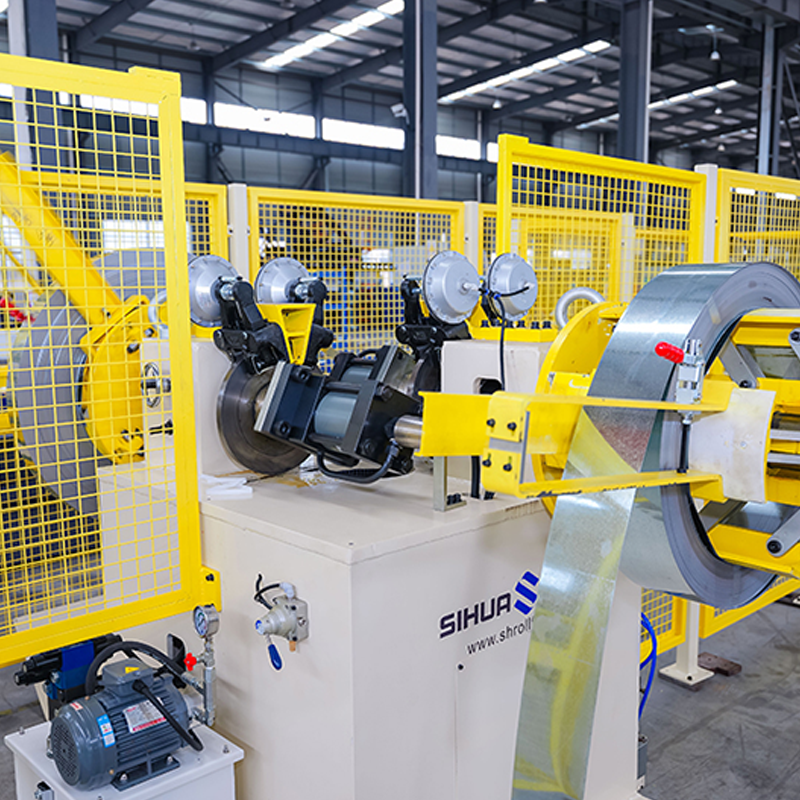
Automatic rotating double-head hydraulic decoiler with no-material detection, 5 tons per side. Laser power and welding length are adjustable to accommodate steel strips of various thicknesse...
See Details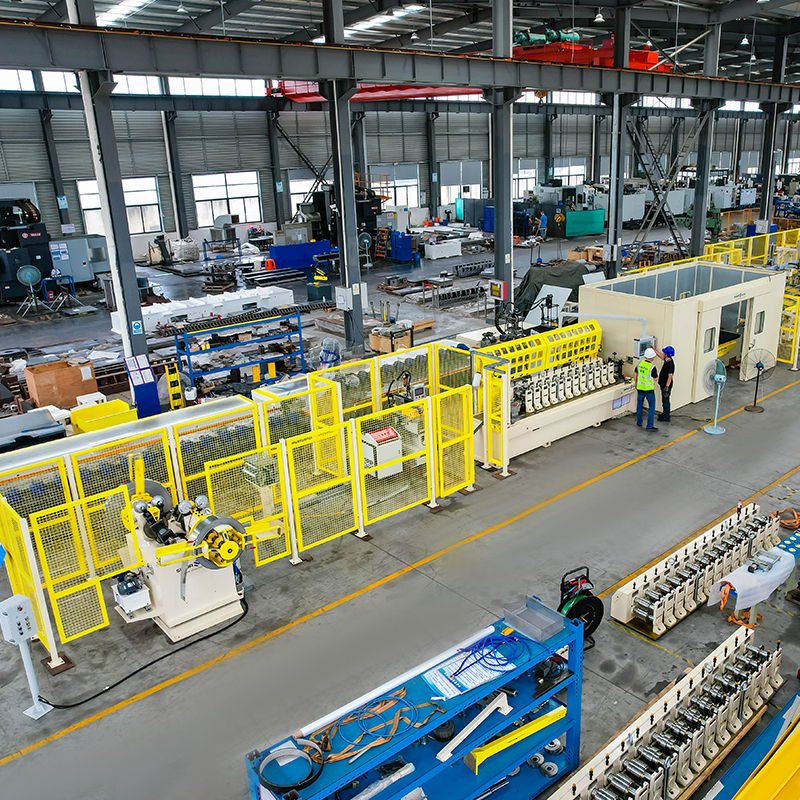
Automatic rotating double-head hydraulic decoiler with no-material detection, 5 tons per side. Quick-change cassette roll forming machine (changeover takes 30 minutes). Cutting without ...
See Details
Double-head pre-painted steel hydraulic expanding/contracting uncoiler, double-head galvanized steel expanding/contracting uncoiler, pre-painted steel storage bracket, belt reduction. The 5-...
See DetailsDon't hesitate to contact when you need us!
Contact Information
PRODUCTS
Mobile


 English
 Español
 русский