Content
An upright rack roll forming machine is a purpose-built production line that converts coiled steel strip into the perforated, cold-formed vertical columns used in pallet racking, shelving, and storage systems. The upright column—also called the upright post or upright frame column—is the structural backbone of any racking system, and its geometry, perforation pattern, and dimensional consistency determine the load-bearing capacity and compatibility of the finished rack assembly.
Unlike generic roll forming lines, an upright rack machine is engineered specifically for this profile family. The cross-section of a rack upright is typically a C-channel, box section, or open-back column with a series of teardrop, square, or round perforations punched at regular pitch intervals—commonly 50 mm or 75 mm—along the web and flanges. These perforations serve as the connection points for beam connectors, allowing beam heights to be adjusted without tools. Producing this combination of precise cold-formed geometry and accurately pitched perforations at production speeds of 15–25 meters per minute requires a machine integrating decoiling, straightening, pre-punching, roll forming, and cut-to-length functions in a single continuous line.
The dimensional accuracy of the finished upright—particularly hole pitch consistency and cross-section squareness—directly determines whether assembled racking passes load testing standards such as EN 15512 in Europe, RMI in North America, or AS 4084 in Australia. Tolerance stack-up across multiple uprights becomes critical in multi-bay installations; a machine producing uprights at the lower limit of dimensional tolerance causes beam connectors to bind or fit loosely, creating both assembly problems and structural risk.
A complete upright rack roll forming line consists of several sequential stations, each performing a specific function. Understanding what each station does and what quality indicators apply helps buyers evaluate machine specifications meaningfully.
The decoiler holds the steel coil—typically 1.5–3.0 mm thick galvanized or pre-painted steel strip, 80–200 mm wide depending on profile size—and feeds it at controlled tension into the line. Hydraulic expansion decoilers accommodate a range of coil inner diameters (typically 508 mm or 610 mm) and coil weights up to 5–10 tonnes. The straightener follows immediately, using a series of offset rolls to remove coil set (the natural curvature imparted by winding) from the strip before it enters the punching station. Inadequate straightening produces bowing in the finished upright along its length—a defect that causes fit problems at installation and may disqualify the product from load testing.
The pre-punching press is the most mechanically demanding station on an upright rack line. It uses a servo-driven or hydraulically driven die set to punch the teardrop or other connector hole pattern into the flat strip before roll forming begins. Punching in the flat—before the profile is formed—is far more straightforward than punching after forming and eliminates distortion around the holes that post-form punching produces. Hole pitch accuracy is the critical specification here: the best machines hold pitch tolerances of ±0.1 mm, while budget machines may allow ±0.3–0.5 mm, which causes perceptible variation across a pallet rack bay. Servo-controlled feed systems achieve tighter pitch accuracy than crank-driven mechanical feeds and are standard on quality production machines.
Die material and maintenance access significantly affect operating cost. Punches and dies for teardrop perforations in 2.0–2.5 mm galvanized steel typically require resharpening every 500,000–1,000,000 strokes depending on steel hardness and coating type. Machines with tool steel (D2 or equivalent) punches and accessible die change systems reduce downtime during tooling maintenance cycles.
The roll forming mill is the core of the machine—a series of paired roller stations, each incrementally bending the steel strip closer to the finished cross-section. Upright rack profiles typically require 14–24 roll stations depending on profile complexity and material thickness. Each station is driven by a common shaft or individual servo motors and contains upper and lower rolls precision-machined from hardened tool steel. The number of forming stations matters because insufficient stations force excessive bend per pass, creating springback, edge cracking, and dimensional instability. Reputable machine builders calculate the required number of stations based on the steel's yield strength and the profile geometry—buyers should request forming sequence simulations or finished profile inspection reports when evaluating machines.
Rack uprights are produced in specific lengths—commonly 1,800 mm to 6,000 mm for standard pallet racking—and must be cut accurately without distorting the formed profile. Flying shear and stop-and-cut (post-cut) systems are the two main approaches. Flying shears cut on-the-fly while the profile continues moving, maintaining higher production speeds but adding mechanical complexity. Post-cut systems stop the material momentarily for cutting, simplifying the mechanism but creating a minor speed reduction. For rack upright production, hydraulic or servo-driven flying shears with length tolerance of ±1 mm are standard on production-grade machines. Circular saw cut-off units are sometimes used for thicker material where shear cutting leaves a deformed end profile.
Modern upright rack roll forming lines are controlled by a programmable logic controller (PLC) with a human-machine interface (HMI) touchscreen. The control system manages production speed, hole pitch servo timing, cut-to-length counting, and production batch records. The quality of the control system has an outsized effect on day-to-day production efficiency—intuitive interfaces reduce setup time when switching between upright profiles or lengths, and comprehensive fault diagnostics reduce troubleshooting time during unplanned stops. Siemens, Mitsubishi, and Allen-Bradley PLCs are the most common platforms in quality machines from established manufacturers; proprietary controllers on budget machines may be difficult to service if the machine supplier provides limited after-sales support.
Upright rack roll forming machines are typically built around a specific profile family, though many manufacturers offer tooling change capability to produce multiple profile sizes on a single line.
The open-back C-section with inward-folded lips is the most widely produced rack upright profile globally—it provides high strength-to-material ratios, compatibility with standard beam connectors, and straightforward roll forming. Box-section (closed) uprights offer better torsional stiffness and are specified for heavy-duty drive-in racking and high-bay automated storage systems. Structural column profiles with complex multi-bend cross-sections—common in drive-through and push-back racking—require more forming stations and more complex tooling than standard C-section profiles. A machine line specified for one profile type is not always readily adaptable to another without significant tooling investment.
Standard rack upright material runs from 1.5 mm to 3.0 mm in thickness, with 1.8–2.5 mm covering the majority of production volume. Higher-strength steel grades—S350GD, S450GD, or equivalent—allow thinner material gauges to achieve the same load-bearing capacity as thicker lower-strength alternatives, reducing material cost per meter of upright produced. The roll forming machine must be specified for the hardest and thickest material combination in the production range; forming rolls sized for 1.5 mm mild steel will wear prematurely and lose dimensional accuracy when running 2.5 mm high-strength material continuously. Machine builders should provide roll material hardness data (typically HRC 58–62 for forming rolls in rack production) and estimated roll life figures for the target material specification.
| Profile Type | Typical Thickness | Forming Stations | Hole Pattern | Primary Application |
|---|---|---|---|---|
| Open-back C-section | 1.5–2.5 mm | 14–18 | Teardrop / square | Selective pallet racking |
| Box section (closed) | 2.0–3.0 mm | 18–24 | Round / rectangular | Drive-in, high-bay AS/RS |
| Structural column | 2.0–3.5 mm | 20–28 | Custom pitch | Push-back, drive-through |
Upright rack roll forming lines typically produce at 15–25 meters per minute for standard C-section profiles in 1.8–2.5 mm material. At 20 m/min with an average upright length of 3,000 mm, a single-shift line produces approximately 400 uprights per hour—or around 3,000–3,200 uprights in an 8-hour shift, allowing for coil changes, tooling inspections, and minor stops. Annual output for a single-shift, five-day operation approaches 750,000 uprights, which corresponds roughly to the upright requirement for 65,000–80,000 pallet rack bays depending on bay height and configuration.
Buyers should calculate required output based on current and projected order volume before specifying machine speed—a machine running at 60–70% of its rated capacity has better tooling life, lower reject rates, and more maintenance headroom than one running consistently at maximum speed. Specifying a machine with 30–40% overcapacity relative to current demand is standard practice among experienced rack manufacturers.
Line configuration also affects factory layout requirements. A complete upright rack line including decoiler, straightener, punching press, roll forming mill, and cut-to-length system typically occupies 20–35 meters of floor length, with 4–6 meters of width required for the line footprint plus clearance for coil handling and finished part stacking. Lines with automated stacking and bundling systems extend the footprint but eliminate manual handling labor at the exit end—a meaningful operating cost consideration for high-volume production.
Machine procurement decisions in roll forming carry significant consequences—a production line represents a multi-year capital commitment, and the difference between a well-specified and a poorly specified machine compounds over thousands of operating hours. The following evaluation criteria are the most consequential.

wide material single decoiler Leveling machine and Machine for punching small holes on both sides All the upper and lower rollers are connected to a worm gear reducer.This makes the for...
See Details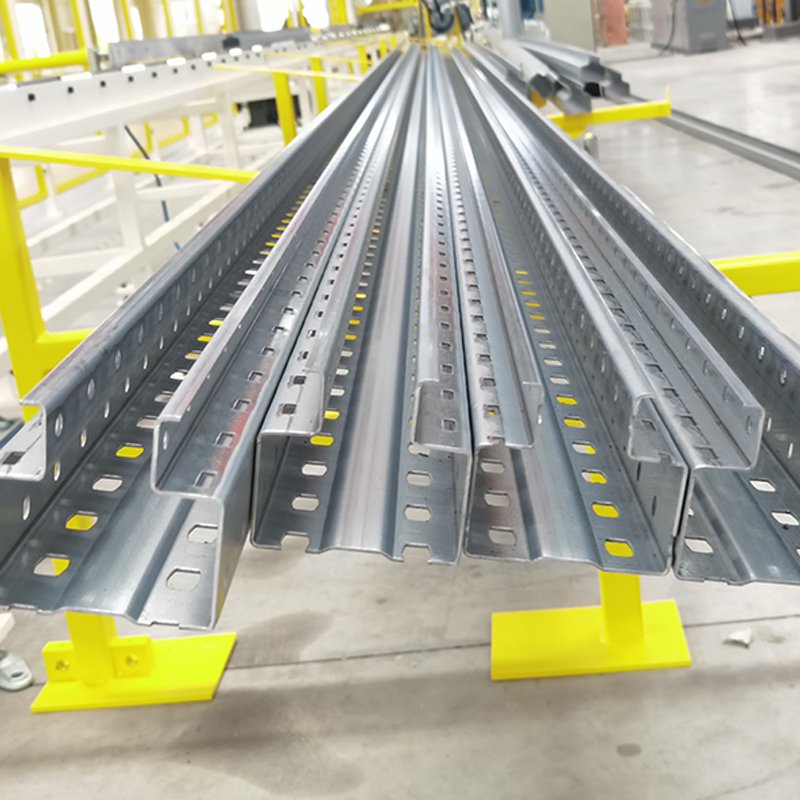
Upright rack roll forming machine, steel yield strength 250–550 MPa Single-head manual decoiler with feeding trolley Leveling before the press machine Yangli/Yadon press machine (o...
See Details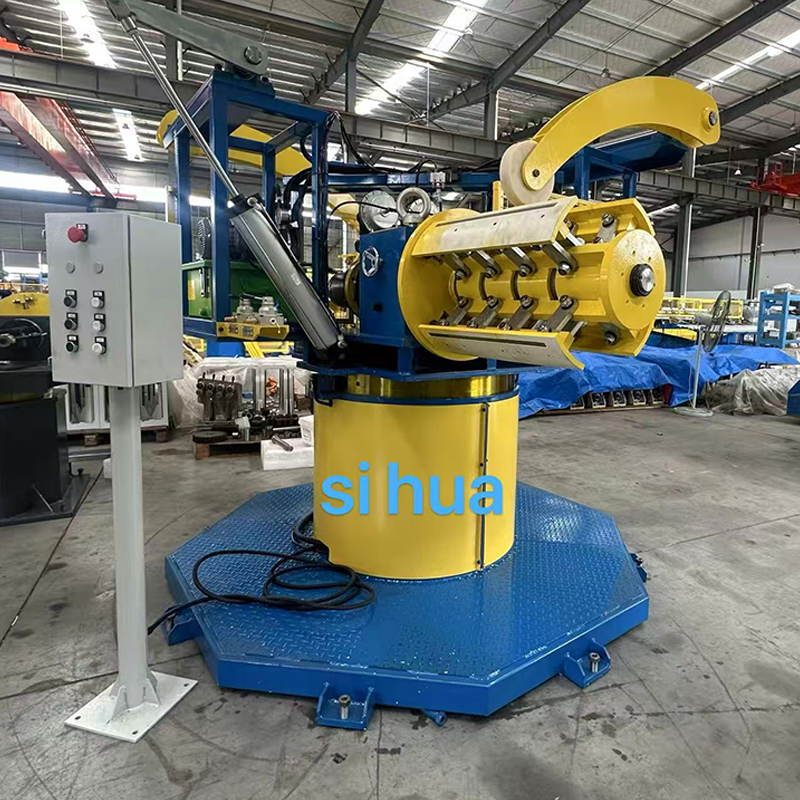
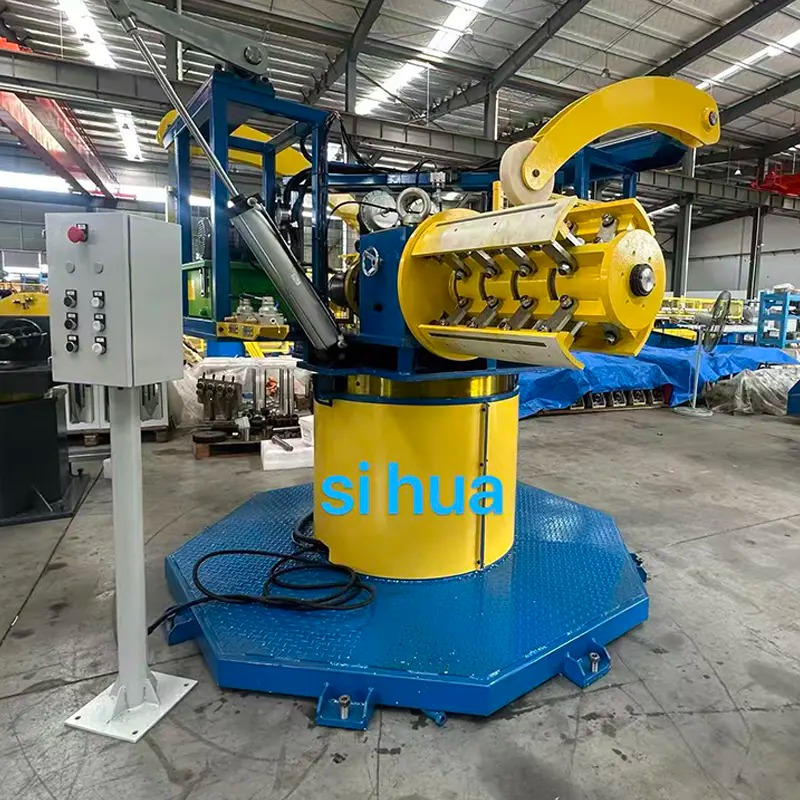
Double head rotating hydraulic heavy-duty decoiler.This equipment can automatically stop synchronously with the forming machine, and features hydraulic expansion and contraction as well as automa...
See Details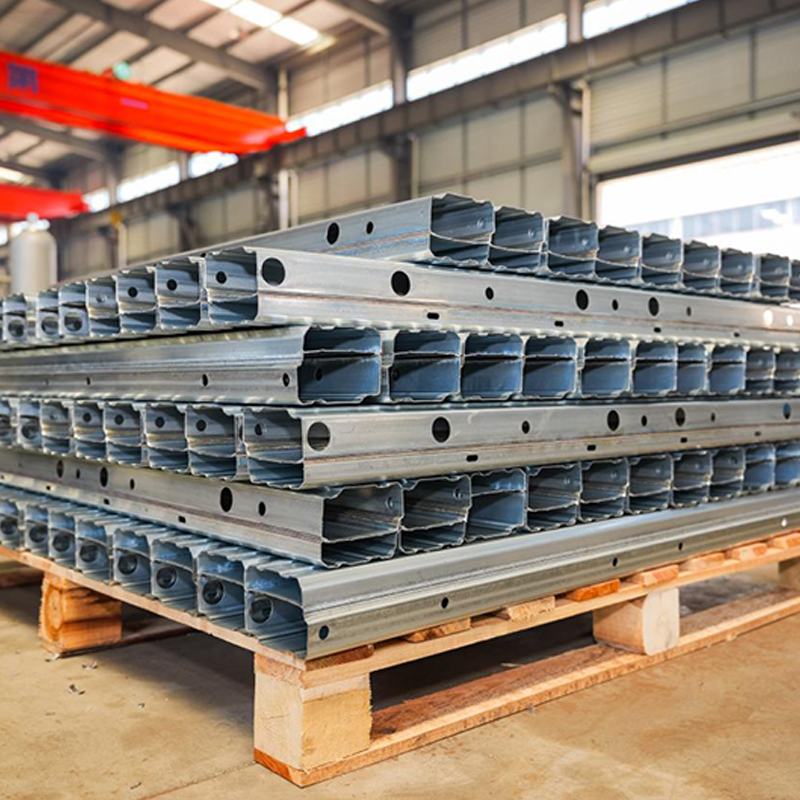
The production line for vehicle B-profile automotive chassis reinforcement beams involves several key processes to ensure High-strength, precision, and durability for vehicle applications. Key e...
See Details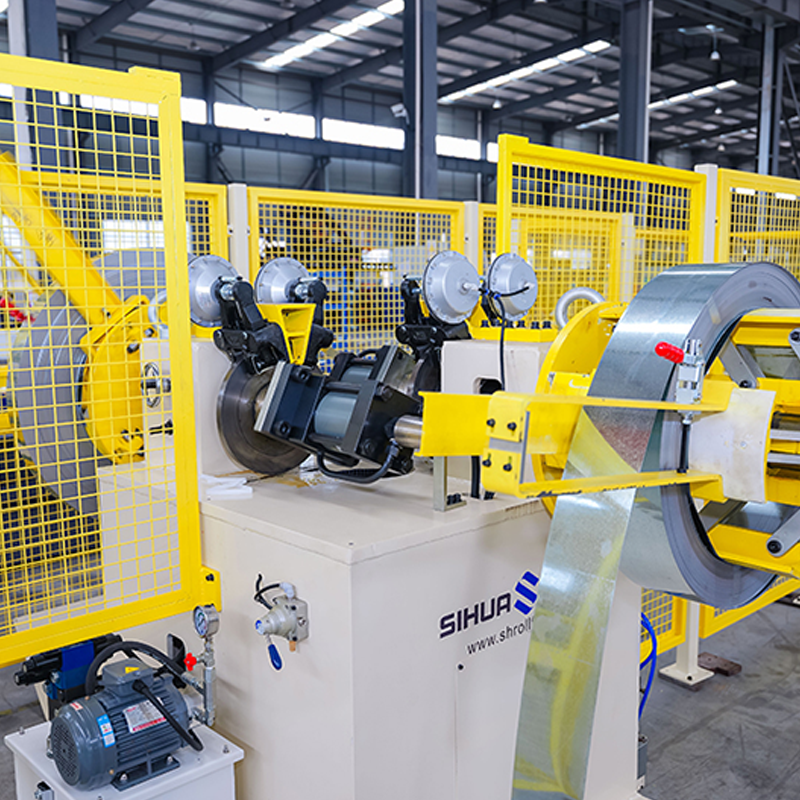
Automatic rotating double-head hydraulic decoiler with no-material detection, 5 tons per side. Laser power and welding length are adjustable to accommodate steel strips of various thicknesse...
See Details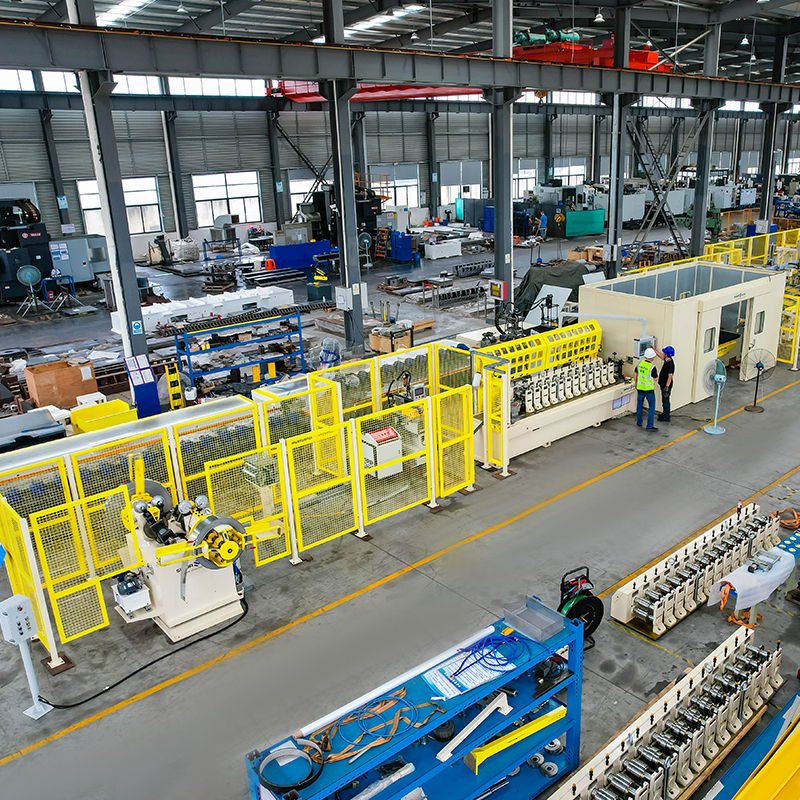
Automatic rotating double-head hydraulic decoiler with no-material detection, 5 tons per side. Quick-change cassette roll forming machine (changeover takes 30 minutes). Cutting without ...
See DetailsDon't hesitate to contact when you need us!
Contact Information
PRODUCTS
Mobile


 English
 Español
 русский