Content
A strut channel roll forming machine is a continuous cold-forming system that converts flat steel coil into finished strut channel profiles—also known as unistrut, Superstrut, or framing channel—without interrupting the production flow. Raw steel strip is fed from a decoiler, passed through a precisely sequenced series of roller stations, punched or slotted at fixed intervals, and cut to length, all in a single inline pass. The finished output is a C-shaped or back-to-back double-C structural channel with a characteristic inward-turned lip that accepts spring nuts and fittings for cable management, pipe support, and structural framing installations.
The machine's defining advantage over press-brake bending or stamping is throughput. A properly tuned roll forming line running 15–25 meters per minute can produce several hundred meters of finished channel per shift from a single operator and decoiler, at a material utilization rate above 95%. That combination of speed and minimal scrap makes it the standard production method for high-volume strut channel manufacturers supplying the construction, electrical, HVAC, and solar mounting markets.
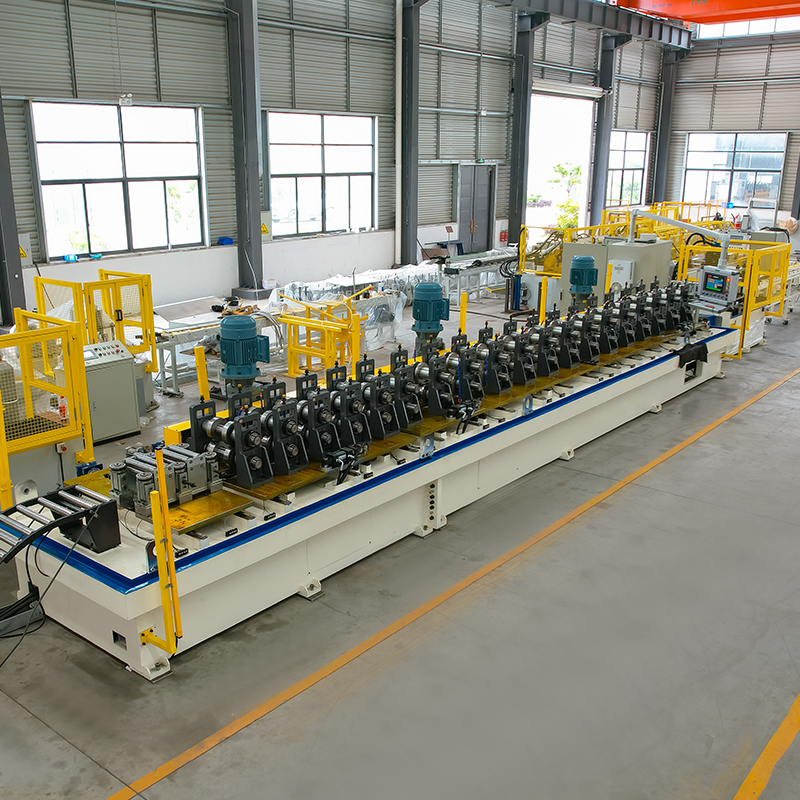
Understanding how a strut channel roll forming machine is assembled clarifies both its capabilities and its maintenance requirements.
The decoiler holds the steel coil—typically 1.5–3.0 mm thick, 41–65 mm wide for standard strut profiles—and feeds it under controlled tension into the line. A straightener with multiple rolls removes the coil set (residual curvature from storage) before the strip enters the forming stations. Skipping straightening at this stage introduces camber that accumulates across roll stations and produces finished channel that curves laterally out of tolerance.
The forming section typically comprises 12–18 paired roller stations for a standard single-slot strut profile. Each station bends the strip a few degrees further toward the final cross-section, distributing the total forming work across enough incremental steps that material does not spring back or crack at the bends. Rolls are machined from tool steel (Cr12 or D2 grade are common) and surface-hardened to HRC 58–62 to resist the abrasive wear of high-volume production runs. Roll sets are profile-specific: changing the machine to produce a different channel size requires swapping the tooling set, a process that can take two to six hours depending on line design.
Strut channel is distinguished by its repeating slot pattern—typically 9 × 22 mm slots at 25 mm pitch on standard metric profiles, or 9/16" × 1-5/16" slots at 1" pitch on imperial versions. The punching unit is hydraulically or servo-driven and operates inline, meaning the strip does not stop moving while holes are punched. Servo-driven punching units offer higher positioning accuracy and faster changeover between slot patterns than hydraulic systems, at a higher initial equipment cost.
A flying shear or hydraulic guillotine cuts finished channel to customer-specified lengths—commonly 3 m, 4 m, or 6 m—without stopping the forming line. Flying shear systems are preferred for higher-speed lines because the blade travels with the profile during the cut, eliminating the brief line pause that a stationary guillotine requires. Length accuracy on a well-maintained flying shear is typically ±1–2 mm.
Modern strut channel roll forming machines are often designed for multi-profile flexibility. By swapping roll tooling sets, a single machine can produce several channel variants from the same base footprint:
| Profile Type | Nominal Size (mm) | Slot Pattern | Typical Application |
|---|---|---|---|
| Single Strut (standard) | 41 × 41 | Single slot, 25 mm pitch | Cable tray, HVAC support, pipe hangers |
| Deep Strut | 41 × 82 | Single slot, 25 mm pitch | Heavy load spans, structural bridging |
| Back-to-Back (double) | 41 × 82 welded pair | Dual slot, both faces | Column framing, seismic bracing |
| Solid (unslotted) Strut | 41 × 41 | No slots | Decorative trim, low-load brackets |
| Solar Strut (hat profile) | 41 × 41 hat section | Single slot or no slot | PV panel racking, rooftop mounting |
Manufacturers targeting the solar mounting market often commission dedicated roll forming lines configured specifically for the hat-section and Z-purlin profiles used in ground-mount and rooftop PV installations, where production volumes justify single-profile tooling permanently installed rather than shared multi-profile equipment.
Procurement decisions for a strut channel roll forming machine involve several interdependent specifications. Comparing machines on speed alone misses the variables that determine actual throughput and output quality:
Most strut channel end markets require corrosion protection. A roll forming line can be configured with inline surface treatment stations that apply finish immediately after forming and before cut-to-length, eliminating a separate post-processing step:
A strut channel roll forming machine running two shifts per day will process several hundred tonnes of steel per month. Maintenance intervals must be matched to that loading, not to a generic schedule:
Keeping a set of critical wear parts—punching dies, shear blades, and at least one matched pair of forming rolls for the highest-volume profile—in on-site inventory reduces unplanned downtime from days to hours when failures occur.

wide material single decoiler Leveling machine and Machine for punching small holes on both sides All the upper and lower rollers are connected to a worm gear reducer.This makes the for...
See Details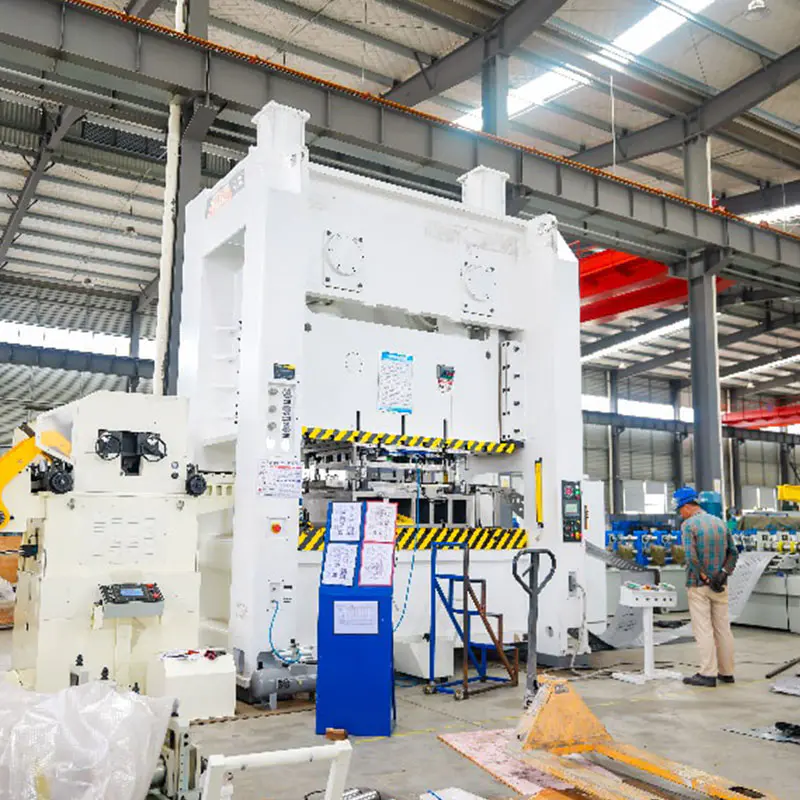
Decoiler System 3-in-1 Decoiler Straightener Feeder Capacity: 5 tons hydraulic coil mandrel expansion, servo feeding & straightening. Punching machine 400 Ton Power Press Capacity: ...
See Details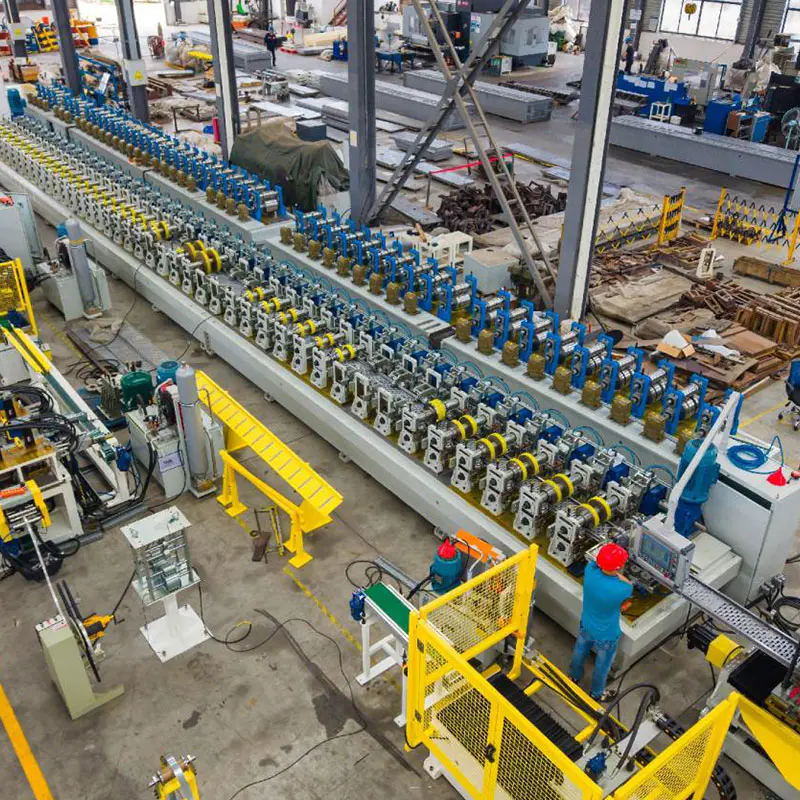
Decoiler System COMBI 3/1 decoiler lever and feeder Capacity: 3-8 tons high feeding accuracy, fully automatic operation, widely used for metal coil stamping Punch Press Unit Punching fo...
See Details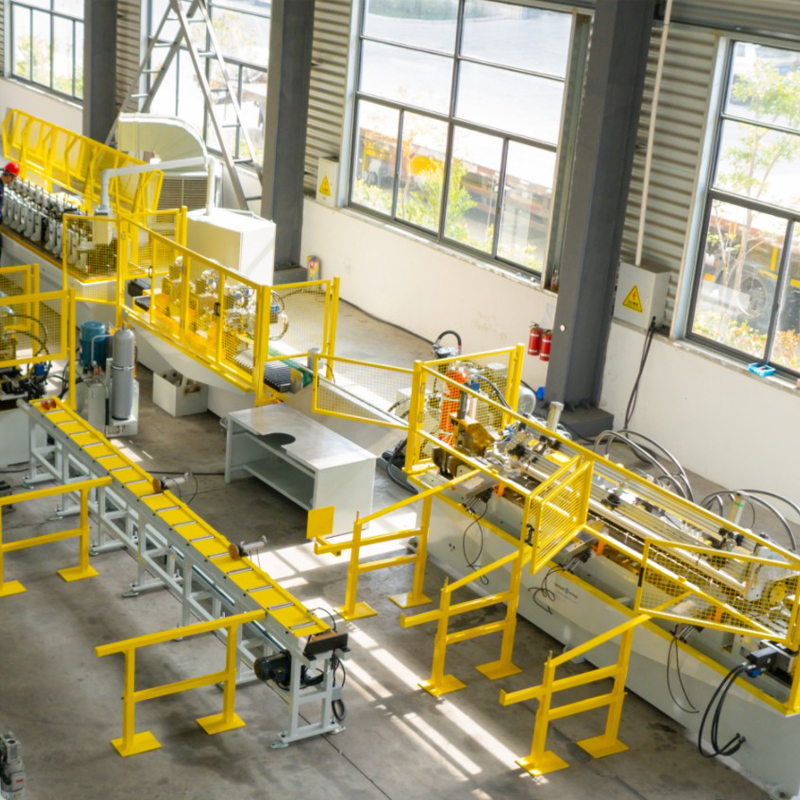
Strut cassette roll forming machine Single-head 3-ton decoiler Leveling machine(A leveling machine is required before using a punch press.) Yadon/Yangli 125-ton press machine (opti...
See Details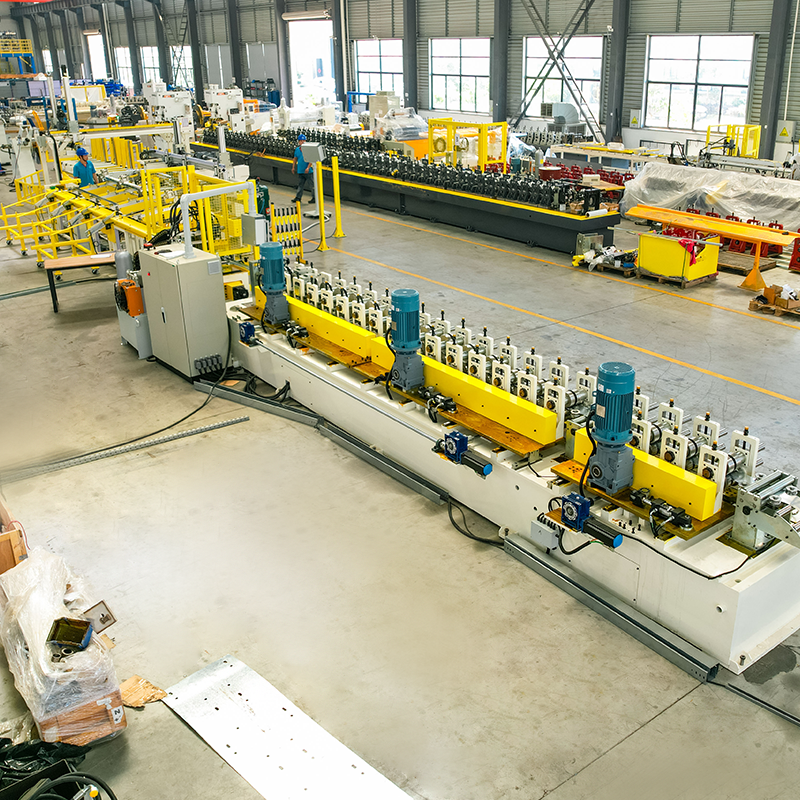
CU automatic width-change roll forming machine, chain drive, automatic packing. Economical double-head hydraulic decoiler, 3 tons per side, manual brake Automatic width and height chang...
See Details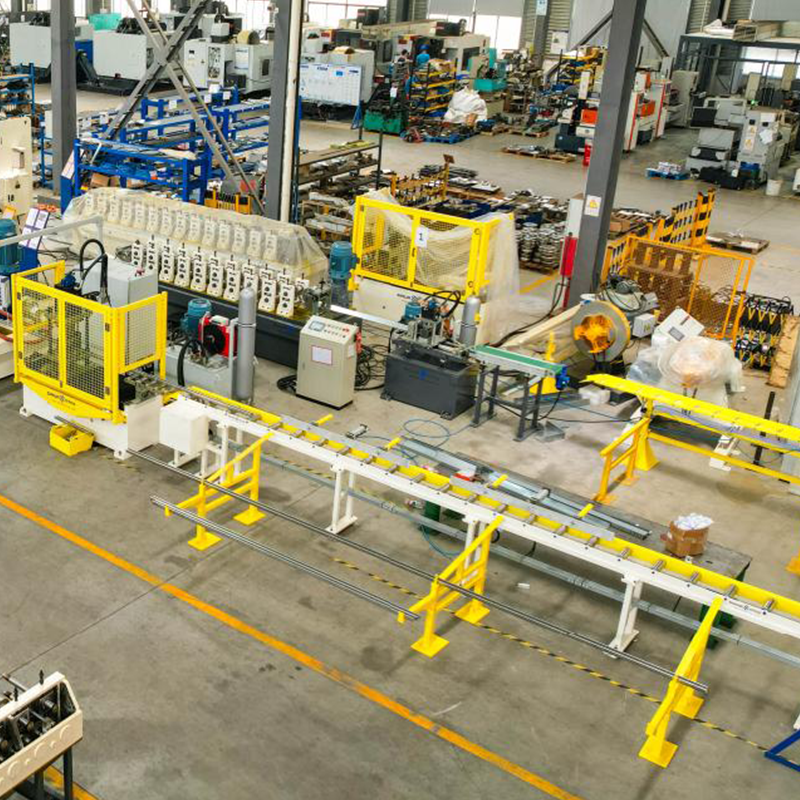
SS304 unistruct profile cassette roll forming machine Leveling machine(A leveling machine is required before using a punch press.) Yadon/Yangli 125-ton press machine (optional) Fle...
See DetailsDon't hesitate to contact when you need us!
Contact Information
PRODUCTS
Mobile


 English
 Español
 русский