Content
An upright rack roll forming machine is a cold-roll forming system engineered specifically to produce the vertical column profiles used in pallet racking, shelving systems, and industrial storage structures. These upright columns—typically C-section, open-back, or box-section profiles with punched teardrop or round hole patterns at regular intervals—are the structural backbone of every racking system in a warehouse or distribution centre. Producing them with consistent geometry, precise hole spacing, and correct material thickness is non-negotiable: a single out-of-tolerance upright compromises the load capacity of an entire rack bay.
Unlike general-purpose roll forming lines, an upright rack machine integrates pre-punching or post-punching stations directly into the forming sequence, ensuring that the teardrop slots, round holes, and fixing apertures that accept beam connectors and bracing components are stamped at exact pitch intervals along the full length of every upright produced. The combination of forming and punching in a single pass eliminates secondary operations, reduces handling damage, and achieves throughput rates that separate operations cannot match.
A complete upright rack roll forming line is a sequence of integrated stations, each performing a specific function in the material transformation from coil strip to finished column profile. Understanding each station's role clarifies where quality is built in—and where it can be compromised by under-specification.
The coil of galvanised or pre-painted steel strip (typically 1.5–3.0 mm thickness, 100–200 mm width) is mounted on a hydraulic decoiler that controls strip tension throughout the run. A motorised straightener with multiple rolls removes the coil set—the curvature induced by winding—before the strip enters the forming stations. Inadequate straightening at this stage introduces bow and twist into the finished profile that cannot be corrected downstream without scrapping the section.
In most upright rack lines, the teardrop slots and auxiliary holes are punched before forming rather than after, because flat strip is far easier to punch accurately than a formed C-section. The pre-punch press uses a servo-driven or hydraulic die set with hardened tool steel punches positioned to produce the exact hole pattern specified by the rack design. Punch pitch accuracy—typically required within ±0.5 mm over a 2,400 mm upright length—is controlled by a servo feed system that indexes the strip by the programmed hole spacing before each press stroke.
The forming mill is the machine's core, comprising a series of paired upper and lower roll tooling stations mounted on a rigid mill stand. Each station progressively bends the strip through a small angular increment—typically 10–20° per pass—until the final profile geometry is achieved. Upright rack profiles require 12 to 22 forming stations depending on profile complexity, material thickness, and the degree of work hardening the steel undergoes during forming. The roll tooling is manufactured from GCr15 or D2 tool steel, hardened to HRC 58–62, and ground to close tolerances to maintain profile consistency across millions of metres of production.
Some upright designs require additional punching operations after forming—end notching for base plate attachment, secondary hole patterns in the web, or embossing for brand identification. These operations are performed in a secondary punch press positioned immediately after the forming mill exit, while the profile is still supported by the line's guide system, preventing the distortion that would occur if the formed section were removed and re-fed into a separate press.
The finished profile is cut to length by either a flying shear (which cuts while moving at line speed, enabling high throughput without stopping the forming process) or a cold saw (which produces a cleaner, burr-free cut but requires the line to decelerate for each cut cycle). Upright lengths of 2,400–6,000 mm are common; length repeatability of ±2 mm is the standard expectation for racking manufacture compliance.
Modern upright rack lines are controlled by a PLC (typically Siemens S7 or Mitsubishi Q-series) with a touchscreen HMI that stores product recipes—punch pitch, hole pattern, cut length, and line speed parameters—for each upright SKU in the product range. Recipe-based operation reduces changeover time to minutes for profile variants on the same tooling set, and stores production counts, fault logs, and quality data for traceability purposes.
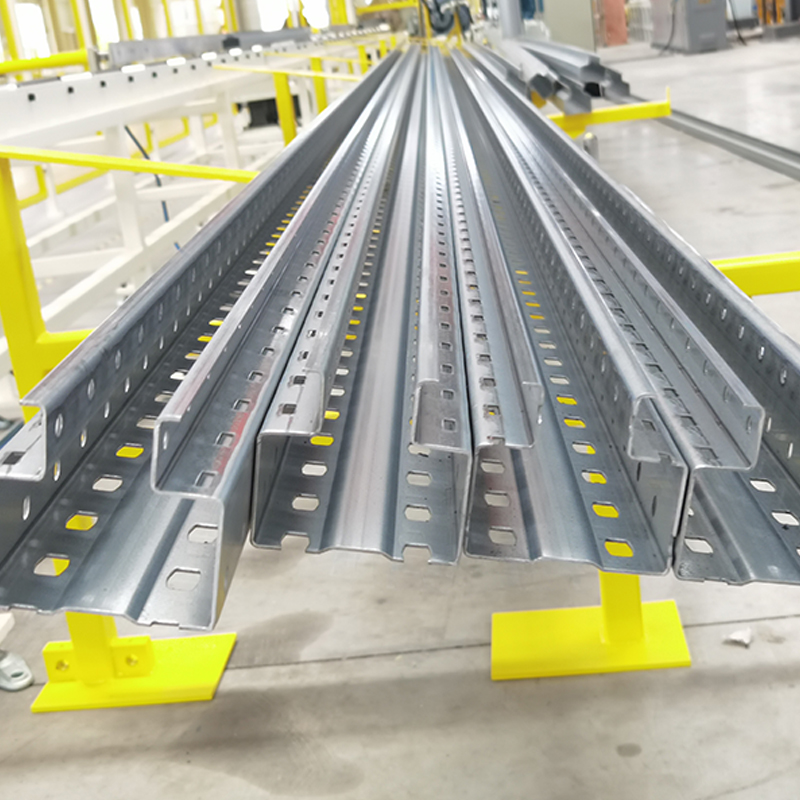
Upright rack roll forming machines are built around specific profile tooling sets. The most common upright profiles in global racking production are:
| Profile Type | Typical Dimensions | Hole Pattern | Common Application |
|---|---|---|---|
| Open C-section (single row holes) | 80–120 mm wide, 1.5–2.5 mm | Single-row teardrop, 50 mm pitch | Light-duty shelving, retail racking |
| Open-back C-section (double row) | 100–150 mm wide, 2.0–3.0 mm | Double-row teardrop, 50 mm pitch | Standard pallet racking (FEM/RMI) |
| Slotted angle / roll-formed angle | 40–60 mm leg, 1.5–2.0 mm | Round holes, 25 mm pitch | Mezzanine framing, light shelving |
| Box section / closed upright | 60×60 mm to 100×100 mm, 2.0–3.5 mm | Round or square, 50–100 mm pitch | Heavy-duty drive-in racking, cantilever |
Input material is most commonly S350GD or S420GD hot-dip galvanised steel coil to EN 10346, with zinc coating class Z275 (275 g/m² total both sides). High-yield steel grades allow thinner gauge specifications to achieve equivalent load capacity, reducing material cost per metre of upright produced—a significant factor at the production volumes typical of racking manufacturers.
Line speed for upright rack roll forming is governed primarily by the pre-punch press stroke rate rather than the forming mill capacity. Typical production parameters for a well-specified upright rack line are:
For manufacturers producing multiple upright SKUs, a quick-change tooling cassette system—where an entire set of forming rolls is pre-assembled on a removable cassette and swapped as a unit—can reduce profile changeover to under 30 minutes, significantly improving equipment utilisation on mixed-product production schedules.
Pallet racking uprights are structural components covered by international safety standards. Production quality must be demonstrably controlled and documented to meet these requirements:
Selecting an upright rack roll forming machine is a capital investment typically in the range of $150,000–$600,000 USD depending on automation level, punch capacity, and control specification. The following questions distinguish serious suppliers from those offering superficially similar but under-engineered equipment:
An upright rack roll forming machine is ultimately only as good as the consistency of the profiles it produces at sustained production rates. Specifying it rigorously against dimensional tolerance, tooling longevity, and control system standards—rather than on purchase price alone—is the single most important decision a racking manufacturer makes in setting up or upgrading a production line.

wide material single decoiler Leveling machine and Machine for punching small holes on both sides All the upper and lower rollers are connected to a worm gear reducer.This makes the for...
See Details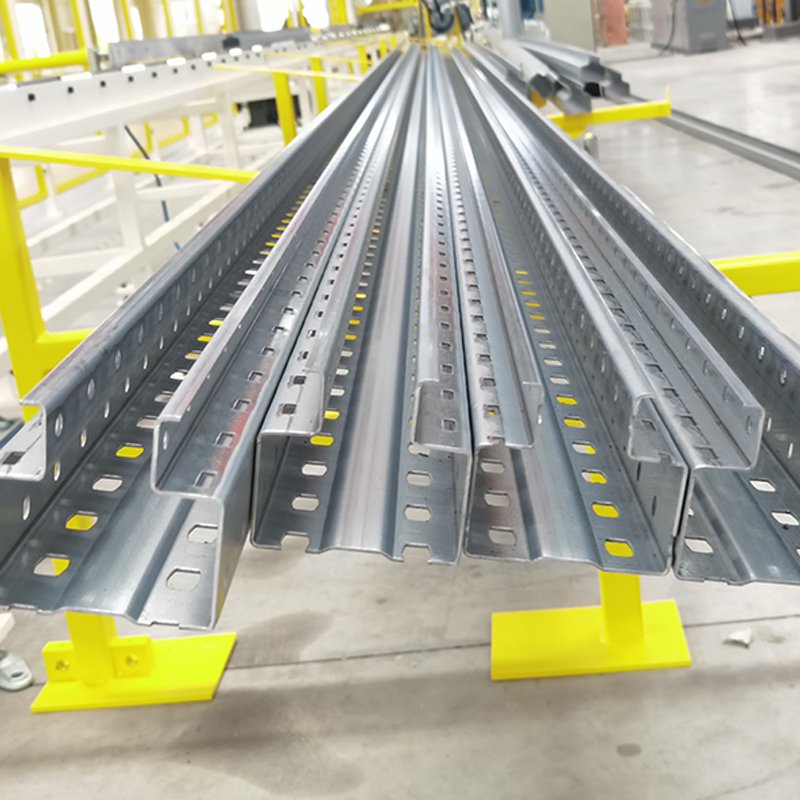
Upright rack roll forming machine, steel yield strength 250–550 MPa Single-head manual decoiler with feeding trolley Leveling before the press machine Yangli/Yadon press machine (o...
See Details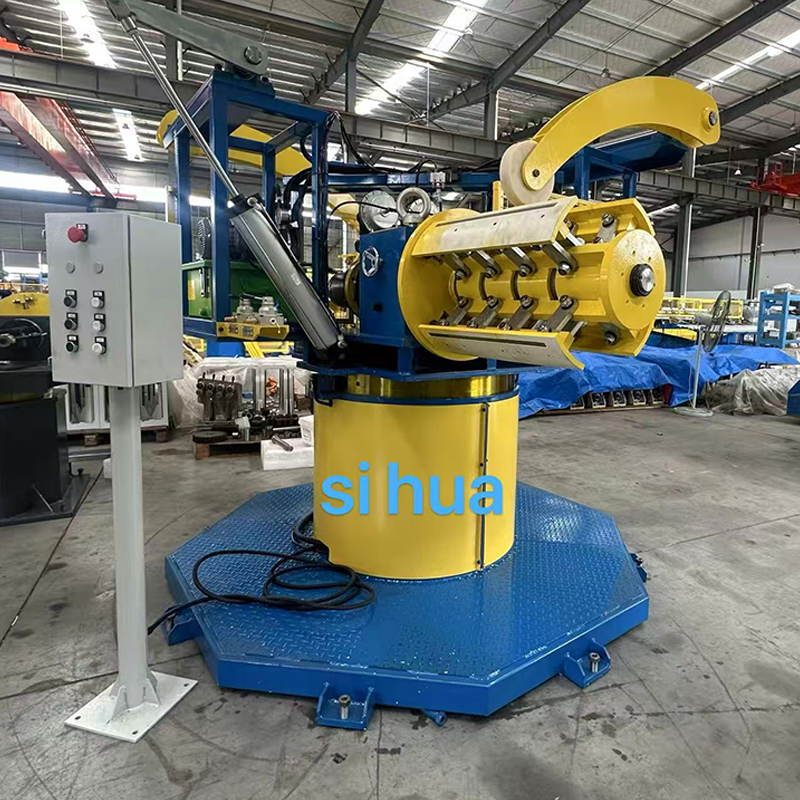
Double head rotating hydraulic heavy-duty decoiler.This equipment can automatically stop synchronously with the forming machine, and features hydraulic expansion and contraction as well as automa...
See Details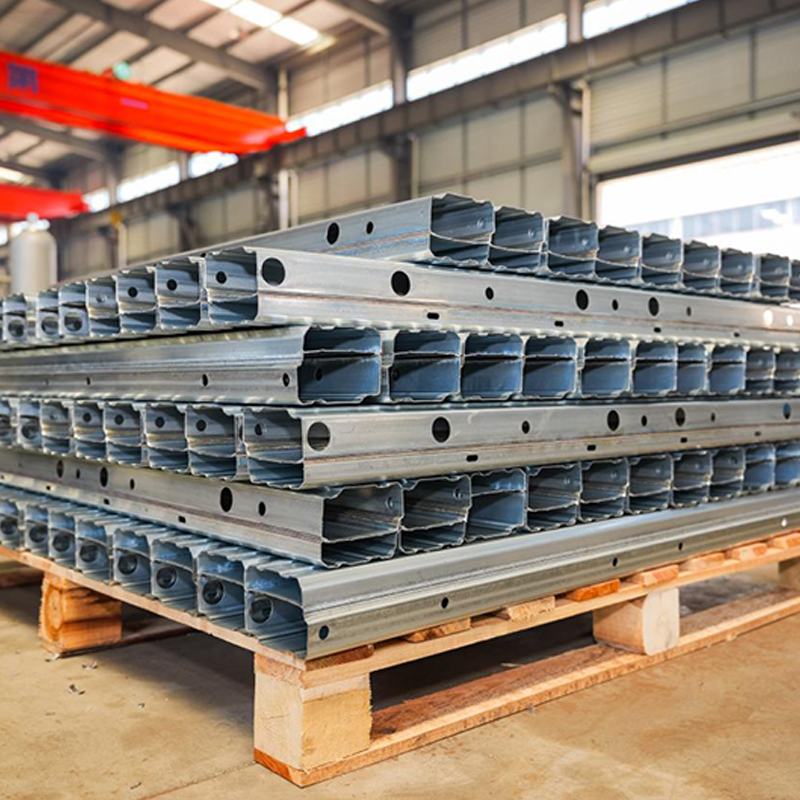
The production line for vehicle B-profile automotive chassis reinforcement beams involves several key processes to ensure High-strength, precision, and durability for vehicle applications. Key e...
See Details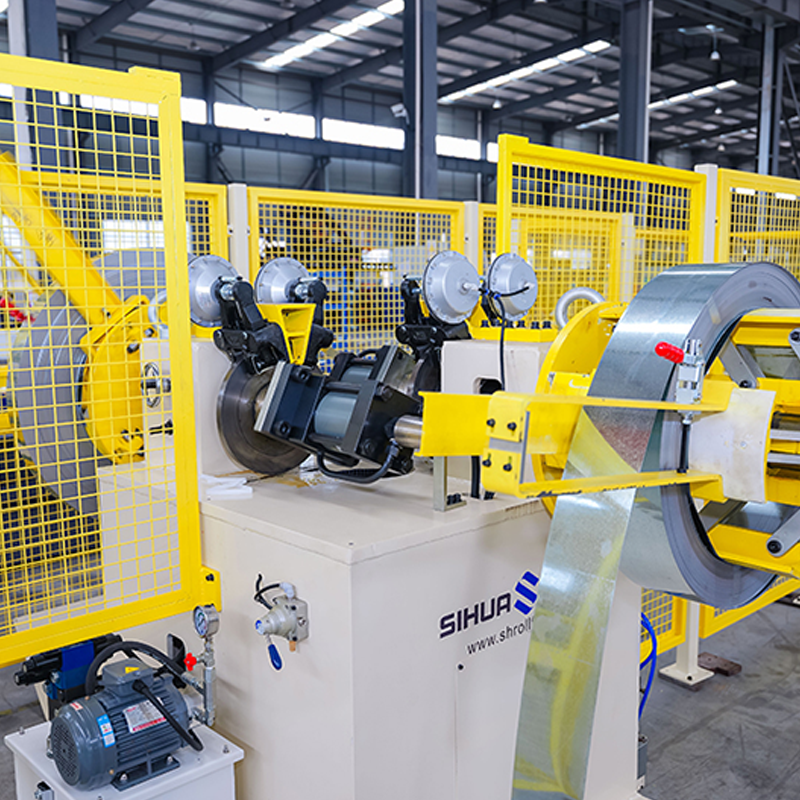
Automatic rotating double-head hydraulic decoiler with no-material detection, 5 tons per side. Laser power and welding length are adjustable to accommodate steel strips of various thicknesse...
See Details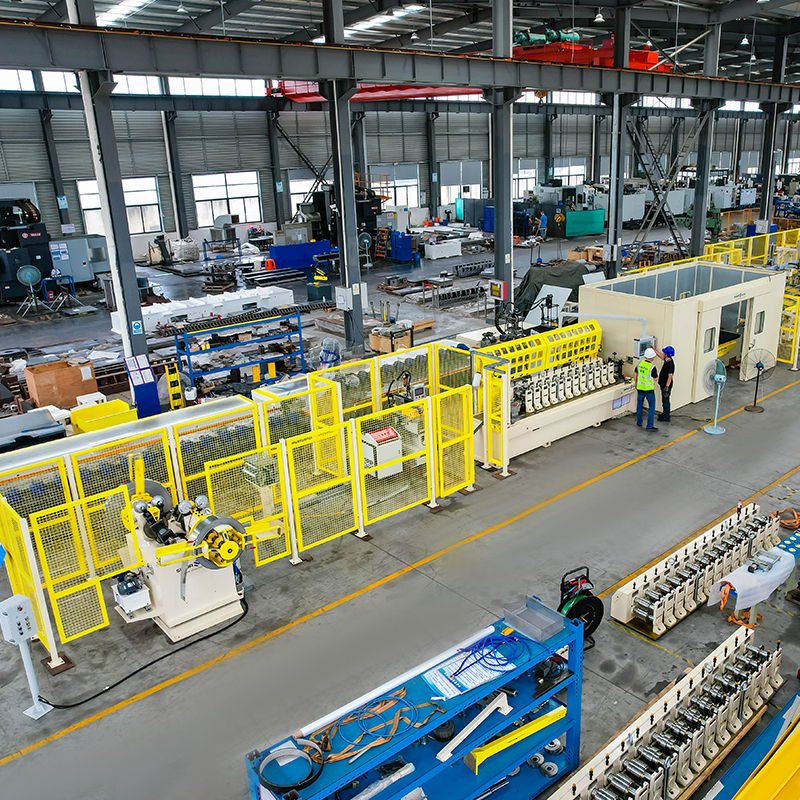
Automatic rotating double-head hydraulic decoiler with no-material detection, 5 tons per side. Quick-change cassette roll forming machine (changeover takes 30 minutes). Cutting without ...
See DetailsDon't hesitate to contact when you need us!
Contact Information
PRODUCTS
Mobile


 English
 Español
 русский