Content
A drywall profile roll forming machine is specialized industrial equipment that continuously bends coiled steel sheet metal into standardized C-studs, U-tracks, and furring channels used in modern wall and ceiling framing systems. These machines transform flat steel coils into complex geometric profiles through sequential sets of hardened rollers that gradually shape material without heating or material removal. Production speeds range from 10 to 60 meters per minute, enabling single machines to supply framing materials for 500,000 to 2 million square feet of drywall construction annually.
The roll forming process distinguishes itself from press braking or extrusion through its continuous operation and superior material efficiency. Drywall profile machines maintain 95-98% material utilization rates since coil feeding eliminates blanking waste associated with punched components. Formed profiles exhibit work hardening that increases yield strength by 15-25% compared to base material specifications, delivering structural performance advantages beyond raw steel properties.
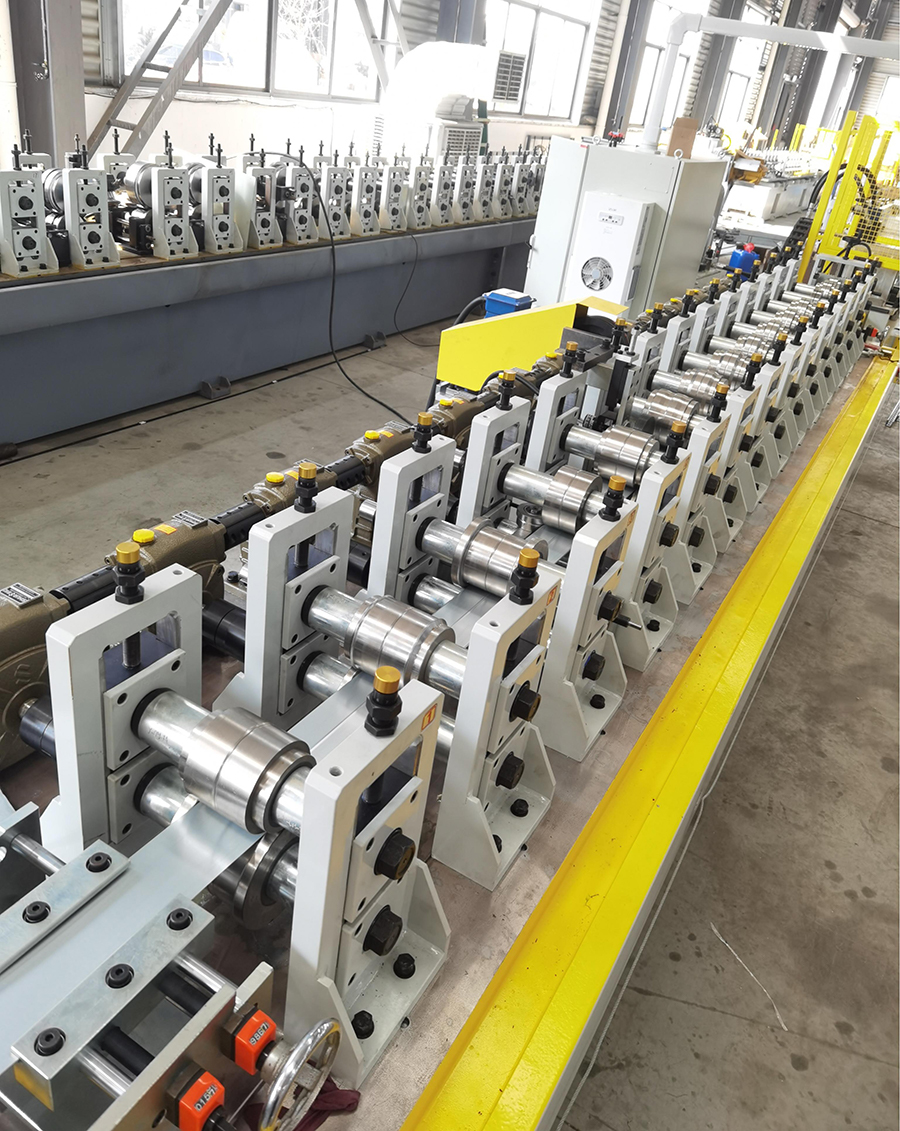
Drywall profile roll forming machines integrate multiple subsystems into coordinated production lines. Understanding component functions clarifies operational capabilities and maintenance requirements.
Hydraulic decoilers accommodate steel coils weighing 3-10 tons with outer diameters to 1,500mm. Automatic tension control maintains consistent strip feeding regardless of coil diameter reduction during unwinding. Servo-driven feeding mechanisms achieve length tolerances of plus or minus 0.5mm on cut-to-length operations, critical for construction site compatibility where cumulative errors compound across multi-stud assemblies.
Forming stations typically number 12 to 20 depending on profile complexity, with each station containing upper and lower roller sets mounted on precision shafts. Roller materials include D2 tool steel heat-treated to 58-62 HRC for standard applications, or chromium-plated surfaces for extended wear resistance in high-volume operations. Station spacing of 350-450mm prevents material distortion between forming stages while maintaining compact machine footprints.
Hydraulic punching units create service holes, notches, and end treatments required for stud-to-track connections and utility routing. Punching force capacities range from 50 to 200 tons, with die configurations accommodating 3-8 simultaneous operations. Flying cutoff saws or hydraulic shears sever continuous profiles to specified lengths without stopping production, maintaining line speed consistency that press braking cannot achieve.
Drywall profile roll forming machines produce the complete range of light gauge steel framing components standardized across global construction markets.
| Profile Type | Dimensions (mm) | Steel Thickness | Typical Application |
|---|---|---|---|
| C-Stud | 50-150 width, 30-40 flange | 0.5-1.2mm | Vertical wall framing |
| U-Track | 50-150 width, 30-40 leg | 0.5-1.0mm | Top and bottom plates |
| Furring Channel | 25-35 width, 12-16 height | 0.4-0.6mm | Ceiling suspension |
| Wall Angle | 25x25, 30x30 L-section | 0.4-0.8mm | Corner protection |
| Resilient Channel | 60 width, 12-15 height | 0.5-0.6mm | Sound isolation |
| Double Stud | Custom configurations | 0.8-1.6mm | Heavy load bearing |
Advanced drywall profile roll forming machines incorporate cassette-style roller change systems enabling profile transitions within 30-60 minutes. Manual changeover operations requiring individual roller replacement consume 4-8 hours, significantly impacting production scheduling. Quick-change capability justifies investment premiums for manufacturers serving diverse construction markets requiring frequent profile switches.
Drywall profile roll forming machines process various steel grades with distinct mechanical properties and coating systems.
Commercial quality mild steel with yield strengths of 180-250 MPa forms the majority of drywall framing production. High-strength low-alloy steels with yield strengths to 550 MPa enable thinner wall sections meeting equivalent structural performance, reducing material consumption 20-30% while challenging forming equipment with greater springback tendencies. Machine roller configurations and forming sequences require adjustment when transitioning between material grades to maintain dimensional accuracy.
Zinc coating weights range from Z100 to Z275 (100-275 grams per square meter total both sides), with heavier coatings extending corrosion resistance in humid environments. Organic coatings including polyester, epoxy, or vinyl provide additional protection for exterior soffit applications or corrosive interior environments. Roll forming machines must accommodate coated materials without surface damage, requiring polished roller surfaces and controlled forming pressures that prevent coating cracking or delamination.
Modern drywall profile roll forming machines integrate sophisticated control architecture ensuring consistent quality and operational efficiency.
PLC systems coordinate decoiler tension, feeding servo motors, punching sequences, and cutting operations through integrated software interfaces. Recipe storage enables 50-200 profile configurations with preloaded parameters for length, hole patterns, and production quantities. Touchscreen HMI panels provide operators with real-time monitoring of line speed, piece counts, and diagnostic alerts without requiring specialized programming knowledge.
Laser measurement systems verify profile dimensions at 0.1mm resolution, triggering automatic adjustments or rejection protocols when deviations exceed tolerance bands. Vision systems inspect punching quality and coating integrity, diverting non-conforming pieces to scrap conveyors without operator intervention. Statistical process control software tracks dimensional trends across production runs, predicting maintenance requirements before quality degradation occurs.
Drywall profile roll forming machine investments require analysis of production capacity, labor requirements, and material economics.
Entry-level machines with 15-20 forming stations achieve 8-15 meters per minute on standard C-stud profiles, sufficient for regional market supply with single-shift operation. High-speed lines with 20-24 stations and servo-controlled flying cutoffs reach 40-60 meters per minute, serving national distribution requirements or export markets. Annual production capacities scale from 2,000 to 15,000 tons depending on machine configuration and operational scheduling.
Automated drywall profile lines require 1-2 operators for coil loading, quality monitoring, and bundle packaging, versus 8-12 workers for equivalent manual press brake operations. Machine footprints range from 12x2 meters for compact single-profile units to 25x4 meters for multi-profile high-speed lines with integrated stacking systems. Production cost advantages of 30-50% compared to traditional fabrication methods typically achieve equipment payback within 18-36 months for established construction material distributors.
Machine longevity and uptime depend on systematic maintenance protocols and component quality.
Forming rollers processing 5,000-10,000 tons of galvanized steel require resurfacing or replacement as surface hardness degrades and profile dimensions drift. Chromium-plated rollers extend service intervals 2-3 times compared to hardened tool steel, justifying higher initial costs for high-volume operations. Roller storage and handling protocols prevent damage between changeovers, preserving dimensional accuracy across multiple production campaigns.
Hydraulic power units for punching and cutting operations require annual fluid analysis and filter replacement to prevent valve sticking or cylinder seal degradation. Servo motor and drive systems demand environmental controls maintaining electrical cabinet temperatures below 40 degrees Celsius through filtered ventilation or active cooling. Preventive maintenance scheduling based on operating hours rather than calendar time optimizes component life in multi-shift production environments.
Drywall profile roll forming machine technology continues advancing in response to construction industry demands and material innovations.
Emerging machine control systems accept BIM-generated cutting lists and hole patterns, automatically programming production sequences without manual data entry. This integration eliminates transcription errors between architectural specifications and manufactured components, ensuring construction site compatibility for complex commercial projects with irregular stud spacing or specialized service integration.
Recycled steel content in drywall framing increases as ESG commitments drive construction material sourcing decisions. Roll forming machines process scrap-based steel with equivalent efficiency to virgin material, supporting circular economy objectives. Energy consumption optimization through servo-electric punching and regenerative drive systems reduces machine carbon footprints 15-25% compared to all-hydraulic architectures of previous generations.
Drywall profile roll forming machines represent capital investments transforming steel coil inventory into high-demand construction components with minimal labor input and material waste. Machine selection requires matching forming capabilities to target market profile ranges, automation levels to available technical staffing, and production speeds to distribution volume requirements. Quality components, systematic maintenance, and operator training ensure equipment longevity that amortizes initial investment across decades of productive service.
The transition from traditional press brake fabrication to roll forming production enables construction material suppliers to compete on cost, consistency, and delivery speed in markets increasingly dominated by lightweight steel framing. Understanding machine specifications, operational requirements, and production economics positions manufacturers to capture growth in residential, commercial, and institutional construction segments where drywall systems remain the dominant interior finish methodology.

wide material single decoiler Leveling machine and Machine for punching small holes on both sides All the upper and lower rollers are connected to a worm gear reducer.This makes the for...
See Details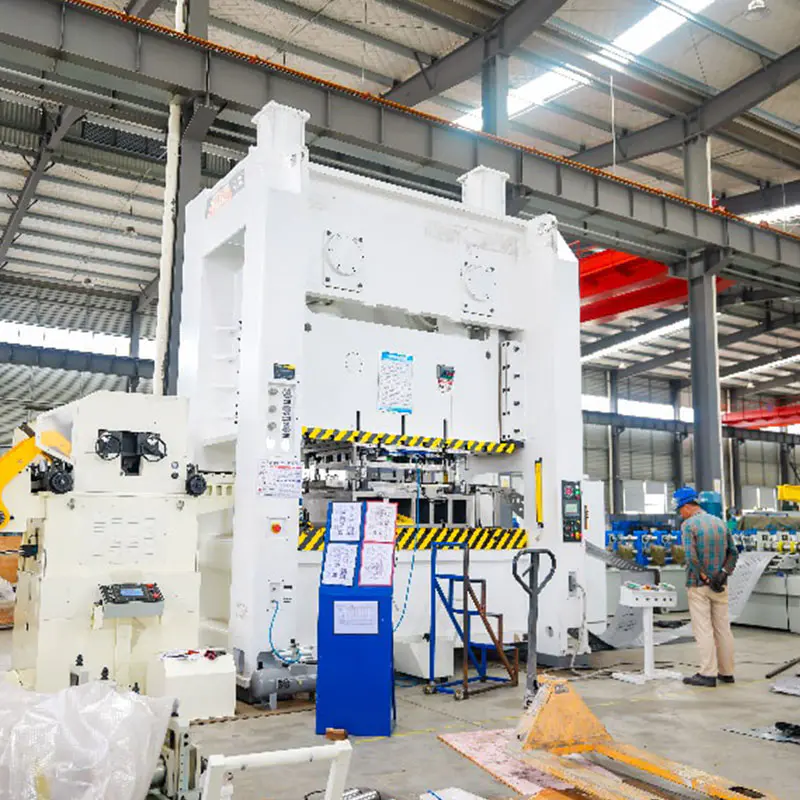
Decoiler System 3-in-1 Decoiler Straightener Feeder Capacity: 5 tons hydraulic coil mandrel expansion, servo feeding & straightening. Punching machine 400 Ton Power Press Capacity: ...
See Details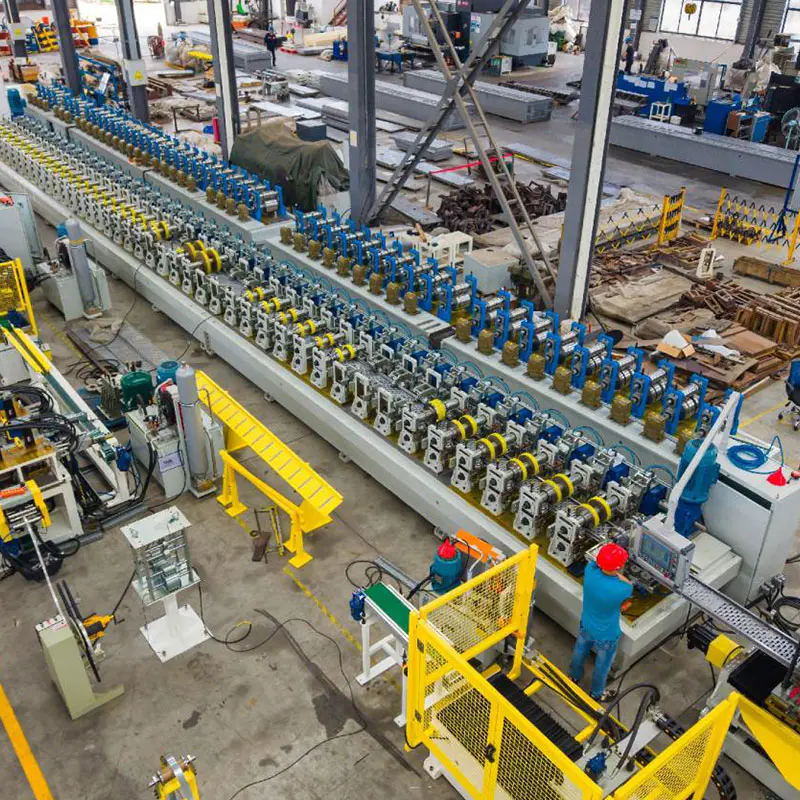
Decoiler System COMBI 3/1 decoiler lever and feeder Capacity: 3-8 tons high feeding accuracy, fully automatic operation, widely used for metal coil stamping Punch Press Unit Punching fo...
See Details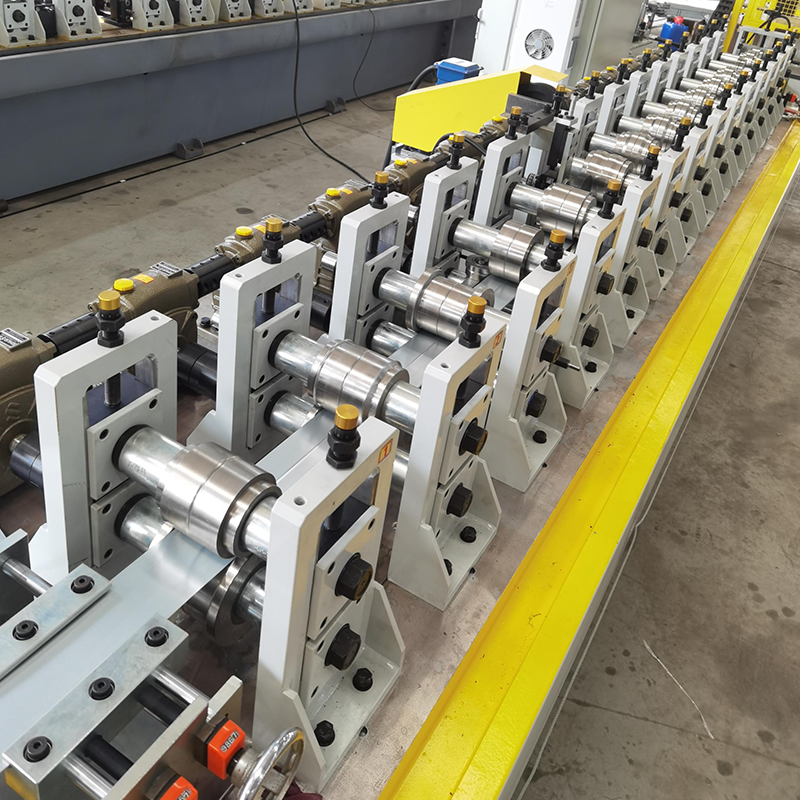
Drywall worm gear reducer roll forming machine, simple model, not a quick-change cassette type, economical and affordable. (It can be upgraded to a quick-change cassette type which can produce di...
See Details
Metal Scaffold decking roll forming machine Shaft diameter: 70–80 mm; scaffold decking length: 0.5–6 m; thickness: 1–2.5 mm. Equipment layout diagram.We welcome you to send us your factory's...
See Details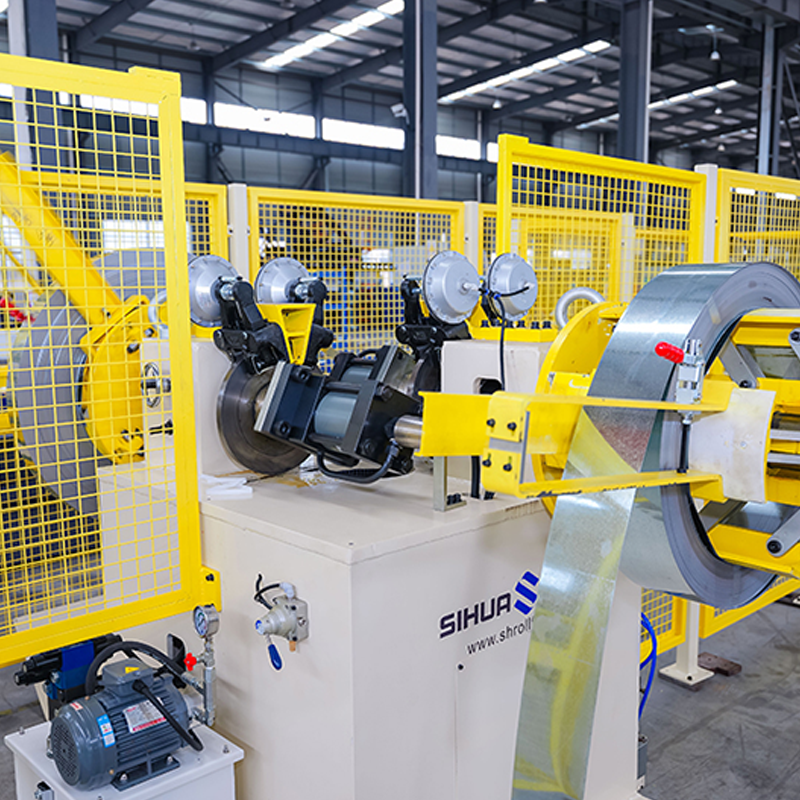
Automatic rotating double-head hydraulic decoiler with no-material detection, 5 tons per side. Laser power and welding length are adjustable to accommodate steel strips of various thicknesse...
See DetailsDon't hesitate to contact when you need us!
Contact Information
PRODUCTS
Mobile


 English
 Español
 русский